



What Are Neuroendocrine Pancreas Tumors?

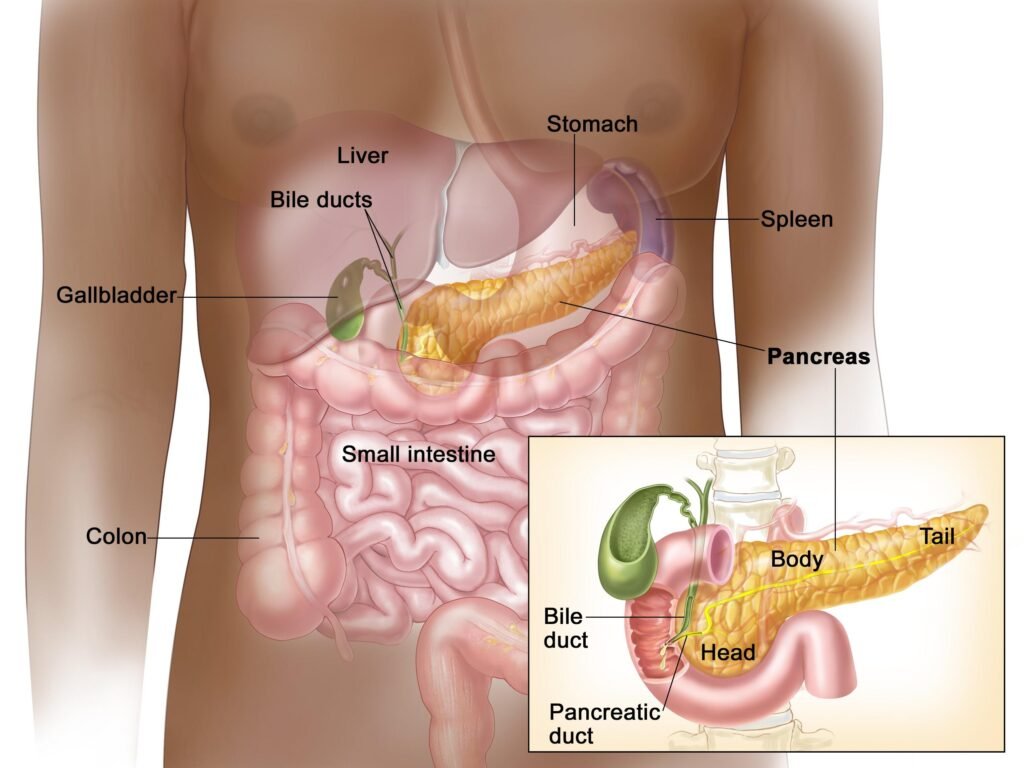
Pancreatic neuroendocrine tumors (NETs), also called islet cell tumors, begin in the tissues of the pancreas, a pear-shaped organ in your abdomen that lies behind the lower part of your stomach. The pancreas has two main types of cells: exocrine cells that produce enzymes, which help digest food in our intestines, and endocrine cells that produce hormones, like insulin, which are released into the blood.
Pancreatic NETs occur in the hormone-producing endocrine pancreas cells, called islet cells. Only about 1%–2% of pancreatic tumors begin in endocrine cells. Pancreatic NETs can be benign (not cancer) or malignant (cancerous). Cancerous pancreatic NETs are sometimes called pancreatic endocrine cancer or islet cell carcinoma.
Other, more common types of pancreatic cancer, such as pancreatic ductal adenocarcinoma, form in exocrine pancreas cells, which produce digestive juices. Exocrine cell pancreatic cancers have very different causes, risk factors, treatments, and prognoses. Learn more about exocrine cell pancreatic cancer at What Is Pancreatic Cancer?
Types of pancreatic neuroendocrine tumors
Pancreatic NETs may be functional or nonfunctional. Most pancreatic NETs (about 90%) are nonfunctional.
- Functional tumors make extra hormones, such as gastrin, insulin, and glucagon, that cause specific signs and symptoms.
- Nonfunctional tumors do not make extra hormones. Signs and symptoms of nonfunctional tumors are caused by the tumor as it grows and spreads. Non-functional tumors are often diagnosed at a later stage and have a worse prognosis.
Functional pancreatic NETs include:
- Gastrinomas form in cells that make gastrin, a hormone that causes the stomach to release an acid that helps digest food. Gastrinomas usually form in the head of the pancreas and sometimes in the small intestine. Most gastrinomas are cancerous.
- Insulinomas form in cells that make insulin, a hormone that controls the amount of glucose (sugar) in the blood. Insulinomas can form in the head, body, or tail of the pancreas. Most insulinomas are benign (not cancer).
- Glucagonomas form in cells that make glucagon, a hormone that increases the amount of glucose in the blood, causing high blood sugar. Glucagonomas usually form in the tail of the pancreas, and most are cancerous.
- VIPomas are very rare pancreatic NETs that make vasoactive intestinal peptide (VIP).
- Somatostatinomas are very rare pancreatic NETs that make somatostatin.
Learn about how different types of pancreatic NETs are treated at Treating Pancreatic Neuroendocrine Tumors.
You may be interested

Now Google Chrome shares tabs to new devices that save where you were
new admin - Sep 24, 2026Google is rolling out some new Chrome browser features that are designed to make it easier to research and study…

Andreessen Horowitz introduces AI school as a college alternative
new admin - Sep 24, 2026Andreessen Horowitz introduces AI school as a college alternative - CBS News Watch CBS News The Horowitz Andreessen Academy is…

New Album ‘Violins,’ Wedding Playlist, Sobriety
new admin - Sep 24, 2026[ad_1] I t's only been a year since Blondshell released her second album If You Asked for a Picture, but…