
Queen and Sex Pistols Play Historic Gigs in U.K.

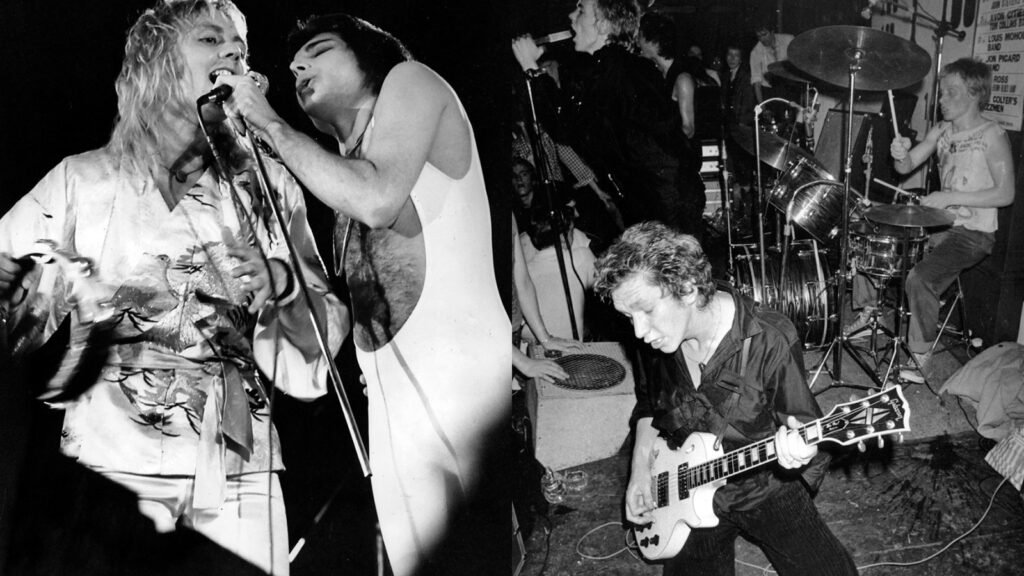
In the latter half of 1976, two very different live music scenes were popping at the exact same time across England and America. On one hand, superstar acts like Peter Frampton, Yes, Fleetwood Mac, the Who, and the Rolling Stones were selling tickets on such an astronomical level that their shows were moving into football stadiums, outdoor fields, and racetracks. At the exact same time, young, upstart groups like the Ramones and the Clash were forming in response to the corporatization of rock, the bloated egos of its biggest stars, and the excesses of prog with the back-to-basics minimalism of punk.
The gap between these two divergent worlds was most apparent during a very memorable point in September 1976 when Queen played a free concert in London’s Hyde Park to roughly 150,000 fans, just two days before the 100 Club Punk Special crammed 600 fans into the 100 Club for showcase performances by the Damned, the Buzzcocks, the Clash, the Sex Pistols, and a new band billing themselves as Siouxsie and the Banshees.
To the U.K. music press of the time, both events seemed to be ushering in a long-awaited new era of rock during a particularly bleak moment when “I Only Want to Be With You” by the Bay City Rollers was one of the top songs in England. “At last, the Seventies have arrived,” gushed Melody Maker‘s Harry Doherty in his review of the Queen concert. “The reverberations of it will be felt for the rest of this decade, hopefully ridding us once and for all of the apathy that generally emerges from those who experienced the sixties and are unwilling to accept anything new from this generation.”
Melody Maker‘s Caroline Coon felt the same way as she approached the 100 Club two days later. “The 600-strong line, which last Monday straggled across two blocks outside London’s 100 Club in Oxford Street, waiting for the Punk Rock Festival to start, was indisputable evidence that a new decade in rock is about to begin,” she wrote. “Two 18-year-olds from Salisbury were at the head of the queue. ‘I’ve been waiting for something to identify with,’ says Gareth, hopping up and down. ‘There’s been nothing for years. I just want to be involved.’”
Just five years earlier, Queen fans were packing into venues just as tiny as the 100 Club. But their popularity grew exponentially in that time thanks to “Seven Seas of Rhye,” “Killer Queen,” “Now I’m Here,” “You’re My Best Friend,” and, of course, “Bohemian Rhapsody,” which topped the U.K. Singles Chart for nine weeks and helped A Night at the Opera go platinum all across the planet.
They didn’t have a new album ready until the end of 1976, but the momentum from “Bohemian Rhapsody” was so strong they began looking into the possibility of playing the biggest free concert in Hyde Park since the Rolling Stones in 1969.
“I don’t think there’s ever been a show like we’re going to do in the park,” Queen guitarist Brian May told Melody Maker days before the concert. “We’re not going to hold back at all just because it’s a free concert. It’ll be the whole works. I hope it all fits together as a very nice and enjoyable afternoon. It’s a way of saying thank you. It’s an adventure, fighting our way through 15 million miles of red tape. It’s quite hilarious.”
Finalizing the bill for the show was its own adventure. Less than a week before fans began filling up Hyde Park, John Miles and Be Bop Deluxe were dropped from the show due to machinations by concert promoter and Virgin Records head Richard Branson, who wanted Virgin acts Steve Hillage and Supercharge instead. “This move weakens the bill considerably and makes a mockery of free festivals,” a spokesperson for Miles told the Evening Standard. “Now it’s beginning to look like a free promotion stunt for Virgin Records.”
Kiki Dee, however, remained part of the show, even though she was unable to get her “Don’t Go Breaking My Heart” duet buddy Elton John to stop by and had to resort to singing alongside a cardboard cutout of him. “Kiki Dee proved that she can exist quite happily without Elton John,” wrote Melody Maker, “although she has obviously adopted the same attitude towards stage performances as the esteemed EJ, which is to use as many musicians as is needed to reproduce recorded sound on stage, regardless of financial disaster.”
Queen had yet to flesh out their lineup to include even a keyboardist, presenting them with the difficult task of recreating all the ornate sounds of A Night at the Opera onstage. But thanks to pyrotechnics, dry ice, Brian May’s virtuosity, Freddie Mercury’s charisma, and his many costume changes, the show was stunning.
“The music veered from the wild excitement of ‘Ogre Battle’ and ‘Brighton Rock’ to soothing pieces in the mould of the moving ‘You Take My Breath Away’ without ever losing pace,” wrote Doherty. “Two weeks ago, I queried Queen’s ability to produce the goods at a gig of this magnitude, and it fills me with great pleasure that I state they have the rare ability to create as much atmosphere in open fields as in homely theaters. They are, how you say, a great little band.”
That “great little band” closed out their set with “In the Lap of the Gods… Revisited,” but they planned on coming back for an encore of “Now I’m Here,” “Big Spender,” “Jailhouse Rock,” and “God Save the Queen.” The authorities had another idea.
“The powers that be wouldn’t let us go on and do the encore, about which we were very upset, having worked up for months and prepared for all that,” May told Capitol Radio in 1977. “They got very frightened because there were 150,000 people in Hyde Park in the dark, and they thought they were going to get out of hand. But in fact, there was no possible danger happening at all. Everyone was peaceful and having a good time.”
This was mild exaggeration, as evidenced by this headline in The Sunday Mirror the following day: “Several Hurt at London Pop Show.” “Several arrests made at free concert by the pop group Queen in Hyde Park,” reads the brief article, “after troublemakers hurled bolts and drink cans into 50,000 crowd. Number of people taken to hospital.”
First off, 50,000 is a very low estimate of the crowd size. It’s pegged today at somewhere between 150,000 and 200,000. Secondly, the article doesn’t explain that fans were hurling objects forward since the stage was absurdly low, and many of them couldn’t see a thing.
“I have been requested by the constabulary for you not to throw little things around, tin cans or whatever,” a frustrated Freddie Mercury told the crowd early in the night. “So make this a peaceful event, OK? Sit on your arses and listen.”
At the 100 Club a couple days later, meanwhile, a mere bolt or tin can thrown through the air would barely have been noticed amidst all the chaos and disorder. No act on the bill was even remotely famous outside of the tiny London punk scene, but it’s staggering to look at today. In addition to the Sex Pistols, the Clash, the Damned, the Buzzcocks, and Siouxsie and the Banshees — the five most iconic U.K. punk bands of their time — Coon also notes the presence of a group of hardcore Sex Pistols fans known as the “Bromley Contingent.”
“This inseparable unit is Steve (21), Bill (22) and Simon (19)—he sells hot dogs off a mobile stand during the day—raspberry-haired Debbie and Suzi herself,” she writes. “They first heard the Pistols at their local tech in January and they’ve been faithful followers ever since.”
She doesn’t provide last names, and the age is off by a couple years, but the “Bill” she references is almost certainly Bill Broad, who would soon start billing himself as Billy Idol and form the group Generation X.
Her description of the Siouxsie and the Banshees performance is fascinating since they weren’t truly a band at this point, membership was very fluid, and they didn’t really have material. “Apart from Suzi, it wasn’t decided who would actually end up doing the festival until the day,” Coon writes. “Two-tone Steve (his hair is black on top, white at the sides) was on the bass he picked up for the first time the night before. Sid Vicious, Johnny Rotten’s friend and inventor of the Pogo dance, was on drums. He had one rehearsal. And a mature gent called Marco was the lead guitarist. The prayer begins. It’s a wild improvisation, a public jam, a bizarre stage fantasy acted out for real. The sound is what you’d expect from, er, novices.”
Sid Vicious, six months before his debut as the Sex Pistols’ new bassist, was most assuredly a novice on the drums. (And he wasn’t much better on bass.) But he was very good at creating mayhem and hurting people. The following night, while the Damned played, he threw a glass that shattered and blinded a young woman in one eye. It sent him off to jail for a short stint, and it would be far from his last time behind bars.
The Clash hadn’t played in public since their opening slot for pub rock band Kursaal Flyers at the Roundhouse on Sept. 15, but they parted ways with guitarist Keith Levene during that time and had written a new song called “White Riot” that opened their set at the 100 Club Punk Special. Like at the Roundhouse, they broke out an early version of “I’m So Bored With the U.S.A.” entitled “I’m So Bored With You.” But Joe Strummer periodically yelled out “USA” this time, showing they had worked on more than “White Riot” and fired Levene during the brief interim.
“The Clash are a fine, visionary rock band with a wild style,” Coon wrote. “I’ve seen them four times now, they’ve never played the same set. Their humour and spontaneity is uncontrived and, now that they’ve settled into their new line-up, they’ll be a cornerstone for the developing punk rock scene.” (Coon would soon shoot the cover photo for the Clash’s “White Riot” single and even briefly manage them.)
The Sex Pistols closed out the first night with a ferocious set that included “Anarchy in the U.K.,” “Pretty Vacant,” “New York,” and covers of “No Fun” by the Stooges, “Substitute” by the Who, and “I’m Not Your Stepping Stone” by Monkees songwriters Tommy Boyce and Bobby Hart.
“The atmosphere in the club is feverish and high-pitched,” Coon wrote. “This band is what everyone’s been waiting for. Not everyone, however, is happy about the Pistols’ growing success and notoriety. The private party is over; the band are public property. It had to happen. But with mixed feelings the band’s nucleus of fans are holding their breath as their champions start their steady climb. Will the businessmen spoil them—that’s the anxious question?”
The Sex Pistols certainly would have their problems with “businessmen,” but they were truly spoiled by the mismanagement of Malcolm McLaren, personality conflicts that are inevitable when John Lydon is a member of your band, and the preposterously stupid decision to fire bassist Glen Matlock, a crucial component of the songwriting team, in favor of Sid Vicious, who brought nothing but chaos.
But before they broke up in early 1978, they’d make the definitive album of the U.K. punk era, Never Mind the Bollocks, Here’s the Sex Pistols, and inspire countless bands that blossomed all across England and the world in the years that followed. Their show at the 100 Club Punk Special alone was witnessed by Paul Weller of the Jam, Shane MacGowan of the Pogues, Chrissie Hynde of the Pretenders, Colin Newman of Wire, and Kevin Haskins and David J of Bauhaus.
And two months earlier, when the Sex Pistols played at Lesser Free Trade Hall in Manchester, future members of the Smiths, the Fall, Magazine, Simply Red, the Buzzcocks, and Joy Division/New Order were in the audience. Every single one of them claimed it was a pivotal experience that forever changed their lives.
Looking back with the benefit of 50 years of hindsight, Melody Maker‘s notion that the Seventies didn’t “arrive” until September 1976 doesn’t really hold up. They began with Led Zeppelin, Black Sabbath, the Stooges, Elton John, and David Bowie at the tail end of the Sixties, at least in terms of rock. But they were absolutely right that something very new was happening. The evidence just wasn’t there at the Queen concert. It was most definitely present at the 100 Club.
That’s not to diminish Queen in any way. They were a titanic force in music, bigger than any one era or movement, whose popularity dwarfed most of the punk acts combined. But not many people walked out of that Hyde Park show thinking they could start their own Queen. Freddie Mercury was a singular talent, and no mortal could even dream of creating “Bohemian Rhapsody.”
It was much easier to imagine writing “White Riot,” “Orgasm Addict” or “Anarchy in the U.K.” after leaving the 100 Club Punk Special. And once people started trying, a new era truly began.
You may be interested
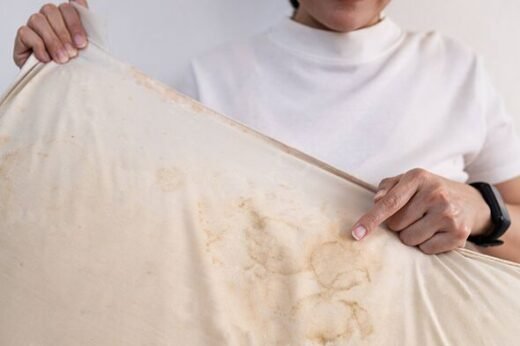
Cheap method using one ingredient 'removes yellow pillow stains'
new admin - Sep 18, 2026Yellow stains on pillows and bedding can be stubborn and unhygienic Source link

M&S 'best buy' autumn trench coat that's 'shower-resistant' comes in two colours
new admin - Sep 18, 2026[ad_1] The trench coat comes in two classic colours for easy autumn styling [ad_2] Source link
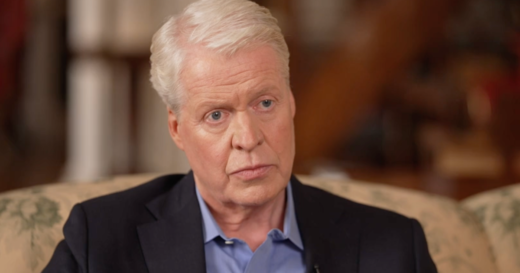
Princess Diana’s brother claims Prince Charles seemed “upbeat” after she died
new admin - Sep 18, 2026The brother of the late Princess Diana claims in his upcoming book that then Prince Charles seemed "upbeat" right after…