



The Push to Remake College Sports

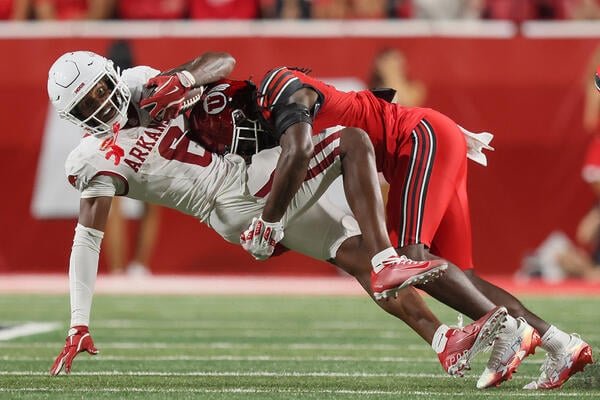
Lawmakers who have worked for years to advance legislation that would overhaul college athletics are expecting to score big this week.
The Senate voted 74 to 24 on Tuesday to move forward with voting on the Protect College Sports Act, a bill to establish federal guidelines on player eligibility, compensation, conference realignment, in-season coaching moves, student transfers and other changes. The bill would also grant the NCAA some antitrust protections that the association has said are critical to governing college athletics.
If the legislation does advance out of the Senate this week, the House likely won’t vote until after the November midterm elections, and it’s unclear whether lawmakers in the lower chamber will rally around the bill. But this issue is a top priority for President Trump, who has warned that college athletics threatens to bankrupt higher education institutions without significant changes.
Texas Republican Sen. Ted Cruz, who co-sponsored the bill with Democratic Sen. Maria Cantwell of Washington, cast the legislation as necessary to save college sports in a Senate floor speech, arguing that institutions and students alike need clear rules to resolve the state of “chaos” in athletics.
“College sports today are in crisis,” Cruz said Tuesday. “For years, court decisions, litigation, conflicting state laws, unlimited transfers, eligibility issues and inconsistent enforcement have chipped away at the foundation of college athletics. The result is what we’re seeing right now: the wild west. The rules change from state to state, court to court and season to season.”
The proposed changes come at a financially precarious moment for college sports, with most athletic departments operating in the red as they respond to new pressures such as revenue-sharing. At the same time, conference infighting over whether former professional players can return to the college ranks has sparked national debate and calls to refine eligibility criteria.
Opponents of the bill, like Democratic Sen. Chris Murphy of Connecticut, believe that the bill favors monied interests in college sports, such as coaches and executives, at the expense of the players. In a Monday press call, he argued the legislation “ensconces a system of exploitation.”
As the bill moves forward, hundreds of colleges, coaches, conferences and the NCAA have thrown their support behind the bill in closed-door conversations and national ad campaigns. Data gathered by the nonprofit OpenSecrets and shared with Inside Higher Ed found that 59 universities and systems lobbied on the legislation in the second quarter of 2026. While lobbying data does not specify the positions they took on the bill, almost all of those colleges and/or member institutions of the systems appear on a list of supporters posted on the Senate website.
Like lawmakers, university officials that lobbied for the bill have argued that a patchwork of disparate state laws has created a confusing environment for athletes and institutions. The University of Colorado, for example, wrote in a letter to lawmakers that legislation is needed to “create consistency” and “bring a semblance of order to a world of chaos.”
Only four institutions that lobbied on the bill are absent from the list of supporters: Cornell University, Dartmouth College, Johns Hopkins University and Princeton University. Inside Higher Ed reached out to all four to ask about their positions, but only Cornell responded, saying the university hasn’t taken a stance on the bill.
Leaders at universities that did not appear in second-quarter lobbying data have also reached out to lawmakers to urge them to vote for the legislation. Presidents of eight Kentucky universities and the Kentucky Community and Technical College System wrote to Sens. Mitch McConnell and Rand Paul earlier this month to urge them to vote for the bill.
“The current system is unsustainable,” they wrote. “Without a uniform national standard, institutions face growing uncertainty and competitive imbalances that make long-term planning difficult.”
The NCAA, which lobbied for the bill, launched an ad campaign in support of the legislation. Like the bill’s sponsors, the NCAA says it is necessary to provide stability to college sports.
“College athletes from all three divisions, all across the country support the PCSA because, according to them, only Congress can deliver the targeted intervention necessary to ensure college sports continues to thrive,” NCAA Senior Vice President of External Affairs Tim Buckley said in a news release.
Individual coaches have also expressed public support, including John Calipari of the University of Arkansas, Ed Cooley of Georgetown University, Mark Few of Gonzaga University and Kelvin Sampson of the University of Houston, all of whom appeared alongside Cruz at a Monday press conference in Washington, D.C. Coaches also argued that the proposed legislation would add stability to college athletics.
Outside advocacy groups and pro sports leagues have also backed the bill.
Last month, Saving College Sports, a group founded by Texas Tech University Regent Cody Campbell, launched its own ad campaign to drum up support for the legislation. Famed football coach Nick Saban has appeared in the ads, as has University of Colorado football coach Deion Sanders, who endorsed the bill in a commercial shot at the stadium where his team plays. Campbell’s group has reportedly spent $6 million on the ad campaign.
Broadcasters such as Walt Disney, which owns ESPN, also lobbied on the bill. While the corporation has not taken a public position on the legislation, ESPN faced criticism for featuring Cruz on College Gameday over the weekend. (ESPN later welcomed NAACP President and CEO Derrick Johnson, who opposes the bill, to voice his concerns on the air.)
Kalshi, the prediction market that has become a household name amid growing concerns over sports gambling, also lobbied Congress on the bill, though has not taken a public position on it. Officials at Kalshi did not respond to a request for comment from Inside Higher Ed.
Others joining the NAACP in opposing the bill include AFL-CIO and the National College Players Association. Opponents have argued that the legislation extends too much legal protection to the NCAA while diminishing the leverage players have. All three organizations joined Murphy and athletes on a Monday press call and urged senators to vote against the legislation.
The NAACP has also taken the fight against the bill to social media.
“Don’t believe the hype,” the group wrote on X. “The #ProtectCollegeSportsAct would make it harder for student-athletes to organize, bargain collectively, and fight for fair treatment. Real protection means empowering athletes, not silencing them. Powerful institutions don’t get to profit off the backs of Black athletes while keeping them quiet. Sharecropping is over.”
You may be interested

New species of wild cat discovered for first time in more than a century, researcher says
new admin - Sep 18, 2026Scientists have discovered a new species of wild cat for the first time in more than a century, a Bolivian…
Queen and Sex Pistols Play Historic Gigs in U.K.
new admin - Sep 18, 2026[ad_1] In the latter half of 1976, two very different live music scenes were popping at the exact same time…

Patrick Clancy’s wife: “I don’t understand how the story’s been so twisted”
new admin - Sep 18, 2026Patrick Clancy's wife: "I don't understand how the story's been so twisted" - CBS News Watch CBS News Sunday on…