


Your Oura Ring can’t measure what’s going on in your skull

This is Optimizer, a weekly newsletter sent from Verge senior reviewer Victoria Song that dissects and discusses the latest gizmos and potions that swear they’re going to change your life. Opt in for Optimizer here.
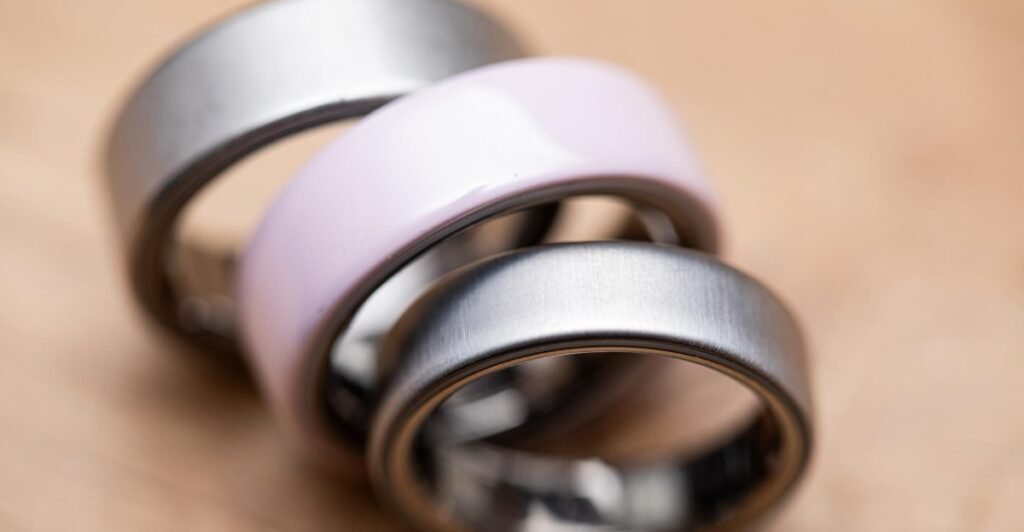
A recently filed class-action complaint against the smart ring maker alleges that the company has duped customers by claiming it can accurately track different sleep stages. A smart ring can’t possibly do that, the suit says, because the Oura Ring doesn’t directly measure your brain waves. Instead, Oura uses AI models to take advantage of “desperate consumers who struggle with their sleep … by selling faulty AI-based inference as reliable science.” The suit frames Oura Ring as no more accurate than a “coin flip.”
When I first saw this lawsuit, I laughed it off. It assumes that Oura users aren’t smart enough to know the ring on their finger can’t measure what’s going on inside their skull.
All wearable devices collect data and then use algorithms — or machine learning AI — to make inferences about various health metrics. As a noninvasive tool, no wearable directly measures anything except motion. The benefit is that noninvasive wearables allow for passive, all-day monitoring. Responsible companies then validate those metrics against clinical, gold-standard methods to create consumer-oriented screening tools and monitoring metrics. It’s not always the most accurate, but even broadly accurate data has improved — and even saved — many lives.

Again, I laughed because, surely, no one would take this lawsuit seriously. Wearables might not measure brain waves, but other measurable physiological changes happen during various sleep stages too. Your heart rate slows, your body temperature rises and falls, and your body paralyzes your muscles during REM so you don’t act out your dreams. But then I logged on and saw the discourse. Several outlets had covered the lawsuit. It was popping up on social media and in Reddit forums. Some commenters used it as a way to say, “Aha! I knew these devices were off!” Others said this discrepancy was illustrative of everything wrong with this current era of optimized obsession. A few wearable nerds reacted the same way I did. Oura published its own rebuttal to the suit, linking to several validation studies in peer-reviewed journals for its sleep tracking algorithm, alongside a supportive op-ed from a sleep researcher.
As a wearables expert, I find the lawsuit’s logic to be lacking, but it did help me identify the real problem here. We still struggle to remember what the point of wearable tech is and how to use it properly. Case in point: Accuracy is a bit of a red herring in this conversation because that’s not always the point of a wearable.
All wearables vary when it comes to sleep tracking accuracy. In general, independent third-party reviews find they are pretty good at detecting when you fall asleep and wake up. Sleep stages are where things get murky, as each company uses a proprietary algorithm to estimate if you’re in REM, deep, or light sleep based on motion, temperature, and heart rate sensors. They can get things wrong for several reasons, ranging from sleep position to battery levels.

Wearables are meant to be used as a tool to track long-term trends. Chances are, if you’re sleeping poorly, you can logically pinpoint a reason why without a gadget. Maybe you drank too much before bed. Perhaps your cat yowls at 5:30AM for breakfast. But, say you’re not an observant person, and there is no obvious reason. The point of a consumer sleep tracker is to get a bird’s-eye view of your sleep pattern. It’s a means of helping you reflect on the lifestyle reasons why your sleep might be doodoo. And in the absence of a reasonable explanation, it’s a tool to help facilitate conversations with a doctor. It does not and will not ever fully replace clinical polysomnography or sleep clinics.
Because wearables rely on indirect methods of estimating health metrics, there is always a possibility that your results might be wackadoodle wonky here and there. The point is the device should be consistent enough to give you a good idea when something is really off. A “check engine light,” if you will. Sometimes, you’ll get false alarms. But the point is you’ve checked in and are more aware.
There’s some nuance here. If I’m generous, this lawsuit could be a good-faith attempt to force health tech companies to be much more precise with their marketing claims. Sometimes less scrupulous companies do embed blatant science-washing into their marketing. I agree that sometimes health tech companies can present features in a misleading way that can cause material harm. This, in my opinion, just doesn’t happen to be one of them. (Again, Oura is almost overly aggressive in showing the receipts of its peer-reviewed scientific research.)

You could argue that more companies ought to include easily accessible educational blurbs. That’s especially true now given the dangerously blurred line between wellness and medical tech. It’d be nice if more wearable companies explained that the closer a feature hews toward medical tech or diagnostic capabilities, the more accuracy matters. If it’s simply to monitor trends, eh. It matters more that a device is consistently inaccurate by the same amount because measuring trends is the most important thing. That’s why certain screening features require FDA clearance and wellness features do not. The Pixel Watch 5’s new breathing emergency feature? Accuracy matters quite a bit there because the watch will call emergency services on your behalf if it detects you may have stopped breathing for an extended period of time. Sleep stages, however, are a clear example of a wellness feature meant to help you monitor long-term trends and how lifestyle choices may impact your perceived sleep quality. If it’s not the most accurate, well, the stakes are much lower.
But to say that wearables companies don’t extensively plaster their UI with educational information about how certain metrics ought to be interpreted and how they’re derived is also untrue. These companies include warnings and disclosures within apps that explain that certain features are wellness and not diagnostic. In Oura’s case, any curious consumer could google “Is the Oura Ring accurate for sleep stages?” and get a succinct AI overview that reads “The Oura Ring is reasonably accurate for tracking general sleep duration and identifying when you fall asleep or wake up, but its breakdown of specific sleep stages is only an estimate.” That’s then followed by dozens of links to studies comparing the sleep accuracy of various trackers and explanatory articles by tech journalists doing the exact same thing.
So why does a class action lawsuit like this even exist? Perhaps the fault is with tech journalists like myself if we preemptively dismiss an opportunity to reinforce context or fail to provide the appropriate analysis. Maybe we’re not writing explainers in the most accessible way. I hesitate to blame consumers. This is a genuinely confusing space, but then again, I find most people are smarter than they’re given credit for. Even so, there’s also only so much educational material that can be provided if a user opts not to read any of it. Ultimately, it’s on companies to make sure consumers understand the limitations of their products. For all the lawsuit harps on accuracy, its most compelling argument is that sweeping marketing claims may lead to consumers misunderstanding how a product ought to be used.
In any case, the takeaway from this lawsuit shouldn’t be that Oura — or wearables at large — are scam products with no value. If that were true, Apple wouldn’t introduce its latest smartwatch every year with real-life testimonials of how it saves lives. Researchers wouldn’t have flocked to wearables to study illness detection during the covid-19 pandemic. To me, this lawsuit is sort of its own “check engine light.” If people are truly duped and do not understand how these features work, it’s an opportunity to recalibrate the conversation.
You may be interested

Iran and Oman near a temporary deal on the Strait of Hormuz
new admin - Aug 26, 2026Iran and Oman near a temporary deal on the Strait of Hormuz - CBS News Watch CBS News Iran and…

Next James Bond final candidates unveiled and producers' favourite is an unknown
new admin - Aug 26, 2026The favourite to be cast as the next James Bond, who has a connection to Daniel Craig, is surrounded by…

Videos show crushing walls of water overtake buildings and bridges on Nepal-Tibet border
new admin - Aug 26, 2026Crowds attempt to flee a surging wall of mud but have nowhere to go as it hits them with horrific…