

Dolly Parton, Country Music Legend, Dead at 80

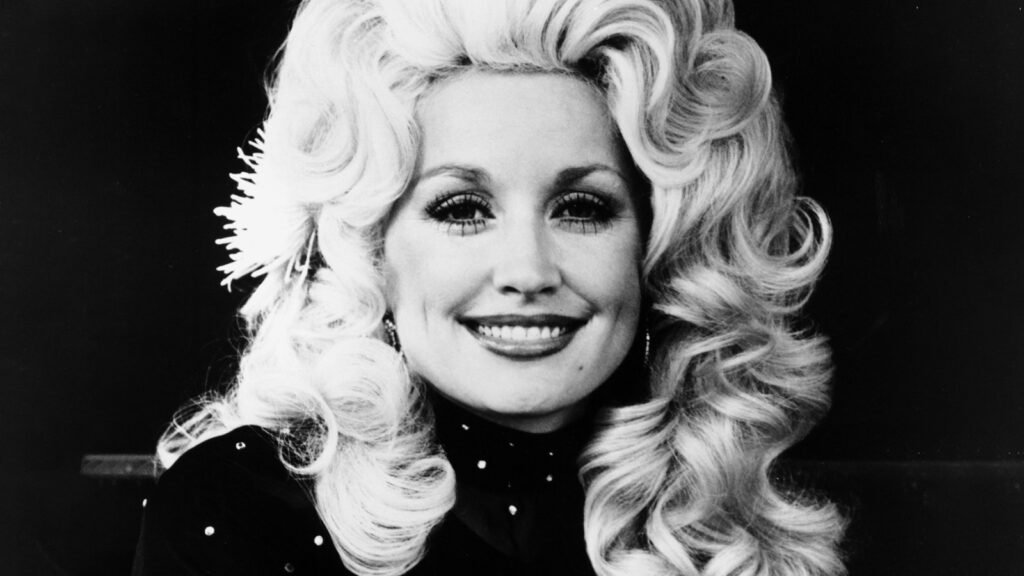
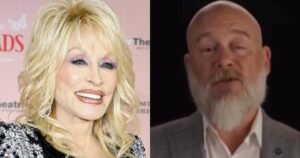
Dolly Parton, the beloved global entertainment icon who sold more than 100 million records and whose songwriting prowess and sure-handed approach to her career reshaped the face of country music, popular music, and the entertainment industry at large, died Tuesday. Bryan Seaver, nephew of Dolly Parton, announced the news via a video announcement on Facebook. She was 80
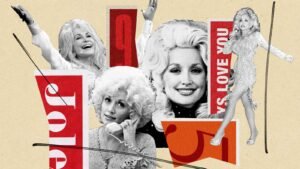
From the 1960s on, Parton’s songs vividly captured details of her impoverished Appalachian upbringing, shared her views on love, faith, loss, and regret, and inspired and influenced future generations of songwriters and performers moved by her indomitable spirit, sparkling wit, and down-home wisdom. The most successful female country artist of all time and one of the most recognizable artists in the world, Parton wrote thousands of deeply personal and instantly relatable songs, including the pop-country crossover hit “9 to 5,” and universal anthems such as “Coat of Many Colors,” “Jolene,” and “I Will Always Love You.” The latter sold more than 20 million copies when Whitney Houston recorded it for the 1992 film The Bodyguard, further enhancing Parton’s image as an influential, genre-defying artist.
Through it all, Parton considered herself first and foremost a songwriter. “I’ve got a big ol’ mouth and personality, so it’s easy for me to get out and entertain,” Parton said in 2020. “But when it comes to my writing … it’s just that little special thing that’s just mine.”
Parton had a large hand in paving the way for any subsequent entertainer who tried to navigate the push and pull between pop commerciality and musical tradition, inside and outside of country, from Garth Brooks to Shania Twain to Miley Cyrus. And the singer’s brand of working class feminism (though she never labeled it as such), laid the groundwork for several generations of country artists, from the Chicks to Miranda Lambert to Kacey Musgraves. Asked how Parton helped shape her own trajectory in 2019, Musgraves responded, “I mean, how has she not influenced me and my career?”
Parton also acted in several films beginning with 9 to 5 in 1980. Six years later, she opened her Dollywood theme park in Pigeon Forge, Tennessee, which helped establish the East Tennessee tycoon as a jobs-providing benefactor of her home region. Over the next four decades, Parton reinforced her image as a benevolent Smoky Mountains philanthropist by offering financial relief to forest fire victims in 2017, donating money for Covid-19 vaccine funding, and, most famously, founding the Imagination Library, which distributes books to children in multiple countries.
The Sevierville, Tennessee, native’s folksy wisdom and sincere lyrics went alongside her eye-popping “Backwoods Barbie” image, which she accentuated with blond wigs, form-fitting dresses, and the occasional cosmetic procedure. She often joked of herself: “It costs a lot to make a person look this cheap.”
“I just wanted to do really good work,” Parton said in 2020. “And I wanted it to make a really big difference in the world.”
Dolly Rebecca Parton was born Jan. 19, 1946, the fourth of Robert Lee and Avie Lee Owens Parton’s 12 children, in a one-room cabin on the banks of the Little Pigeon River. Parton grew up in rural poverty: their family lacked plumbing and electricity, and her mother would sew dresses for their rambunctious daughter, which inspired her origin-story song, “Coat of Many Colors.” “Mama used to sew all of our quilts, curtains for the windows, remake our clothes, and make clothes out of feed sacks,” Parton told Rolling Stone in 2021. “That little song just means so much to me in so many ways for so many reasons. It’s more of a philosophy than it is a song.”
Parton’s family was deeply musical — they sang in church and several relatives played musical instruments — and as a child, Parton openly dreamed of stardom. Her uncle Bill Owens gifted her a Martin guitar at age 8 and helped get her a gig singing on local TV. “It was just around home and in church,” Parton said of her family’s musicality in 1978. “I was the first one that ever became popular doin’ it, but there’s a lot of ‘em a lot more talented than me. I just had this grit and all these dreams and plans.”
From an early age, Parton became fascinated with the type of storytelling that would one day shape her imaginative songwriting. “When I was young, we didn’t go to the movies, so I just created my own stories,” Parton wrote in her 2020 book, Songteller: My Life in Lyrics. “I used to love to go to graveyards a lot. I’d read somebody’s name on their stone or see the grave of a little kid and wonder what their story was.”
At 14, she made her first record, “Puppy Love,” and during her first appearance on the Grand Ole Opry was introduced by Johnny Cash. On June 2, 1964, the day after she became the first person in her family to graduate from high school, the 18-year-old hopped a bus for Nashville. “I boarded a Greyhound bus with my dreams, my old guitar, the songs I had written,” Parton wrote in her 1994 autobiography. “And the rest of my belongings in a set of matching luggage — three paper bags from the same grocery store.”
Parton spent her early years in Nashville writing for other artists, and an early co-write with her Uncle Bill, “Put It Off Until Tomorrow,” was recorded by Loretta Lynn and Bill Phillips in the mid-1960s. All the while, Parton began recording pop-leaning originals, like 1965’s “I Wasted My Tears.” Within three years of her moving to Nashville, Parton was recording her 1967 Monument Records debut and appearing on the syndicated Porter Wagoner Show. She released the 1968 LP Just Because I’m a Woman for RCA Records, and officially became a member of the Opry the following year.
An early example of Parton’s bold, uncompromising songwriting was 1969’s chilling (and controversial) “Down From Dover,” in which an abandoned, pregnant woman delivers a stillborn child. Marianne Faithfull was among those to later cover it, but the song, much to Parton’s disappointment, never took off. “I would have thought [that] would have been a hit,” Parton later said, “and nobody cares.”
As soon as Parton become one of the precious few prominent female recording artists in country music, she began a career of navigating structural sexism in the music and entertainment industry. “There are basically two kinds of men you have to deal with in business,” Parton wrote in 1994. “The ones who want to screw you out of money, and the ones who want to screw you, period.” Her relationship with Wagoner, however, was a nurturing one. The veteran country hitmaker gave Parton her big break by casting her on his show and the pair became frequent duet partners. They released 13 albums and won the CMA Award for Vocal Duo of the Year three times.
“Porter and I worked together for many, many years,” Parton told Rolling Stone in 2021, “and Porter was always involved in the production and working with the engineers and the musicians, making sure they got it the way that he wanted it and how he felt like I would want it.”
But after seven years, Parton was ready to branch out and announced her departure from Wagoner’s show, ending their professional association by writing the tearful “I Will Always Love You,” which topped the country charts in 1974. The song, Parton once said, was “kind of like a bargaining thing when things were very difficult between us and he wouldn’t listen to me … I played it and he cried and it bridged the problems between us and eased the way for me to be able to leave.” In 1982, she returned the song to Number One with a version for the soundtrack to her comedy The Best Little Whorehouse in Texas. In 1995, three years after it became a record-breaking hit for Whitney Houston, she cut it as a duet with Vince Gill.
Around the time Parton wrote “I Will Always Love You” (according to legend, on the very same day), she also composed a song about her husband’s innocent flirtation with a bank teller. “She got this terrible crush on my husband,” Parton said in 2008, “and he just loved going to the bank because she paid him so much attention. It was kinda like a running joke between us — when I was saying, ‘Hell, you’re spending a lot of time at the bank. I don’t believe we’ve got that kind of money.’”
That song was “Jolene,” which became Parton’s second country Number One after it was released in the fall of 1973. With its hypnotically pulsing guitar lick and desperate, ascending chorus melody revolving around the song’s simple two-syllable title, “Jolene” soon became Parton’s signature song.
Other early Number One solo hits included “Joshua,” “The Bargain Store,” and “Love Is Like a Butterfly,” the opening theme of Parton’s own syndicated series, which aired for one season beginning in 1976.
As her star ascended in country music, Parton plotted moves which, she insisted, would not alienate country fans but take them along for the ride, beginning with 1977’s “Here You Come Again,” the pop Top Three title cut of her first million-selling album. “That’s such a good song a monkey could have made it a hit,” Parton said of her pop breakthrough the next year, in 1978. “Well, you’re looking at a million-dollar monkey.”
Parton approached her pop and mainstream ambitions with a keen sense of self-aware intentionality. “This is a new freedom for me,” Parton told Rolling Stone in 1977. “Just total self-expression and daring to be brave, just to really see music the way that I totally feel it … I am 30 years old. I mean, if you let so many years go by, then you miss out on your chance and I think that I am in my season now.”
In 1978, she was named CMA Entertainer of the Year, sported a bunny outfit on the cover of Playboy, and made the first of frequent guest spots with Johnny Carson on The Tonight Show, where she tolerated — and often initiated — jokes about her appearance. When Jane Fonda began production of the workplace comedy 9 to 5, she handpicked Parton to play the role of Doralee Rhodes, a no-nonsense secretary who is the victim of workplace sexual harassment.
“I had never met her,” Fonda told Rolling Stone for a Parton cover story in 1980. “But I was really into her music. Anyone who can write ‘Coat of Many Colors’ and sing it the way she does has got the stuff to do anything. This was not a woman who was a stereotype of a dumb blond. I felt that she could probably do just about anything she wanted, that this was a very smart woman.”
Parton was nominated for a Golden Globe for her role in 9 to 5, and the title song earned an Oscar nomination. “9 to 5” also became Parton’s first Number One pop hit. The film earned more than $100 million at the box office. Two years later, in 1982, she starred with Burt Reynolds in the musical Best Little Whorehouse in Texas, then with Sylvester Stallone in 1984’s Rhinestone and, later, in the 1989 ensemble comedy-drama Steel Magnolias.
Parton continued to release music throughout her years as a movie star in the Eighties. Like countless country artists before and after her, her decision to alter her sound to reach a broader pop audience during these years was met with a tremendous amount of sonic-policing controversy from the genre’s purists. Singles like 1978’s disco-influenced “Baby, I’m Burnin’” and 1983’s MTV-era “Potential New Boyfriend,” both of which became Top 20 dance hits, established Parton as a singer reaching an increasingly wide range of non-country audiences. “I’m always tickled,” the singer would later say, “to be in any new places they put me.”
All the while, Parton was keenly conscious of how her art was being received, now that she had become a pop phenomenon. “I wrote about half of the songs on the 9 to 5 album. I wrote all of the songs for the one that will follow that,” Parton told Rolling Stone in 1980. “You know, people thought I had sold out: what’s this piece of shit that Dolly’s done now?…I’m very aware of all that stuff.”
By this time, Parton had long solidified her image as a “country girl’s idea of what glamour was,” as Parton told Rolling Stone in 2003. “I patterned my look after the town tramp. I thought she was the prettiest thing in the world, with all that bleached hair and bright-red lipstick. People would say, ‘Oh, she’s just trash,’ and I’d think, ‘That’s what I want to be when I grow up.’”
After the 1983 chart-topping “Islands in the Stream” duet with Kenny Rogers cemented Parton’s status as an adult-contemporary hitmaker, the singer’s pop career cooled with subsequent lesser hits like “Don’t Call it Love” and “Real Love,” a follow-up duet with Rogers. Nevertheless, Parton continued to have country hits. An ill-fated ABC variety show coincided with 1987’s Trio, the first of two critically acclaimed back-to-basics rootsy albums with Linda Ronstadt and Emmylou Harris that stood as a personal career highlight for the singer.
“I’ve never been prouder of anything,” Parton later said of the Trio project. “What we did as a trio, really, I think is going to stand up long after we’re gone … We’re bound together at the song.”
The Trio project prefaced Parton’s country-leaning albums White Limozeen (1989), Eagle When She Flies (1991), and Slow Dancing With the Moon (1993). In between big-screen appearances and made-for-TV films and specials, Parton embarked on another “trio” project, the Honky Tonk Angels LP with fellow country icons Loretta Lynn and Tammy Wynette.
By this point, Parton was long a recognizable worldwide figure whose appeal far transcended her origins as a country-roots performer. “Oh, Dolly’s big in Iceland,” Björk told Rolling Stone in 2003. “All my friends love Dolly, and most of them are people who would never listen to country music…It doesn’t happen very often when you get a character that is sort of larger than life. I don’t like rock music, but I like Kurt Cobain … Dolly is like that.”
As the new millennium dawned, she recorded a duet with Culture Club, released a dance-club version of Cat Stevens/Yusuf Islam’s “Peace Train,” and issued the bluegrass-influenced albums The Grass Is Blue, Little Sparrow, and Halos & Horns. A 2003 tribute LP, Just Because I’m a Woman: The Songs of Dolly Parton, featured versions of her classics recorded by Sinead O’Connor, Shania Twain, Melissa Etheridge, and Alison Krauss, among others.
“Dolly was a huge inspiration to me as a child,” O’Connor said at the time. “She has demonstrated for women the world over how much can be achieved by the power of the female voice. She ought not be underestimated I guess, as some people kind of laugh when you say you’re into Dolly Parton. But she’s a fucking genius.”
By the early 2000s, Parton’s career was at a commercial low, as she released acclaimed but largely overlooked bluegrass-leaning albums on niche labels like Sugar Hill Records. But over the next two decades, the singer would reiterate her legacy as an unstoppable force with a flurry of world tours, studio albums, film projects, corporate partnerships, and books.
Parton’s commercial resurgence began, in part, in 2005, when she returned to the top of the country charts with “When I Get Where I’m Going,” a duet with Brad Paisley. It was her 25th Number One hit. And while Parton didn’t write that song, she remained committed to songwriting in the latter half of her career, writing nearly all of the songs on albums like 2011’s Better Days and 2016’s Pure & Simple. “These days, inspiration can strike at any time,” Parton wrote in 2020. “I might hear a great title, think of a great thought, see a great story on TV, or hear something on the news and think, ‘Somebody needs to write a song about that.’ And that somebody is usually me.”
Throughout the next decade, her recorded output lessened, but her 2014 Blue Smoke LP was followed by a world tour, which included playing to one of the biggest crowds ever assembled (more than 100,000) at England’s Glastonbury Music Festival. Two years later, 2016’s Pure & Simple became the singer’s first Number One country album in 25 years. She released her first children’s album, I Believe in You, in 2017 and followed it up with a Christmas LP before teaming up with author James Patterson to co-write the novel Run, Rose, Rose and release a companion album under that title in 2022.
For Parton’s biggest media blitz in years, she looked far outside of country music to release an album of classic rock, hard rock, and even heavy metal. Titled Rockstar, the 2023 album found her singing covers, like “Stairway to Heaven” and “Every Breath You Take,” and originals with a diverse group of artists: Judas Priest’s Rob Halford, Joan Jett and the Blackhearts, Pink and Brandi Carlile, Parton’s goddaughter Miley Cyrus, Journey’s Steve Perry, Aerosmith’s Steven Tyler, and the Beatles’ Paul McCartney and Ringo Starr.
The 30-track album dovetailed with another high-profile achievement in Parton’s career: her 2022 induction into the Rock & Roll Hall of Fame. “I’m a rock star now!” Parton said during her acceptance speech, after being inducted by Pink. “This is a very special night for me. I’m sure a lot of you knew that back when they said they were gonna put me in the Rock & Roll Hall of Fame, I didn’t feel like I had done enough to deserve that. And I didn’t understand at the time that it’s about more than that. But I’m just so honored and so proud to be here tonight.”
By the time of her Rock Hall honors, Parton was already a longtime member of the Country Music Hall of Fame, which inducted her in 1999. She was also a 2001 inductee into the Songwriters Hall of Fame and was awarded the National Medal of the Arts in 2005, along with being named a Kennedy Center honoree in 2006.
In her later years, Parton’s solidified her legacy — as multimedia business titan, as a world-class entertainer, and as a brand — through a series of high-profile public appearances and retrospective projects. In 2009, she wrote music and lyrics for the Broadway version of 9 to 5. In December 2015, more than 13 million people tuned in to the first of a series of NBC television films inspired by her iconic songs, Dolly Parton’s Coat of Many Colors, based on the story of the patchwork jacket her mother made her as a child. The film found a built-in audience thanks to its source material, a song that rivaled “Jolene” as Parton’s most popular because of its universal nature. “You’ve got family, you’ve got religion, you’ve got honesty, and you’ve got poverty and being made fun of,” country songwriter Brandy Clark told Rolling Stone, describing the appeal of “Coat of Many Colors. “I think if you haven’t had one of those five things go on, you probably haven’t lived.”
And in 2023, Parton, at 77 years old, donned the iconic and revealing Dallas Cowboys Cheerleaders outfit to perform the halftime show of the Thanksgiving Day game between the Cowboys and the Washington Commanders.
All the while, Parton maintained a focus on her own songwriting. “As a songwriter,” wrote Bill Malone in his history of the genre, Country Music USA, “she has had few peers in country music, bearing strong comparison to Merle Haggard in her wide range of interests and in her facility with a diverse array of idioms.”
One of her final songs was “If You Hadn’t Been There,” released in March 2025 just after the death of her husband Carl Dean. It was a tribute to Dean, whom she met shortly after first arriving in Nashville. Parton married the famously reclusive Dean in May 1966 and had no children, but Parton’s nieces, nephews, and other family members lovingly referred to her as “Aunt Granny.” While Dean happily kept out of the spotlight, Parton spent the bulk of their 60 years marriage becoming a superstar. “I’m not holding back any information,” Parton said of her marriage in 2016, “but there are just some things that are sacred and private.”
In 2025, Parton announced a series of concerts at Caesars Palace in Las Vegas for December of that year. But in the fall, the entertainer postponed the shows, citing “health challenges” that required her to stay in Nashville. The following year, Parton canceled the postponed shows outright, citing health issues that, she said in a message to fans, included kidney stones but also involved her immune and digestive systems.
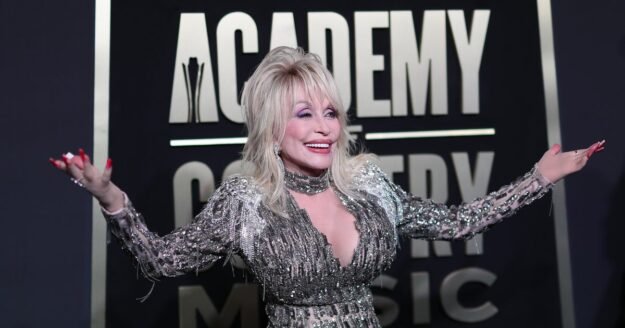
Save for a few public appearances in 2026, including the opening of her own truck stop in Tennessee in June, Parton remained largely out of the spotlight, choosing to appear virtually in pre-recorded segments for the announcement of a new roller coaster at Dollywood and to accept awards from the Academy of Country Music and the Americana Music Association. During her virtual appearance for the Dollywood ride, Parton elaborated on her health issues. “Sometimes I get a little dizzy, and I get dehydrated. And I’m dehydrated. And so my Nashville doctor clipped my wings, saying you ain’t traveling this week,” she said.
Even so, Parton remained busy behind the scenes, especially in overseeing the construction and 2026 opening of her Nashville hotel, SongTeller, which included her Life of Many Colors Museum.
“Everybody has a purpose,” Parton told Rolling Stone in 1980. “Lots of people don’t ever really find it, but I was luckier than a lot of people. I was born the fourth in a family of 12, so I was kinda independent and really didn’t have a lot of things pulling at me. I was always kinda free to think, and I had the opportunity to do more than I realized for a long, long time.”
In her later years, Parton, keenly aware of her own legacy, began recording vocal parts to many of the hundreds of yet-unreleased songs she wrote throughout her career with the goal of leaving a body of work to be released once she dies. “Any producer anywhere in the world, when I’m gone, they could take my songs, just the click track and my vocal and build a complete arrangement,” Parton said in 2019. “That will go on forever.”
“At the end of the day, I hope that I will be remembered as a good songwriter,” Parton wrote the next year, in 2020. “The songs are my legacy.”
You may be interested
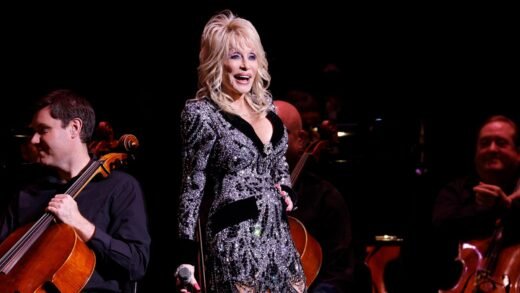
Watch Dolly Parton Sing ‘Celebrate the Dreamer in You’ at Last Show
new admin - Aug 25, 2026[ad_1] The music world was dealt a devastating blow today when word came down that Dolly Parton has died at…
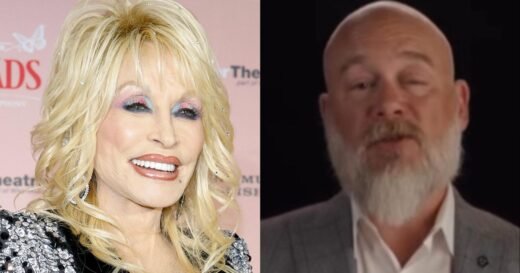
Dolly Parton's nephew announces her death in social media video
new admin - Aug 25, 2026Dolly Parton, legendary singer-songwriter, actress and philanthropist, has died at 80. Her nephew announced her death on Tuesday in a…

Browns Making Another QB Error? 7 Takeaways From Week 2 Of The Preseason
new admin - Aug 25, 2026[ad_1] NEWYou can now listen to Fox News articles! Two weeks of preseason games are in the books, and we're…