

Robin Wall Kimmerer on the wonders of nature

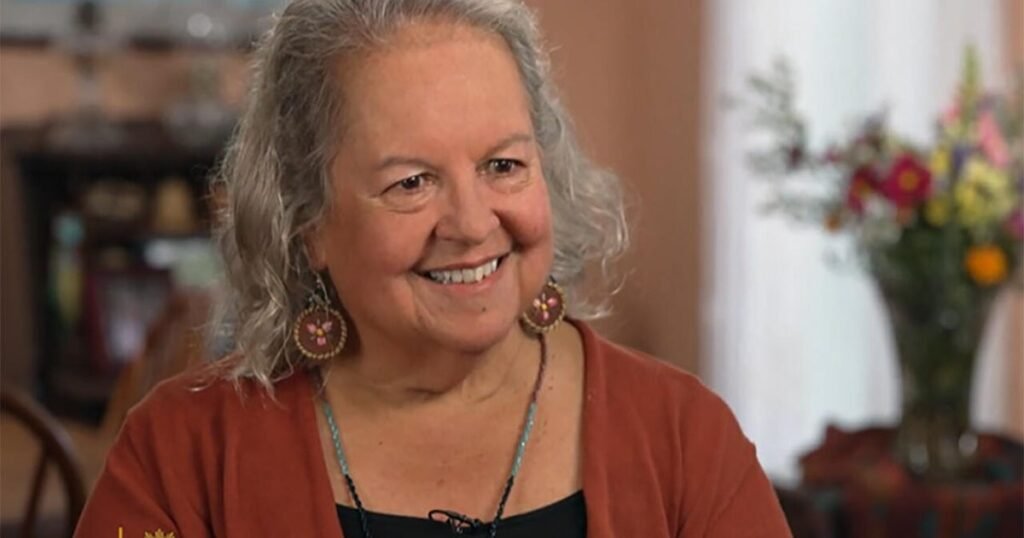
“A sweetgrass braid is meant as an emblem, a marker, a metaphor, if you will,” said Robin Wall Kimmerer. “We are committed to braiding Mother Earth’s hair, i.e., we are committed to helping her be at her best.”
Kimmerer’s book, “Braiding Sweetgrass: Indigenous Wisdom, Scientific Knowledge and the Teachings of Plants” (published by Milkweed Editions), was published in 2013. Through word of mouth, seven years later, in 2020, it made the New York Times Bestsellers List, and (except for one week) has been there ever since. It has sold more than two million copies.
“What I have tried to do is give voice to plants, to give voice to the land,” she said. “And I found that people were listening. That felt for me like this deep obligation to continue to raise my voice, to advocate on their behalf.”
CBS News 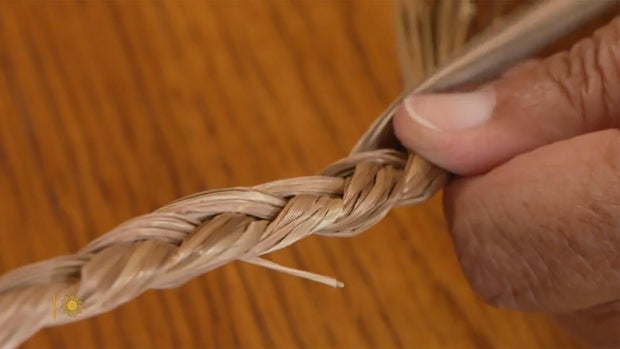
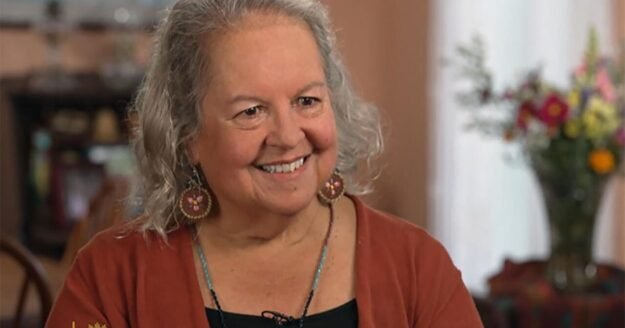
Mother, grandmother, Ph.D. botanist, university professor, member of the Citizen Potawatomi Nation – Kimmerer’s world view is the sum of all those pieces of who she is.
On her own land, outside Syracuse, N.Y., she took me on an ecological show & tell, among the New England asters and goldenrod. “Look at that color combination,” Kimmerer said. “I love how the gold, the goldenrod matches the center of the New England asters.
CBS News 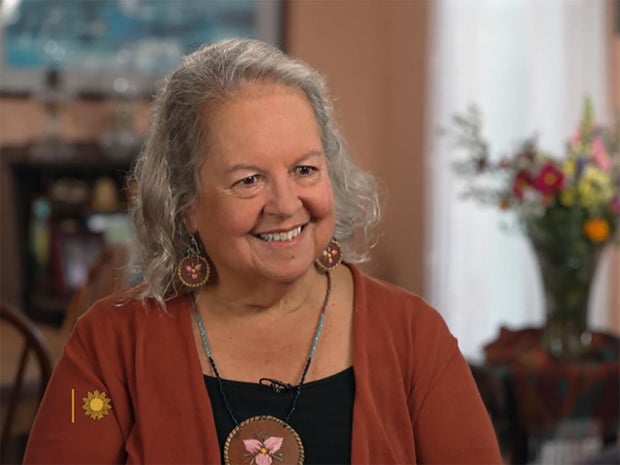
“I’ve used these for a long time as plant teachers,” she said, “to really think about complementary colors, and for me, complementary knowledge systems of Western scientific knowledge and Indigenous knowledge.”
Kimmerer introduced us to a tree she calls Grandmother Maple, or Nokomis Anenemik. “She is probably 200, 250 years old, and she is of course not going to be here forever, and so I planted her a companion – a basswood, or linden tree.”
CBS News 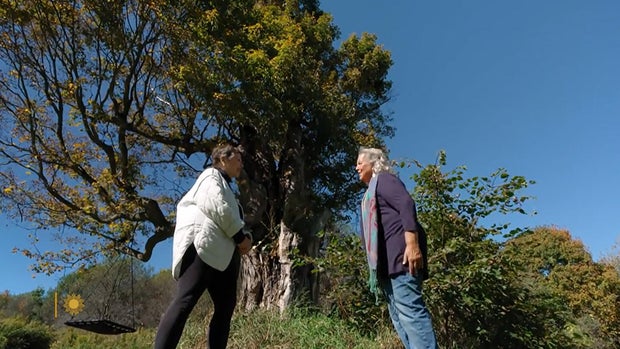
Why not another maple? “Maples are probably going to be leaving us as climate chaos ensues,” Kimmerer said. “And so, I wanted the replacement tree to be someone who could withstand the rigors of climate change.”
Notice she refers to “Grandmother Maple,” and to the replacement tree, as someone, not something. “To me, they’re persons,” she said. “They’re photosynthetic beings. They’re my relatives.”
She’s launched a campaign called Plant Baby Plant – her effort to get people to plant trees. She also passes on the stories of trees to a group of Indigenous kids in Northern Michigan. Kimmerer wants to start them young, showing respect for nature, and gratitude for the Earth’s gifts.
Here, along the shore of Lake Michigan last August, she greets the water. “The joy of connection,” she said, “is the joy of being alive.”
CBS News 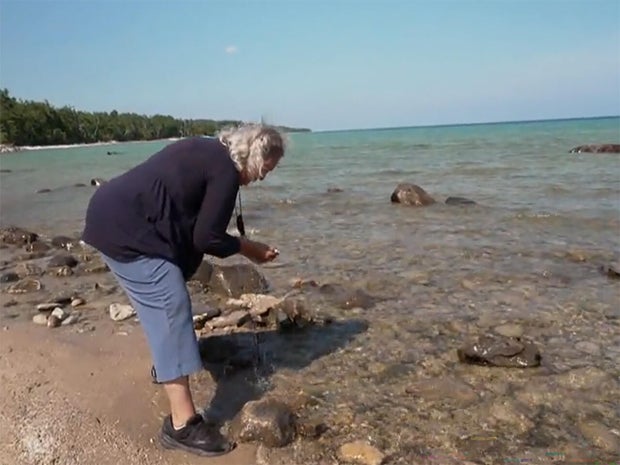
Kimmerer tries to pair events involving Native communities with her book events, like one held a day later, in Traverse City, Michigan, where she told her audience, “The way that I like to talk about economic thinking, grounded in Indigenous principles, as I understand them, and natural law, is this notion of the gift. Let’s take water. I’m going to sell water. How can you sell what you don’t own? Well, hello capitalism! To me, that is corruption. These are our gifts.”
Scribner 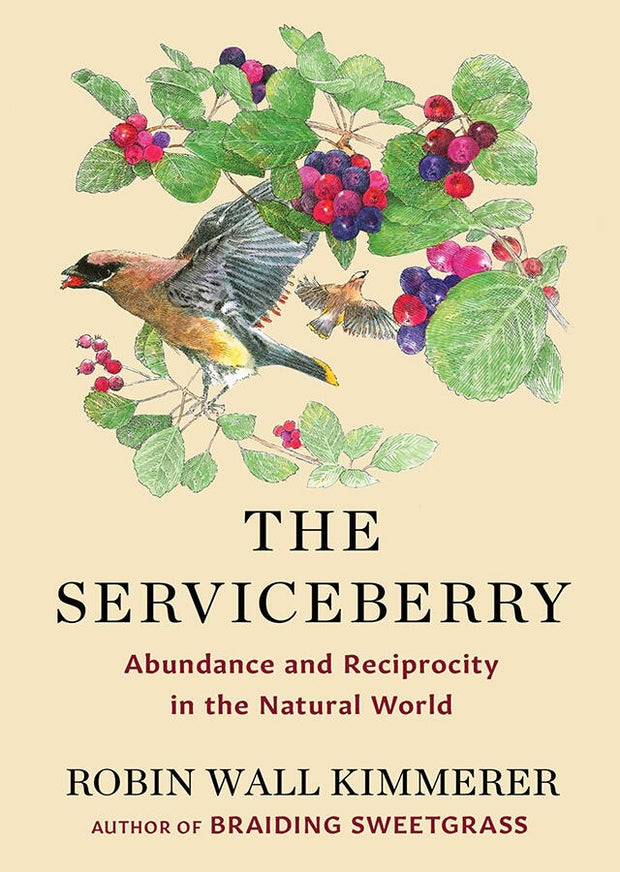
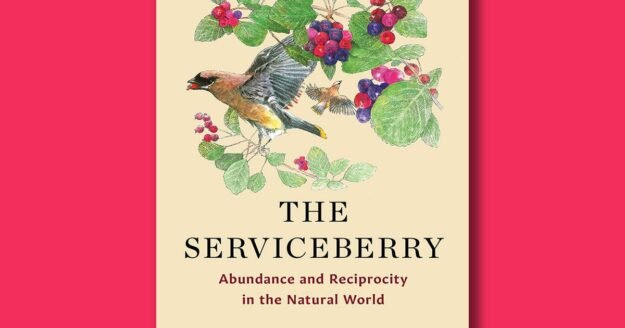
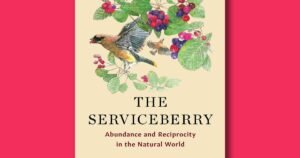
Which is what her recent book, “The Serviceberry: Abundance and Reciprocity in the Natural World” (published by Scribner), is about. It’s sold more than 400,000 copies since it came out at the end of 2024. She writes:
“This abundance of berries feels like a pure gift from the land. I have not earned, paid for, nor labored for them. There is no mathematics of worthiness that reckons I deserve them in any way. And yet here they are — along with the sun and the air and the birds and the rain, gathering in the towers of cumulonimbi. You could call them natural resources or ecosystem services, but the Robins and I know them as gifts. We both sing gratitude with our mouths full.”
They go by many names, among them saskatoons, juneberries, serviceberries. They look like fat blueberries, but taste more like apples.
Kimmerer said, “Many traditional societies have operated with gift economies where you say, well, what do I have in abundance? It’s too much for me. I’m going to share it with my neighbors. The currency of a gift economy isn’t money, it isn’t a commodity; it’s gratitude. It’s respect, and reciprocity. The more you give it, the more it multiplies; the more lives it supports.”
Her message may sound like a religion, and her writing like poetry, but what Robin Wall Kimmerer really wants is that her readers don’t miss her point: “I wanted to be sure that they understood the radical proposition which is baked into these stories, which is to model ourselves after the way that nature works.”
When it’s suggested that what she has written, in conventional Western thought, is incredibly subversive, Kimmerer replied, “I mean it to be so. Because what is dangerous to life on the planet, to our well-being at this moment, is the status quo, is business-as-usual of taking, taking, taking from the Earth without ever giving back.”
CBS News 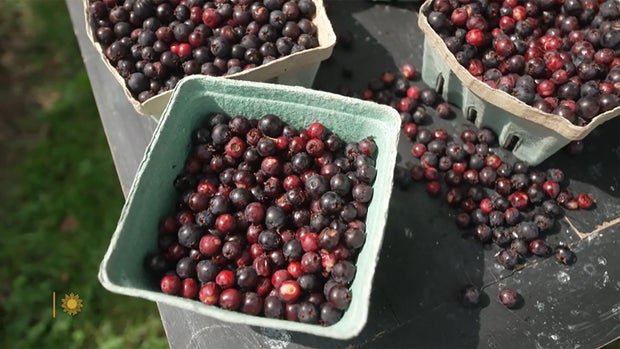
READ AN EXCERPT: “The Serviceberry” by Robin Wall Kimmerer
For more info:
- robinwallkimmerer.com
- “The Serviceberry: Abundance and Reciprocity in the Natural World” by Robin Wall Kimmerer, illustrated by John Burgoyne (Scribner), in Hardcover, Large Print Trade Paperback, eBook and Audio formats, available via Amazon, Barnes & Noble and Bookshop.org
- Plant Baby Plant
- Grand Traverse Band of Ottawa and Chippewa Indians, Peshawbestown, Mich.
- Little Traverse Bay Bands of Odawa Indians, Harbor Springs, Mich.
- Little Traverse Conservancy, Harbor Springs, Mich.
Story produced by Aria Shavelson. Editor: Jennifer Falk.
You may be interested

We’re All Going to the World’s Fair is an intimate coming-of-age horror film
new admin - Aug 23, 2026Jane Schoenbrun’s latest film, Teenage Sex and Death at Camp Miasma, is making a splash in theaters right now. So…
Book excerpt: “The Serviceberry” by Robin Wall Kimmerer
new admin - Aug 23, 2026Scribner We may receive an affiliate commission from anything you buy from this article. Robin Wall Kimmerer, an Indigenous botanist,…

Wisdom From the Late Music Mogul
new admin - Aug 23, 2026[ad_1] The famed label boss was also a world-class adviser on all manner of topics, as friends and fellow music-makers…