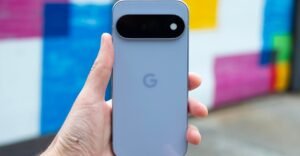




The Pixel 11 isn’t the best Pixel of 2026, but it’s the smartest buy

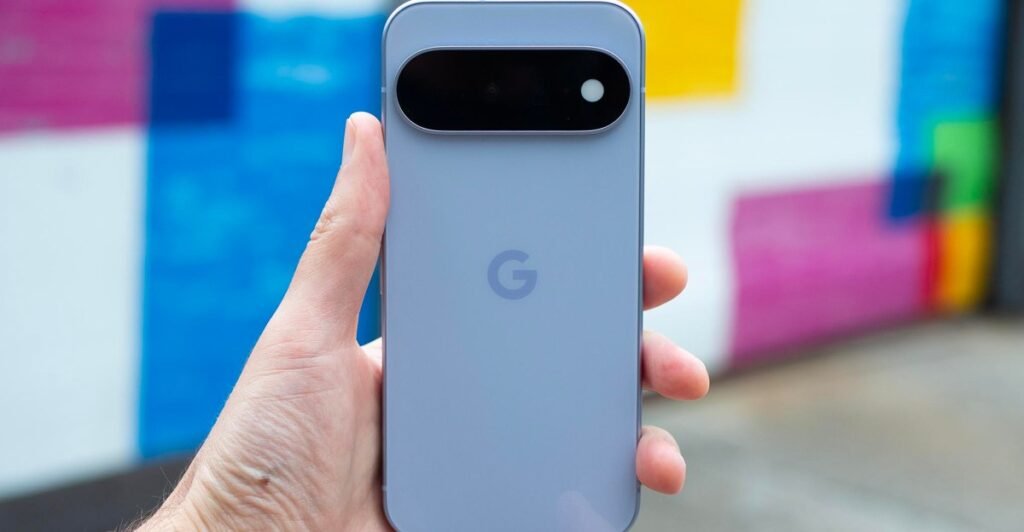
It’d be easy to overlook the Pixel 11. Want the best cameras? The Pixel 11 Pro is your answer. Want the best bargain? The Pixel 10A is still a great deal.
But the Pixel 11 might be the sweet spot in Google’s lineup this year. With 12GB of RAM and 256GB of storage, it delivers the same performance as the base Pixel 11 Pro for $899 — $200 less. And while it’s $400 more than the Pixel 10A, it has a faster processor, more RAM and storage, Qi2 charging, and a telephoto lens.
It’s also the cheapest way to experience what’s actually new about the Pixel 11 series. With the hardware basically unchanged from the Pixel 10 except for new colors and a thinner camera bar, the spotlight this year has shifted to software, specifically features that aim to take full advantage of what most Pixel fans like about their phones: the cameras and special features that make the phones just a bit more helpful.
Last year, we said Google’s Pixel 10 was priced fairly at $799, and that it’d be greedy for buyers to expect more from it. Well, RAMageddon happened, and everyone’s prices went up. The new Pixel 11 starts at $899 and has mostly the same specs. It adds a few exclusive software features that mostly make up for it and doubles the base storage. I guess it’d be greedy to expect much more from this one, too.


$899
The Good
- Great design
- Wireless charging boosted to 25W
- Exclusive camera features are mostly fantastic
The Bad
- Very few gen-to-gen hardware improvements
- $899 is a lot even with double the starting storage
- Proactive Assistance isn’t worth upgrading for yet
The Pixel 11 looks, feels, and performs similarly to the $1,099 11 Pro. The Pro has a brighter, higher-resolution screen and much more powerful ultrawide and telephoto cameras, but the 11 is just as good in nearly every other way. It has the same Tensor G6 processor, and it even has the same amount of RAM as the base model Pro phone (though the more expensive Pro configurations have 16GB). In day-to-day use, I didn’t notice any performance issues owing to the smaller amount of RAM on the 11, though it’s possible that the newer processor balanced it out.
Google didn’t hold back any of the software features from this model, either. As someone who doesn’t upgrade their phone unless they have to (I’m still very happy with my Pixel 9 Pro), I was skeptical that some of the phones’ most intriguing new camera features — Camera Looks and Magic Capture — would be enough to temp me. Unfortunately for those like me who are holding off on upgrading for as long as possible, both features are rad.
Like last year, the 11 has a 48MP main camera, 13MP ultrawide, and 10.8MP 5x telephoto, all of which are smaller and lower resolution than the sensors on the Pro phones. My Pixel 9 Pro’s wide and ultrawide lenses are roughly on par with the 11 Pro’s, and quite a bit more capable than the Pixel 11’s. But in the past week of testing, I don’t miss them as much as I thought I would. Camera Looks in particular helped me have more fun shooting with a Pixel than I have in years. It’s satisfying to quickly swap between different sensor-level presets, and they can make a big impact on how a photo turns out.

I’ve been a Pixel user since 2017, going from the 2 to the 3 to the 6 to the 9 Pro, almost entirely because of the cameras. I trust them to take great shots quickly and with little effort. I even brought the Pixel 2 on my honeymoon trip instead of a DSLR, and no, I don’t regret it all these years later. If you’re a serious phone photographer who spends time composing every shot, you’ll probably want to go for the Pro, but for more casual photographers like me, the quality difference isn’t that noticeable, especially with Camera Looks applied. Camera Looks has even encouraged me to slow down sometimes to put a little more effort into my composition.
Camera Looks seems like Google’s realization that the Pixel’s default vibrant HDR-drenched look isn’t the best choice for every photo. Now, it’s easy to switch to the bold, slightly more muted “Digi” or the black-and-white “Black Tie” styles when you want to take a more impactful photo. If you like one of the Looks enough to make it your default shooting style, you can lock it in. And it’s easier to make adjustments on the fly, thanks to the new quick access dials you can pin to the viewfinder. You can add dials for exposure, color temperature, and shadows.


Magic Capture — another camera feature exclusive to the 11 series — is genuinely useful. The hybrid camera mode records a video and intelligently plucks hi-res photos and video clips from it, and I used it to capture a bunch of little moments with our two-year-old at the beach and at parks. It’s convenient to have a setting that can capture the unexpected without missing a beat. You can also manually capture photos while it’s recording. However, the photos are the highlight, not the video (the resulting video looks choppier than a standard video, as if it lacks image stabilization; it doesn’t seem like it’s meant for consumption). I’m more the type who’d like to shoot individual photos, as it feels great to happen upon a spectacular shot. But the AI does a good enough job at capturing little moments in the action.
Another new software component available only on the Pixel 11 lineup is Gemini’s Proactive Assistance feature. It’s meant to handle more of the grunt work of using a phone for things like managing calendars, making reservations, and buying groceries. To actually have it do things for you, you need to give the agentic AI permission (it’s not on by default) to make changes within an array of apps, ranging from Google’s productivity suite to apps like OpenTable, Instacart, Google Messages, and more. It’s partially helpful, but like an intern that gets just enough wrong that you just feel better doing it yourself.
In my back-and-forth text-a-thon with David Imel, who reviewed the 11 Pro, Proactive Assistance was more miss than hit. One of the features Google advertises is an OpenTable integration that pops up a Gemini chip to book a restaurant reservation if it sees a relevant message. We could only get it to work by being as specific and formal as possible, including the restaurant’s full name and the specific day and time. That’s not how most people type to each other.

Here’s another example of Proactive Assistance in action: I was able to order groceries through my grocery list in Google Keep, but only after I figured out some unstated rules. After I enabled access to both Google Keep and Instacart in Gemini’s settings, I had to adjust the title of my Google Keep list to include “Instacart” (so much for being able to use natural language). Afterward, the feature quickly connected me with a list of nearby retailers that could fulfill my order, just like it does in the Instacart app. Proactive Assistance is intriguing, but I hope it gets better. You can read more about the feature’s quirks in David’s review; for now, it’s not worth upgrading for.

When I bought the Pixel 9 Pro two years ago, I picked the Pro because it was much better. It had a telephoto camera, more RAM, and more special features than the standard model. And its price came in under $1,000.
This year, that’s all changed. The standard Pixel 11 now has a telephoto lens and just as much RAM as the $1,099 Pro, it’ll get all the same software features, and it’s now the one with a price under four digits.
If you’re serious about phone photography, the 11 Pro is probably worth it for the bigger camera sensors. However, as someone who bought the Pixel 9 Pro two years ago, the Pixel 11’s blend of good-enough hardware and compelling software feels Pro enough to me.
Photography by Cameron Faulkner/The Verge
You may be interested

Jack White Quotes 1980s Rap Song in Charley Crockett Kerfuffle
new admin - Aug 19, 2026[ad_1] Instagram post quoting "The Duke" follows comments from Crockett who said he lost respect for White after Twin Temple…

The DOJ official behind a record number of federal monitors going to midterm polling sites
new admin - Aug 19, 2026The Department of Justice plans to send out a record 1,000 federal monitors to polling sites across the U.S., a…

Inside the Viral Quebec Band’s American Takeover
new admin - Aug 19, 2026[ad_1] Becky drove up from San Diego without a ticket. She parked near the Teragram Ballroom in downtown Los Angeles…