
Lawsuit Seeks to Vacate Rule Ending of Duration of Status


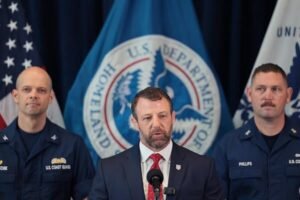
In response to the lawsuit, the Department of Homeland Security said, “The performative outrage is incredible.”
Michael M. Santiago/Getty Images
Eight organizations representing the higher education and journalism sectors have sued the U.S. Department of Homeland Security over its rule limiting how long international students and journalists can stay in the country, which is slated to go into effect Sept. 15.
The lawsuit comes a month and a half after the highly controversial rule was finalized, altering a policy that had stood for nearly half a century that allowed international students to stay in the U.S. until they completed their program of study. Instead, students will be limited to four years unless they receive an extension. In the final rule, DHS said the cap is intended to prevent students from staying in the U.S. indefinitely, leading to overstays and national security concerns.
The complaint, filed Tuesday in the U.S. District Court for the District of Massachusetts, argued that DHS violated the Administrative Procedure Act, the statute that governs federal agencies, when it issued the final rule. The plaintiffs claim the department did not complete a thorough analysis of the potential impacts of the rule, failed to substantively respond to negative public comments and did not consider other possible solutions to address the concerns related to overstays, among other violations.
“DHS’s cost-benefit analysis is fundamentally defective,” the complaint reads. “The agency acknowledged billions of dollars in quantified costs over ten years, but listed zero quantitative benefits … And DHS also refused to quantify—and therefore largely disregarded altogether—the greatest harm of the Final Rule: the foreseeable decline in international student enrollment.”
NAFSA: Association of International Educators and the Presidents’ Alliance on Higher Education and Immigration, two organizations that have advocated against the rule since it was put forth last year, are among the plaintiffs on the case. Miriam Feldblum, president and CEO of the Presidents’ Alliance, said the central theme of the complaint is that DHS “did not engage in the reasoned decision-making that’s required by the APA.”
The rule drew massive scrutiny from the international education community. Higher education institutions argued that many students have legitimate reasons to study in the U.S. for more than four years and that extension requests would be burdensome both to institutions’ international student services offices and U.S. Citizenship and Immigration Services, which will be responsible for evaluating the applications. The proposal received 22,000 public comments, the majority of which opposed the change.
In a statement to Inside Higher Ed, a DHS spokesperson wrote, “The performative outrage is incredible. Where was the outrage when foreign nationals were abusing the system, violating the terms of their student visas, and making a mockery of our immigration laws? If the media really cared about legitimate international students, they would be thanking President Trump for cracking down on the rampant fraud to ensure only those truly intending to study in the United States are given the privilege.”
The plaintiffs are asking the judge to vacate the rule and are seeking a preliminary injunction to prevent the rule from taking effect. In the motion requesting the injunction, the plaintiffs note that the rule is already affecting institutions and students, with colleges reporting that some international students have withdrawn their fall 2026 enrollment out of concern about the end of duration of status. Other institutions said that the number of applications they received from international students tanked this year.
“The detrimental harm of the rule impacts all institutional types, and the types of harms that are outlined in the declarations … [include] significant economic burdens on institutions,” said Feldblum. “As one of the institutions said, when students don’t come, that’s not a relationship that can be repaired. That is a loss for the institution.”
NAFSA has estimated that declines in international enrollment this academic year could cost the U.S. economy $3.4 billion.
This isn’t the first time advocates have cited the APA when fighting the Trump administration’s actions against international students. Last year, after DHS terminated many international students’ statuses in the Student Exchange and Visitor Information System, a database of information about international students in the U.S., those terminations were reversed in lawsuits that largely hinged on the APA.
You may be interested

Unitree, China robot maker, surges in stock market debut amid AI boom
new admin - Aug 19, 2026[ad_1] HONG KONG — The robotics firm behind China’s famously backflipping humanoids leapt to a remarkable stock market debut on…

'One of the best around' war films on Netflix perfect for Saving Private Ryan fans
new admin - Aug 19, 2026The film focusses on a 'forgotten' battle that took place in the 1960s with the help of the Irish Army…

8/18: CBS Evening News – CBS News
new admin - Aug 19, 2026Watch CBS News New details in Hayden Panettiere's death; Recycling plant explosions kill 2 in Ohio. Source link