

School vaccination rates inch down again to record low as exemptions reach new high

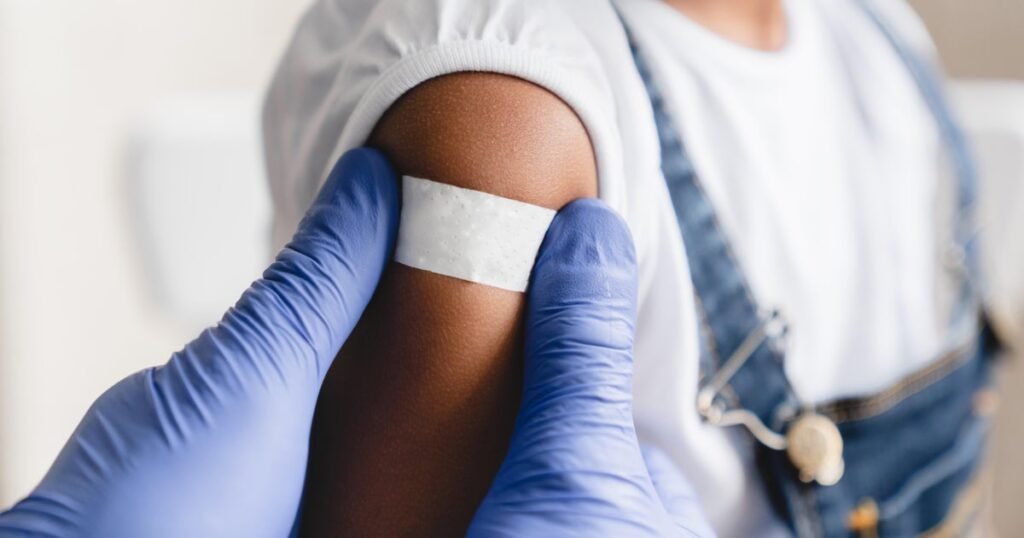
U.S. kindergarten vaccination rates inched down again last year and the share of children with exemptions rose to an all-time high, according to federal data posted Monday.
The fraction of kids exempted from vaccine requirements rose to 4.2%, up from 3.6% the year before. That’s an estimated 155,000 children nationally during the 2025-26 school year.
It’s the fourth consecutive year that the national average exemption rate has reached a new record, and the vast majority are parents withholding shots for nonmedical reasons. Exemptions increased in 41 states and the District of Columbia.
Experts point to turmoil caused by federal health officials.
U.S. Health Secretary Robert F. Kennedy Jr. was a leading voice in the antivaccine movement before President Trump put him in charge of federal health agencies. In the last 18 months, Kennedy and other federal officials have repeatedly tried to revise and reduce childhood vaccination guidance. Earlier this month, Mr. Trump called for revamped childhood vaccination recommendations based on the idea that childhood shots should be spaced out into separate medical visits — which medical organizations say is not supported by research.
“The root cause of this is primarily because there’s so much chaos and confusion in vaccination recommendation systems in the last year or so,” said Dr. James Campbell, of the American Academy of Pediatrics.
The CDC reported that 92.4% of 2025-26 kindergartners got their required measles-mumps-rubella shots, down slightly from the previous year. Before the COVID-19 pandemic, the vaccination rate was 95% — the level that makes it unlikely that a single infection will spark a disease cluster or outbreak.
Vaccination rates also fell for polio, for the combination shot against diphtheria, tetanus and pertussis, and for the first dose of the vaccine against chickenpox.
The rate held steady for protection against hepatitis B. But that’s a vaccine given shortly after birth, and it will take a few years before recent federal efforts to upend infant hepatitis B vaccine recommendations would appear in the vaccination rates of kindergartners, Campbell said.
The vaccination numbers were posted as the U.S. experiences its worst year for measles since 1991.
The numbers indicate that more than a quarter of a million children entering kindergarten are susceptible to measles, said Campbell, a University of Maryland researcher who is chair of the AAP’s infectious diseases committee.
Those at-risk kids are not evenly distributed — concentrations of unvaccinated children are higher in some places than others, which helps explain why measles waves vary in intensity.
The CDC data is coming out as school and health officials across the country are encouraging parents to get their children vaccinated as the school year starts.
“Back-to-school season is an important reminder that protecting our children’s health is both a shared responsibility and a shared goal,” North Carolina Health and Human Services Secretary Dev Sangvai said in a statement. “Vaccines help keep our children and teens healthy and in the classroom.”
In the past, the CDC has released the vaccination coverage data in its flagship publication, the Morbidity and Mortality Weekly Report. CDC officials usually speak to the trends and stress the importance of vaccinations.
But since the Trump administration took office early last year, the agency has posted the data online. This year, the agency issued a three-sentence statement that noted a small decline in vaccination coverage among children entering kindergarten and said: “CDC continues to encourage parents to discuss vaccination options with their doctors.”
Public health officials focus on vaccination rates for kindergartners because schools can be cauldrons for germs and launching pads for community outbreaks.
For years, those rates were high, thanks largely to school attendance mandates that required key vaccinations. All U.S. states and territories require that children attending childcare centers and schools be vaccinated against a number of diseases, including measles, mumps, polio, tetanus, whooping cough and chickenpox.
All states allow exemptions for children with medical conditions that prevent them from receiving certain vaccines. And most also permit exemptions for religious or other nonmedical reasons.
In the last decade, the percentage of kindergartners with medical exemptions has held steady, at about 0.2%. But the percentage with nonmedical exemptions has risen.
According to the CDC data, 17.5% of kindergartners had an exemption to one or more vaccines in Idaho in the last school year. But fewer than 0.5% did in Connecticut.
You may be interested
Lindsay Clancy murder trial puts spotlight on treatment for severe mental illness
new admin - Aug 18, 2026The defense in the Lindsay Clancy murder trial called multiple witnesses Tuesday. Clancy has admitted to killing her three young…

C+C Music Factory Robert Clivilles Sues Freedom Williams for Trademark
new admin - Aug 18, 2026[ad_1] Robert Clivillés, whose last name is one of the two C’s in the name C+C Music Factory, filed a…

DOJ, HHS Antisemitism Investigations Were Predetermined
new admin - Aug 18, 2026[ad_1] A protest encampment at Columbia University, one of the investigated institutions. Stephanie Keith / Getty Images Whistleblowers say the…