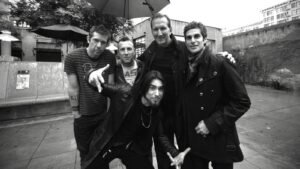



Remembering the Korn, Limp Bizkit, Linkin Park Manager

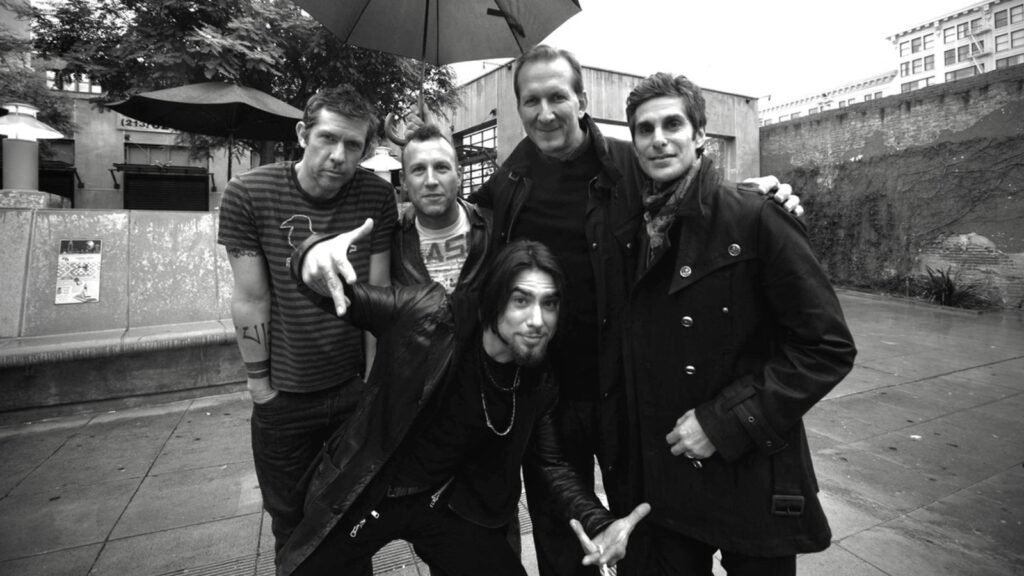
It was August 2002. Korn were headlining the Paredes de Coura festival on a field north of Porto, Portugal. Tens of thousands of kids from across Europe had been camped out for days. The band’s members, road-tested from nonstop touring, were so dialed in that they no longer needed a soundcheck. Imagine that.
What I remember is the faces: sunburned, solemn, ready for battle. When Jonathan Davis bellowed, “Are you ready?????” over the opening bars of “Blind,” the answer no longer mattered. It was coming.
What unfolded could easily have been mistaken for a riot between mortal enemies. What it was, was the closest thing to perfect harmony between a band and an audience I have ever witnessed. The fury of bodies colliding, hypercharged by the fear and loneliness and tragedy of being young, righted itself into something almost breathing and moving in unison. The riverbank shifted under the weight of it. The trees bent. The earth literally moved under my feet.
I was there alone for the management company known as the Firm. Korn was Jeff Kwatinetz and Pete Katsis’s band, but if you signed with us, everyone in that building was your manager. The only difference between me and the kids down front was a laminate. I’d been one of them — fighting for oxygen in a pit — and I never stopped being one of them. Nobody in our building ever did. That was the whole qualification for the job.
Pete Katsis died on Aug. 6 this year. He was 69. He paved the road that took the Korn live show from the Roxy in Hollywood to that field in Portugal, from club band to the world stage as one of the preeminent live rock acts on the planet.
I have never written a word about any of this. Neither has anybody else. Go look — 20 years, one of the loudest companies in the business, and there’s nothing. No oral history, no tell-all, no anonymous former executive airing grievances. There was never a rule. In a town where every story you own gets converted into leverage eventually, this was the one thing nobody ever bargained with. Not even the guys who left screaming, and some left screaming.
I’m saying it now to honor Pete and what we all did together. Any word against one of us was a word against all of us. To understand Pete’s impact is to understand that moment in time, when music and culture ate off the same table. Everybody watched MTV. Everybody waited for Tuesday, the day records were released — in a store, as a physical object. If you wanted the album, you got in a car.
The country was eight months past Sept. 11 and still grappling with what it was going to be. The answer coming back was louder, bigger, together. Spider-Man did $80 million in a weekend, a box-office first. American Idol premiered that summer and was instantly the most-watched program on television. One country, one channel, one weekend, one thing everybody was talking about on Monday. There was a singular feed, we just weren’t using the word “monoculture” for it yet.
And the whole business ran on the reveal. You’d sit on a record for a year. Nobody heard it — not a leak, not a snippet, not a teaser. Then one Tuesday morning it belonged to everyone at once, and by Wednesday it had changed what people said to each other. Music and film were the only two industries on earth that could take over a day. Not sell something on it — take it. That made music 10 times bigger than it was, not because the songs were better, but because the moment was shared.
At the Firm, we were sitting dead center in the middle of it. Linkin Park was the biggest band in the world off Hybrid Theory, still the best-selling album debut of the 21st century. Korn wasn’t a band, Korn was a culture. Limp Bizkit could gather 100,000 screaming kids anywhere you chose on a globe. Snoop Dogg changed how the whole country talked with a single verse. Backstreet Boys sold a million concert tickets in a day, which is not a number about a band — it’s a number about a world where everybody found out at the same hour. Every one of those acts and 25 more were managed out of the same building, on the same floor, by the same 15 people. One week in the fall of 2002, the Firm clients had 19 albums on the Billboard 200 at the same time. Nineteen. One company.
There wasn’t a market research document anywhere in that Beverly Hills office. No data science, no focus group, no strategy team. We were everything for each other. Our weekly staff meeting looked like the galley between races at OTB — one person’s in a suit, another is in yesterday’s clothes and hasn’t been to bed. Somebody’s blasting a rough mix loud enough to do permanent damage, somebody else is screaming to start it over. That was the entire apparatus. Plus a few other wackadoodles banished from labels, serving out their sentences in our nuthouse. There was a closet full of phones people had thrown at the wall and dents in the drywall nobody ever explained. Rules weren’t there to be broken, they were there to be amended — you went at the same exit again and again until it moved. Get caught? So what. Go again. We were all good at what we did. Together we were the greatest of all time.
Making Korn work inside Sony took exactly one relentless true believer: a marketing guy named Al, part lost porn star, part biker, still trapped in 1977, and the biggest pain in the ass alive. He’d follow you into the bathroom and keep pitching while you stood at the urinal. He’d also sit on the floor with a band for hours finding their colors and their fonts, and cry at the mention of his mother, John Lennon, or the Civil War. Guys like that are toast in corporate America. Kwatinetz hired him right out of Sony and made him head of marketing. He bled for the bands.
Michael ran radio promo. He came out of the Jimmy Iovine camp at Interscope. Monday, he was the whipping boy; Tuesday he was God; Wednesday on parole, and every week brought a new expectation of a miracle. The man had nicknames, pet names, codenames, and spoke like Barry White telling a dirty joke. He worked label promo departments like a subway pickpocket, and he always delivered just when spins seemed out of reach.
Entertainment is the only business that still rewards the industry tourist. Nobody hires a chef who can’t cook. Here you can run things without ever knowing how a record gets made — stumble onto a band, hang around, get lucky, ride off into the sunset. That wasn’t us. We didn’t get lucky, we were good. And maybe we forced some of that luck. So what?
Which is where Pete Katsis comes in.
Ask anyone about the best show they ever saw and you’ll get a detailed account of a night decades ago — where they stood, who they went with, moments you never forget. A concert ticket used to be more than just a seat at the venue. It was a contract for that night, bonding band and fan in a relationship that’s uniquely individual, even among thousands of fellow devotees.
But no band keeps that promise alone. It takes a small city of people — trucks, riggers, lights, sound, a promoter in a town nobody can find on a map. And somebody has to build that city, move it, and have it working by dark, every night, in a different country. Pete Katsis enforced that contract, for artists and fans, tens of thousands of times.
And in a monoculture, that was the whole game. One night, one room, one shot, everybody facing the same direction, barely any video and certainly no stream. That job existed because that world did.
Pete Katsis was really a translator. A record is a private thing somebody makes in a room. A show is the public one, and for most kids the show is the artist. How do you tell the Limp Bizkit story to a 15-year-old boy without saying a word? Lights, staging, the walk-on, how long a room stands in the dark before anything happens.
He could hear it. Pete knew when something was missing sonically and when it was missing visually, which meant no crew ever tried to tell him the room was fine. He’d be there the whole week of rehearsals — set, sound, sightlines — before anything could go wrong. That’s the real portrait. Not the saves, but the weeks nobody remembers because nothing bad happened.
Pete could turn warrants into wine. He once worked half a U.S. consulate to move an artist who’d lost their passport out of one country into another, 18,000 people already inside the building. He did it from his cell phone, from a club in Los Angeles, while holding down a table of nine, and nobody at that table ever knew there was a problem.
He wasn’t cool. He was ice cold.
And he was a giant. Six-foot-six, north of 350 pounds. In a building where people survived by shouting over each other, the biggest man was the quietest. Find a single picture of Pete online where he isn’t wearing a backstage pass. He was always at a show.
That was the manager’s job. Not to be seen onstage, and not to be called out in the song. Nobody bought a ticket to watch you. These days, some “managers” have more followers than their clients. They sign autographs, talk about personal brands, and have their own podcasts. “Blasphemous arrogant pricks, the lot of you,” I imagine Pete saying.
Of course the Firm couldn’t last. And here’s the thing about a company that carried water for culture: When the culture comes apart, so do you, on exactly the same schedule.
MTV worked out it could make more money filming kids arguing in a house, and the one hour a day when everybody looked at the same thing was over. Napster came, then the iPod, and records stopped being objects you drove somewhere to buy — so Tuesday stopped meaning anything, and the reveal went with it. We were built for that reveal. Then Spotify changed what a song was for. Not an event — a slot, arriving alone at a different hour for every listener, into no moment at all. The table broke into 10,000 smaller ones, each set for one person, and everything we were good at stopped mattering in the same order.
The Firm wasn’t built around a vision for a slow and steady growth. That was for someone else .We were built for banana day in the monkey cage-level chaos and ripping the doors off the hinges. As the walls of culture fell, there was nothing left to rip them off of.
If you’d asked Pete what he did, he’d say he made weapons of war for the gods. That was far too modest. He made the live music experience at the turn of the millennium feel like the closest thing to God. For Jeff Kwatinetz, it wasn’t about the power, it was the faith. Tens of thousands of people showing up believing that something was going to happen to them that night, and handing you that certainty. That’s what I miss most. Not the money, not the deals, not the shows themselves. The faith of a crowd.
When Pete died, the phone just started ringing. Just like on any Tuesday at the Firm when the weekly sales numbers would come in. The whole scattered gang of mismatched orphans, contrarians, and troublemakers, people who haven’t worked in the same building in 20 years, calling each other like we’d hung up 10 minutes ago. Our covenant remained unspoken.
We lost one of the sentinels of the gift. It’s no wonder words were never needed.
Jeff Rabhan was a partner at the Firm from 2000 to 2006 where he worked with Kelly Clarkson, Michelle Branch, and DMX, among others. He served as chair of NYU’s Clive Davis Institute of Recorded Music from 2010 to 2021.
You may be interested
Indiana Fever covers spread over injury-hit Dallas Wings, per pick
new admin - Aug 14, 2026[ad_1] NEWYou can now listen to Fox News articles! The WNBA is taking center stage today for the betting market.…
EDM Johnny Cash, But No Country
new admin - Aug 14, 2026[ad_1] File this under things that don’t surprise us in the least: Secretary of State Marco Rubio has rather batshit…
Luigi Mangione says he will plead guilty in federal case
new admin - Aug 14, 2026Luigi Mangione told a judge Friday he is prepared to plead guilty in his federal case at a court appearance…