



How Spain’s migration surge tested E.U. border policy

Leaders of governments with stricter migration policies have criticized Sánchez. Denmark and Italy, for example, accused Spain of not being able to secure the E.U.’s only border with Africa.
How has Spain responded?
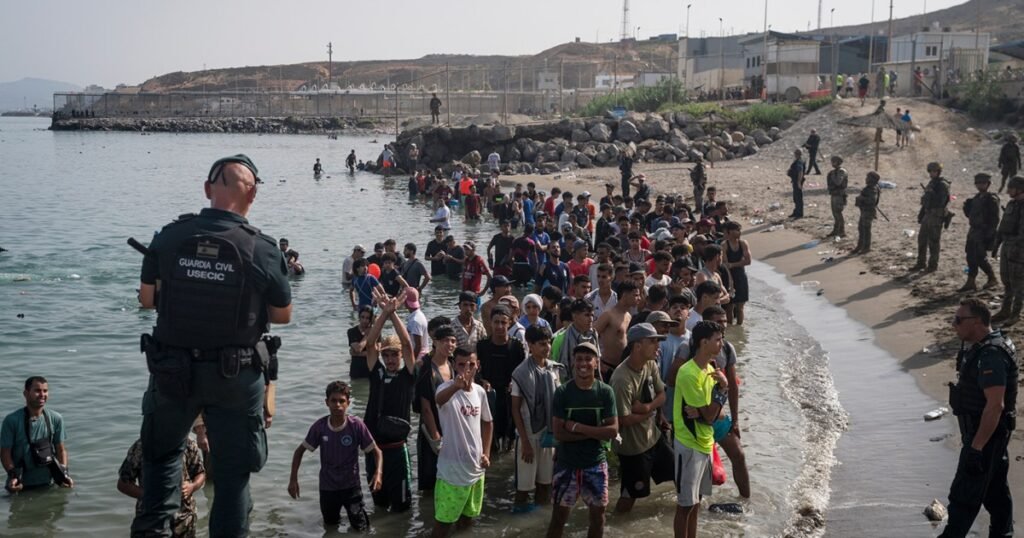
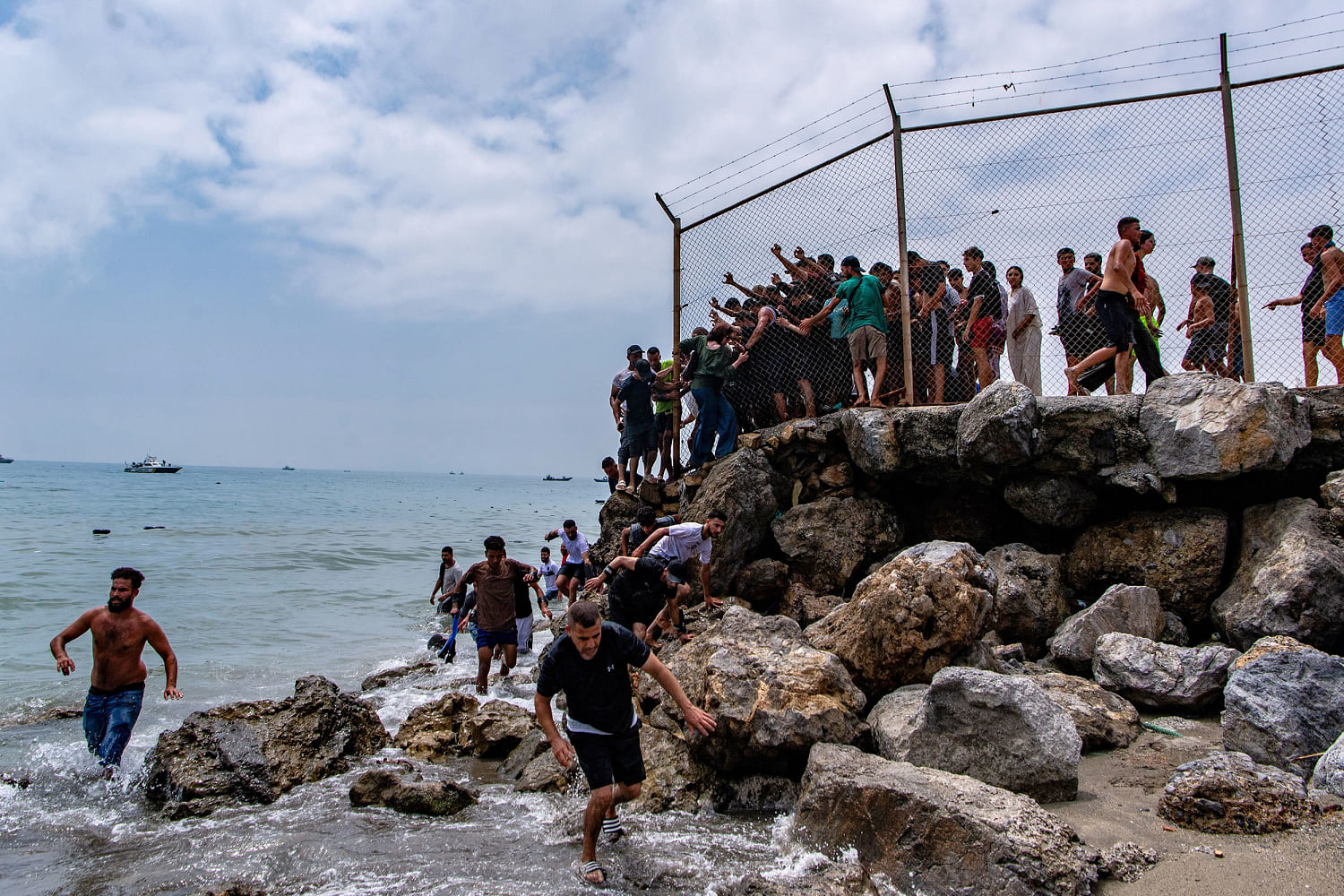
Spain deployed armed forces and police to Ceuta, where migrants were met with water cannons and tear gas and escorted back across the border. Ceuta’s leader declared that the exclave was experiencing a humanitarian and security emergency. The city’s official migrant reception center, already overcrowded before the surge, continued to operate above maximum limits.
Sánchez traveled to Ceuta on July 31. Speaking to reporters, he called the migrant surge “a violation of Spain’s territorial sovereignty” and defended his administration’s migration policy, asserting that migrant smugglers’ misinterpretation of the Supreme Court’s ruling was the trigger.
Shortly after the influx ended, Spain installed a 1640 foot long floating sea barrier off the coast of Ceuta to deter similar crossings.
Roughly 1,100 unaccompanied minors who came to Ceuta before and during the latest wave are still in the city, according to the local government. The Spanish government approved $29 million for Ceuta to support the minors, many of whom had to find shelter in warehouses or sleep on the streets due to overwhelmed reception centers.
What are the broader implications for Europe’s migration policy?
Experts say the situation in Ceuta was the first real test of the E.U.’s new Pact on Migration and Asylum, which is intended to move the bloc toward a more coordinated system for managing migration. That some member states opted to impose unilateral Schengen suspensions rather than rely on the pact’s new mechanisms is “a sign that more time may be needed to build trust in the new system,” Fernández said.
In recent years, irregular migration has become a third rail of European politics, said CFR’s Kupchan, bolstered by sudden, massive surges that have reignited debate over the issue. A day after the migrant flood into Ceuta, twenty-two of the E.U.’s 27 member states issued a joint letter calling for an “immediate and coordinated European response.”
Several countries have also taken action of their own. Italy suspended its Schengen open-border policy with Spain on July 31, reinforcing air and sea border patrols, while France announced a five-fold increase in the number of police stationed at its border with Spain. Portugal also declared more controls at its southern land and maritime borders.
You may be interested

'Unwanted' kitten rescued from impossible spot needs family to love
new admin - Aug 10, 2026A tiny kitten who was found trapped inside a drainpipe and rescued after hours is now looking for a loving…

Brooks Koepka calls his season pathetic after missing FedExCup Playoffs
new admin - Aug 10, 2026[ad_1] NEWYou can now listen to Fox News articles! Brooks Koepka was quite hard on himself after his first year…

Fernando Mendoza, Curt Cignetti on what was behind Indiana University's winning streak
new admin - Aug 10, 2026Indiana University football was known for losing. That changed with the recent historic season, when head coach Curt Cignetti and…