




Law Schools Are Asking the Wrong Question About AI (opinion)

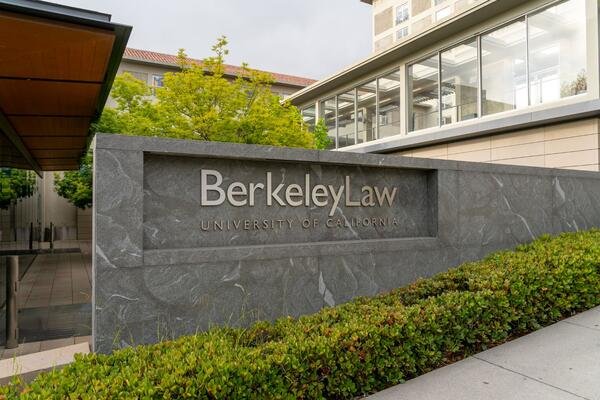
As has been widely reported, two of the country’s most influential law schools have adopted markedly different approaches to generative artificial intelligence.
The law school at University of California, Berkeley, implemented a highly restrictive AI policy, broadly prohibiting students from using generative AI in graded work, including for “conceptualizing, outlining, drafting, revising, translating or editing” purposes, and banning its use entirely during examinations.
The University of Chicago Law School took a different approach, banning electronic devices in core first-year classes, with plans to introduce supervised AI use later in the curriculum, in electives and upper-level classes, after students have developed foundational legal skills. Chicago is also piloting a hybrid approach to its first-year legal research and writing course that “will treat writing without AI as the foundation and will layer writing with AI onto it.”
The discussion has been framed largely as a choice between two competing philosophies: Berkeley’s prohibition-based approach versus Chicago’s more gradual integration of AI into legal education. That framing misses the larger issue. The main challenge facing legal education—and professional education more broadly—is not simply a question of academic integrity. It is whether customary methods of assessing student performance continue to measure what schools believe they are measuring. Both Berkeley and Chicago have developed thoughtful responses to the first question. Neither has answered the second question fully, although it ultimately is the more consequential one.
Academic Integrity and Academic Assessment
Educational integrity and assessment often are discussed as if they were the same issue. They are not.
Academic integrity asks whether students complied with the rules governing an assignment. Did they use unauthorized assistance? Did they properly disclose the tools they used? These are conduct questions, and universities have long experience addressing them through policies, enforcement systems and disciplinary procedures.
Assessment asks a different question. Does successful completion of an assignment still demonstrate what the law school claims it does? A student may fully comply with every AI policy and still complete an assignment that does not reliably demonstrate professional competence. Conversely, students may use AI appropriately and demonstrate their own knowledge and judgment if the assessment requires them to explain, defend and apply their reasoning.
That distinction matters because it determines the type of solution an institution pursues. If the problem is primarily an academic integrity issue, the logical response is to regulate AI use more carefully. If the problem is assessment, the response is fundamentally different. The challenge is to design assignments that continue to demonstrate professional competence regardless of the technological tools that students use.
Different Policies Built on Similar Assumption
Berkeley’s policy reflects understandable concerns: Faculty members routinely encounter fabricated citations and other well-documented shortcomings of generative AI. The school’s response was to construct a comprehensive integrity framework that prohibits AI at virtually every stage of graded writing, with only narrow exceptions. As an integrity policy, the approach is coherent. It creates clear expectations, minimizes ambiguity and seeks to preserve confidence in student work.
The policy, however, does not resolve the wider assessment question. Its underlying premise is that if AI can be kept outside the assessment process, traditional assignments will continue to measure what they have always measured. That assumption becomes increasingly difficult to sustain as AI becomes more capable and as legal employers increasingly expect graduates to understand how to use these tools responsibly.
Chicago starts from a different premise. It recognizes that AI is becoming part of legal practice and that law schools must prepare students to use it responsibly. At the same time, it seeks to ensure that students first develop the foundational skills on which good legal judgment depends. Even so, Chicago ultimately faces the same unresolved question. Once students begin using AI in upper-level courses, the law school still must determine how to assess their legal reasoning rather than merely the quality of the documents they submit. Delaying AI use shifts the timing of that question. It does not eliminate it.
The two schools therefore differ more in strategy than in their underlying assumptions. Both approach AI primarily as something that must be regulated. Neither has demonstrated fully how legal education should evolve once AI-assisted work becomes an accepted part of professional practice.
Redesigning Assessment
If the challenge is assessment rather than academic integrity, then the question changes. Instead of asking whether students used AI, faculty should ask whether an assignment still demonstrates what they want to know about the student’s knowledge. Chicago has begun moving in that direction by encouraging new forms of teaching and assessment, including a new oral-discussion requirement for substantial research papers. Those efforts recognize that AI requires more than new rules. It requires new ways of evaluating learning.
The most effective assessments will focus less on the documents students submit and more on their ability to explain, defend and apply their reasoning. With such assessments, it will quickly become apparent which students have relied on AI without understanding their work. Students who used AI appropriately while exercising sound legal judgment also would distinguish themselves. That ultimately is what law schools should be measuring.
A Governance Question
Once the issue is understood in these terms, an equally important institutional question arises: Who decides how legal education should respond?
Universities often respond to technological disruption by adopting new rules governing student conduct. Rules are relatively easy to draft and revise. Reconsidering what a professional degree certifies is considerably more difficult because it requires faculty to examine long-standing assumptions about curriculum, assessment and professional competence.
Those questions properly fall within the faculty’s responsibility for the curriculum. Determining what students should know, how they might demonstrate that knowledge and what constitutes professional competence historically have been at the core of shared governance. By contrast, administrators, general counsels and student conduct offices play essential roles in developing honor codes. They are not positioned to determine how legal reasoning should be taught or assessed.
AI Policies Cannot Stop With Students
One striking feature of the current debate is that nearly every institutional AI policy focuses on students. Much less attention has been given to faculty use of generative AI, even though professors increasingly are using it to prepare lectures, develop examinations, create grading rubrics, provide written feedback, conduct research and carry out administrative work. Universities generally have treated AI as an academic integrity issue for students while simultaneously embracing it as a productivity tool for faculty.
That distinction ultimately may be justified, but it cannot simply be assumed. As faculty increasingly rely on AI in designing and evaluating student work, universities will need to articulate the principles that govern those uses as well. The question is not whether faculty should ever use AI. It is which aspects of academic judgment may be supported appropriately by AI and which should remain the responsibility of the faculty member. Students and faculty occupy different roles and should not be governed by identical rules. They should, however, be guided by common principles of transparency, professional responsibility and accountability.
The Debate Law Schools Should Be Having
The point is not that academic integrity has become unimportant. Fabricated citations remain a serious problem, and law schools have an obligation to ensure that graduates understand their professional responsibilities to clients and to the courts.
The larger challenge, however, extends well beyond citation accuracy or AI disclosure requirements. Every professional school, including medicine, engineering, business, public policy, journalism and architecture, will soon confront the same question. Institutions can continue to devote increasing attention to regulating how students produce assignments, or they can redesign assessment so that graduates demonstrate the professional judgment their degrees are intended to certify, regardless of the technological tools available to them.
Berkeley and Chicago deserve credit for recognizing that generative AI requires a response. The more important question is whether law schools will continue debating how students should use AI or begin reconsidering what a law degree is intended to certify. The professional schools that lead will not be those with the longest AI policies. They will be those that ensure their degrees continue to certify the knowledge, judgment and professional competence society expects of their graduates.
You may be interested

Reality Check: You CAN Afford to Start a Family | Money Moves with Jill Schlesinger
new admin - Jul 30, 2026Most Gen Z and millennials say the cost of raising a child feels financially out of reach and many don't…

Princess Kate’s blouse is perfect for summer and it’s back in stock | Royal | News
new admin - Jul 30, 2026[ad_1] As we head into another weekend of glorious summer sunshine, it’s the perfect excuse to refresh your warm-weather wardrobe…

Recognition as a Lever for Improving Transfer
new admin - Jul 30, 2026[ad_1] Community colleges began as junior colleges, intended to provide the first two years of a bachelor’s degree before students…