


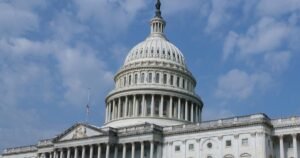

Council handpicked by Trump to gut review process of historic-preservation projects


A federal advisory council filled with Trump appointees is poised to gut a federal review process that assesses the impact of new projects on historical properties before they are approved and remove the requirement for public comment, according to multiple sources.
The Advisory Council for Historic Preservation is voting this week on a measure to slash the role of states, tribes and the public in Section 106 reviews under the National Historic Preservation Act. Twenty of the 24 members of the council are Trump administration appointees. The council does not currently have a chairman, who must be nominated by the president and Senate-confirmed, and one appointee appears to have stepped down in June. Three of the members are ex-officio representatives of national preservation organizations.
Section 106 is a 60-year-old law that says federal agencies “must consider the effects on historic properties of any project they propose to carry out.” If a project could affect a historic property, a review process takes place, where the council, relevant parties and the public can weigh in on the project before it moves forward.
The issue is of interest to President Trump, since the president has several construction projects underway in the region. The ballroom addition to the East Wing of the White House is not governed by the rule, since it is on White House grounds. But the president’s plans for a triumphal arch to be built near Arlington National Cemetery are currently undergoing a Section 106 review, and the nonprofit National Trust for Historic Preservation says it’s worried the review has been too hurried.
“We are deeply concerned about the limited nature of the consultation, the rushed timeline, the exclusion of many parties (including the National Trust) from the consultation process, and the failure to consider less harmful alternatives,” said Rob Nieweg, senior vice president of the National Trust for Historic Preservation, in testimony before the National Capital Planning Commission earlier this month.
Experts warn that the changes, which would take effect after a final rule is passed and would impact future projects, could expand the federal government’s power to build or renovate historic sites with less oversight.
The review process currently requires the Advisory Council for Historic Preservation to consult with state preservation officials and Tribal Historic Preservation officers.
Under the proposal, which was reviewed by CBS News, the definition of a historic property would be changed, and the State Historic Preservation Officers’ review would be optional, rather than mandatory. Public comment would also no longer be required.
The changes would also limit the ability of Indian tribes or Native Hawaiian organizations to protest projects that may affect their land.
In a letter obtained by CBS News, the National Trust for Historic Preservation said it opposes the moves by the council to change Section 106, arguing it will “eviscerate the preservation of our shared civic and cultural heritage in the United States,” and says the group will take legal action to press for the withdrawal of the proposal.
“If implemented, federal agencies will no longer be required to avoid or minimize damage to our nation’s historic sites and landscapes, or seek public input on federal projects that would impact historic places,” Brent Leggs, CEO of the National Trust for Historic Preservation, said in a statement.
The National Association of Tribal Historic Preservation Officers, which sits on the advisory council, said the proposed changes would fundamentally weaken the role of Tribal Nations in the review process and undermine the protection of sacred places.
Ira Matt, the association’s executive director of Indigenous Diplomacy and Federal Relations, called the proposal “an affront to Tribal sovereignty.”
“Any effort to diminish our voice or disregard the places, traditions, and practices we hold sacred is egregious and represents a violation of the federal government’s trust and treaty responsibilities that is neither morally nor ethically defensible,” Matt said.
The National Conference of State Historic Preservation Officers also objected to the proposed changes.
“It is baffling that during our semiquincentennial the very agency charged with overseeing Section 106 appears to be trying to relive that history, deliberately mislead its own members about what it is doing, and making it easier to destroy our historic places,” Erik Hein, the group’s executive director, said in a statement to CBS News.
The White House and Interior Department declined to comment.
You may be interested

A Destiny’s Child Remixes Are Coming, Beyoncé’s Dad Confirms
new admin - Jul 23, 2026[ad_1] Mathew Knowles just spilled that Destiny’s Child are coming out with a lineup of new remixes and they’re releasing in…

Expert on why the cyclospora parasite has been so hard to track
new admin - Jul 23, 2026Julie Swann, head of the department of industrial and systems engineering at North Carolina State University, joins "The Daily Report"…

Lego’s Donkey Kong arcade machine lets Mario jump endless barrels — Miyamoto is reportedly happy
new admin - Jul 23, 2026Q: How does the barrel mechanism work, and how many barrels fit inside of it at a time?The barrel mechanism…