

The Rise of the Nontraditional College Student

For generations, colleges were largely designed around the idea of an 18-year-old who enrolled straight out of high school, attended full-time and followed a relatively linear path to graduation. But today’s students increasingly look different, forcing institutions to rethink long-held assumptions about whom college is designed to serve.
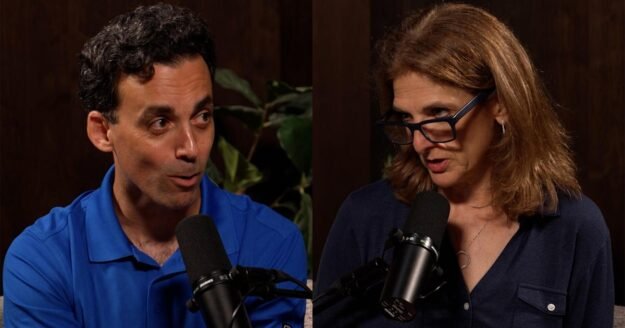
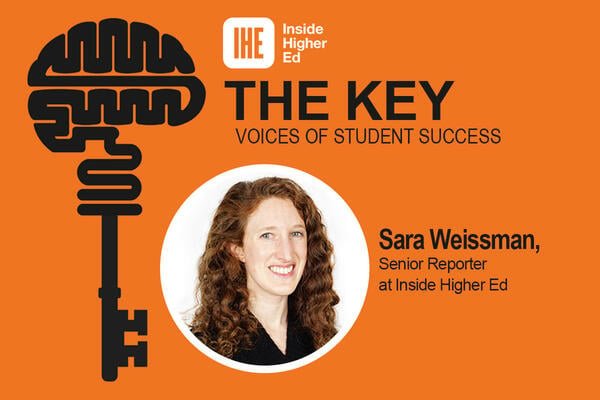
Sara Weissman, senior reporter at Inside Higher Ed, joined student success reporter Joshua Bay on Voices of Student Success to discuss how higher education demographics have changed, why the traditional student model no longer reflects the reality on many campuses and what institutions must do to better serve today’s learners.
This episode kicks off a six-part series exploring the experiences of nontraditional students, including adult learners, working students, transfer students, student parents and first-generation students, whose educational pathways fall outside the traditional college model.
Here are five takeaways from the conversation on how today’s college students are reshaping higher education.
- The “traditional” college student is no longer the norm.
Weissman noted that roughly one in five college students is parenting or has childcare responsibilities, about a fourth are adult learners and many are balancing college with work—not just part-time jobs, but full-time employment. At the same time, the number of traditional-age students is declining, prompting many institutions to rethink whom they’re serving. Together, those shifts illustrate why the long-held image of the “traditional” college student no longer reflects the reality on many campuses.
“We’re seeing drops in the numbers of traditional-age students, that classic 18-year-old, and so I think colleges are really courting adult learners in a new way,” Weissman said. “There’s really been a shift in who the ‘typical’ college student is.”
Weissman also reflected on the language higher education uses to describe these students. While “nontraditional student” remains the most common term, she said she prefers “post-traditional” because it better captures the idea that the traditional model is no longer the norm.
“That term does speak to me a little bit because it at least signals that we’re in a point where maybe who we thought was traditional is not what’s traditional anymore,” Weissman said. “This is millions of our students. It’s not a small fringe group who aren’t having that typical 18-year-old, dorm, four-year university experience, and the terminology we use reflects how aware we are of that.”
- Students’ lives don’t fit into neat categories.
Weissman noted that one of the biggest misconceptions about nontraditional students is that they can be neatly grouped into a single category. In reality, many students are simultaneously balancing work, caregiving, parenting and other responsibilities, creating overlapping challenges that institutions often overlook.
“These students are juggling jobs, sometimes full-time jobs. They’re juggling family care responsibilities that can include their children or their parents or older adults in their lives,” Weissman said. “These are folks who are doing their homework starting at 9 o’clock at night when their kids go to bed.”
She also argued that as colleges pay greater attention to student mental health, they should recognize how those overlapping responsibilities uniquely shape the well-being of post-traditional students.
Weissman added that conversations with Nicole Lynn Lewis, president and founder of Generation Hope, have shaped how she thinks about the stigma many student parents experience on campus.
“There’s a sort of emotional reality of feeling like you’re different and you have different concerns from your classmates that colleges could be better at acknowledging and creating some space for,” Weissman said.
- Different students face different challenges—but many of the barriers are the same.
Weissman said that while transfer students, adult learners, student parents and other nontraditional students have distinct experiences, many encounter similar obstacles. The largest among them, she said, is the complexity of balancing college with responsibilities outside the classroom.
She added that challenges related to basic needs and access to campus resources often cut across student populations. For example, tutoring and other academic support services may be offered during traditional business hours, making them difficult to access for students who are working full-time or caring for family members.
At the same time, Weissman said conversations about nontraditional students often fail to take into account the strengths they bring to higher education.
“These student groups also show real grit and resilience,” Weissman said. “We see that their academic outcomes in certain ways, often like GPA, are better, [and] they’re highly motivated. So they share a set of challenges, but they also share a set of strengths.”
- Supporting today’s students requires redesigning—not just adding—services.
Weissman said colleges are beginning to rethink how they serve today’s learners by redesigning systems rather than simply expanding support services. She pointed to several innovations that are making it easier for students to navigate higher education in ways that better reflect the realities of their lives.
One example, she said, is the City University of New York’s Transfer Explorer, or T-REX, a public-facing tool that shows how courses transfer across the system’s 20 undergraduate colleges and which credits apply toward specific degree requirements.
Weissman also highlighted the growth of guided pathways, a reform movement informed by research from the Community College Research Center that aims to create clearer academic pathways for students, particularly those transferring between institutions. She added that growing interest in short-term credentials, bolstered by Workforce Pell, is another example of institutions expanding more flexible educational options.
“We’re seeing more institutions kind of dip their toes in that water,” Weissman said. “As much as higher ed has a ways to go, there’s also a lot of exciting developments happening, and there is a lot of energy being put into making institutions a better place for these students.”
- The future of higher education depends on moving beyond the traditional student model.
For Weissman, success isn’t simply about enrolling more nontraditional students; it’s about ensuring that institutions are designed so those students can succeed. She said higher education will know it has truly adapted when outcomes for nontraditional students are no longer defined by persistent equity gaps.
“Seeing gaps like that close and making sure that students are on an equal basis completing on time or transferring on time,” Weissman said. “That’s really the sign we’re waiting for to know that we’ve done this right.”
Get more content like this directly to your inbox. Subscribe here.
You may be interested

Shop TODAY Launches Its First-Ever Sample Sale: See the Goods!
new admin - Jul 16, 2026[ad_1] IE 11 is not supported. For an optimal experience visit our site on another browser.UP NEXTUS Ice Cream Flavors:…

Navy’s elite Blue Angels under investigation after video shows low flyover at Florida beach
new admin - Jul 16, 2026The Navy's elite Blue Angels say they are reviewing the circumstances surrounding a low flyover at a beach in Florida. Video…

Proton’s CTO says there’s no such thing as a good backdoor
new admin - Jul 16, 2026Today on Decoder, we’ve got the first of a two-part series on the systems that run the world: I’m talking…