

University Researchers in Demand Amid Diarrhea Outbreak

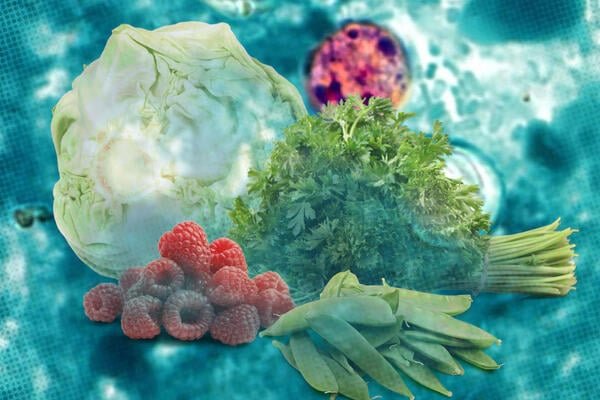
Chances are you’ve seen at least a few headlines this summer about what some are unsubtly referring to as the “explosive diarrhea parasite,” or Cyclospora cayetanensis.
But for some public health and foodborne-illness researchers, it’s been a surprise to see the parasite dominating the news cycle. Cases of cyclosporiasis, the infection caused by the parasite, tend to crop up every summer, though this outbreak is particularly widespread, with nearly 7,000 cases confirmed or under investigation. One researcher, Kali Kniel, a professor of microbial food safety at the University of Delaware, postulated that the “explosive diarrhea” framing might be helping it gain traction—though she noted she would instead use the descriptors “violent” and “sudden.”
For those scientists, outbreaks of the disease are taking their work beyond the walls of their labs or offices; suddenly, they’re responsible for combating misinformation, answering a slew of media requests and even fielding questions from the public.
“There are several of us that work in this field that are getting the questions about, ‘How does an outbreak investigation go? What is it about cyclospora that makes it more unique, and how can it survive in the environment?’” said Kniel. “I take the angle that I really want the right information to get out there, however I can share that as a scientist and as an educator. I’ve been on NPR and BBC, The New York Times, Good Housekeeping, Food and Wine. I think everybody is curious.”
The current outbreak of cyclospora, a parasite that spreads through ingesting contaminated water or food, began in late June and has grown quickly since. Although the source of the outbreak is still unknown, cyclospora is often transmitted through raw fruits and vegetables like lettuce, and the parasite can be killed by cooking produce. While the symptoms are unpleasant, cyclosporiasis is rarely fatal, and no deaths have been reported from the current outbreak. The illness has also inspired many memes.
Kniel researches many different foodborne pathogens; her research into cyclospora has primarily used “surrogates”—similar but not identical organisms—since it can be difficult to obtain cyclospora. She said that, though it’s not the first time the media has reached out to her, the influx of requests amid this outbreak has been the biggest of her career.
Public health and microbiology experts told Inside Higher Ed that it can be strange when their area of expertise is at the center of public attention—though some noted that this isn’t even the first time panic over a disease has dominated the news cycles in recent months, pointing to the hantavirus outbreak on a cruise ship and an Ebola outbreak in the Democratic Republic of the Congo.
The massive amount of attention can be overwhelming; in response to one email Inside Higher Ed sent to a leading cyclospora researcher at the University of Georgia, a spokesperson at the university said they’re no longer responding to individual interview requests, but instead putting together an FAQ on the parasite for media.
But it can also be a boon, giving researchers a unique opportunity to share their expertise, ensure the public is working from the best information possible and provide transparency about what we don’t yet know.
“Many of my colleagues believe that these moments are made to really reinforce the importance of what we do with our expertise and engaging with the public,” said Rodney E. Rohde, a microbiologist and the chair of Texas State University’s medical laboratory program.
Communication Challenges
Science communications experts say scientists play an important role amid acute situations like the ongoing cyclospora outbreak. At the same time, they face certain challenges when responding to real-time events, according to Dietram A. Scheufele, professor and chair of life sciences communications at the University of Wisconsin at Madison.
For one, the public sometimes wants answers at a rate researchers can’t provide them; if a specific question hasn’t been studied yet, scientists can’t produce answers, which can be frustrating, Scheufele said. And sometimes, what scientists want to discuss about a situation differs from what the public is more interested in or concerned about.
“Scientists very often respond with technical explanations rather than with what people are asking,” he said, “[Like], ‘Should I buy lettuce or should I not buy lettuce? And should I buy it in bags or should I wash it and how often do I need to wash it?’”
Barbara Kowalcyk, a professor at George Washington University and director of the Institute for Food Safety and Nutrition Security, said one of the biggest challenges of talking about her work is that people often lack even a base-level understanding of America’s food systems, including how food is produced and distributed, or how foodborne illnesses are transmitted. She also said that crises like this outbreak can create a significant workload.
“Everything that I had planned for this week is now not happening,” she said. “I have a deadline this Friday that I’m probably not going to make. I think one of the advantages of being in academia is that you do have more flexibility, that you can pivot when these kinds of things happen. But it doesn’t stop the student papers. It doesn’t stop the research that you have ongoing. It doesn’t stop publications and teaching and mentoring.”
Additionally, that burden has heightened in recent years, Scheufele said. Some infrastructure at federal agencies like the Centers for Disease Control and Prevention and the Food and Drug Administration aimed at communicating amid public health emergencies has been impacted by the Trump administration’s cuts, leaving researchers themselves to fill the gap.
“At the federal level, I think this is where we normally have just the personnel and the know-how—people who’ve gone through Ebola, people who’ve gone through Zika, people who’ve gone through I don’t know how many foodborne outbreaks and recalls, and who know this area inside out,” he said. “Maintaining that infrastructure is expensive, but … we maintain [it] for when we do need it, and it more than pays off when we do need it.”
The CDC also recently scaled back its surveillance of foodborne illnesses, including cyclosporiasis, which Kniel said is contributing to the difficulty of tracking the source of the current outbreak.
Although the cyclospora outbreak has put an especially large spotlight on these researchers, science communication is a year-round part of the job for many. Because of his past work tracking infectious diseases as part of the Department of Health in Austin, Rohde of Texas State often fields emails from the public asking about a range of diseases. Most recently, he spoke on the phone with a podiatrist who was worried he may have contracted rabies after a creature hit his back while he was running.
Although he’s always been a strong writer and speaker, Rohde cites his role as a professor—both at Texas State and at Austin Community College, where he has been an adjunct professor of biology for 31 years—as one of the key reasons he’s such an effective health communicator.
“[I have] many, many, many years of talking about infectious diseases with all ages, all ethnicities, all cultures, all types of people. Whether I’m teaching at the community college in Austin or here at Texas State, we just have such a diverse group of people that you have to kind of think about that when you’re teaching to people. English may not be their [first] language, for example, or perhaps they’re a little older and they haven’t been to school in 20 years,” he said. “It always makes me think about what they’re thinking.”
It’s also been an especially impactful learning experience for some of his students, who have been excited to see cyclospora in the news after learning about the parasite in his Medical Parasitology course.
Kniel echoed that sentiment, saying the graduate students in her lab were especially psyched when The New York Times requested a copy of a publication they had worked on.
“It’s rewarding to the students, for sure,” she said, “to see that what they’ve done really matters.”
You may be interested

Google is better at playing this game
new admin - Jul 16, 2026Today, the European Union ordered Google to give its AI rivals greater access to Android, the open-source operating system that…

Lamine Yamal vs. Lionel Messi As Spain-Argentina Set Up World Cup Final
new admin - Jul 16, 2026[ad_1] NEWYou can now listen to Fox News articles! It all comes down to this: Spain and Argentina will meet…

In ‘Noga,’ an Israeli Artist Confronts War and Backlash
new admin - Jul 16, 2026[ad_1] Right before the opening title card of Noga hits the screen, you see Israeli rapper Noga Erez at her…