

North Texas Denies Faculty Conference Funding

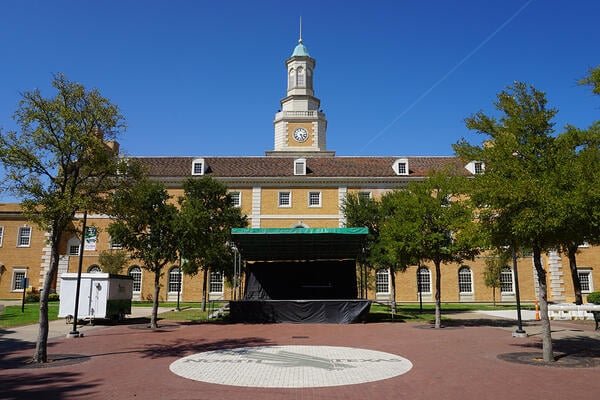
A memo from UNT’s compliance office alleges that an association whose meeting faculty members requested conference funding to attend violates anti-DEI provisions of the Texas Education Code.
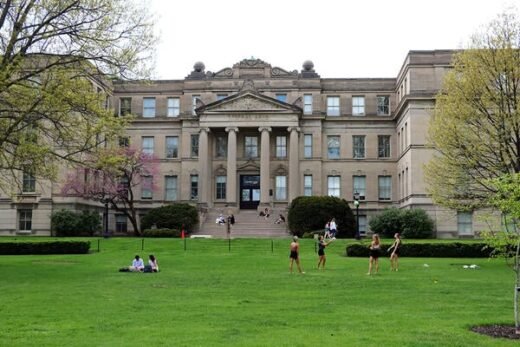
Michael Barera/Wikimedia Commons
The University of North Texas has paid for journalism professor Tracy Everbach and her colleagues to attend a certain conference every year since she started at the university in 2004.
Until this year.
In a June 30 memo to Everbach and at least five other journalism professors, university administrators said that funding membership or sponsorship costs for the Association for Education in Journalism and Mass Communication, the organization that hosts the conference she plans to attend and present at next month, violates a Texas law banning diversity, equity and inclusion measures at public institutions.
The memo, from the University Integrity and Compliance Office, alleges that among other things, the association violates a provision of the Texas Education Code that prohibits “promoting differential treatment of or providing special benefits to individuals on the basis of race, color or ethnicity.”
Everbach said she doesn’t understand that charge. “It’s just a regular research conference,” she said.
Scheduled for early August in New Orleans, the AEJMC conference has a Jazz & Jambalaya theme, which showcases the “rich histories” and “diverse contributions” of community members, according to the association’s website. The schedule says it will feature “thought-provoking programming, diverse voices and exciting opportunities to learn and connect.”
Everbach said she submitted an open records request to the university on July 2 seeking all the communications surrounding the funding denial, in an effort to better understand why officials made the decision. She has yet to receive a response, though UNT has 10 business days to reply.
A ‘Dangerous Precedent’
Everbach, a tenured professor, is worried about what the denial means for her tenure-track colleagues. “The reason that we are going to the conference is to represent the university and present our research, which is required as part of our jobs,” she said.
She added that she believes the move impedes her academic freedom and pointed to the conference funding denial as one of “a number of things” that have occurred because of Texas laws.
SB 17, for example, which took effect in January 2024 after Gov. Greg Abbott signed it into law, restricts certain DEI activities at public institutions and requires universities to comply with reporting requirements. The university’s Integrity and Compliance Office said the AEJMC violated provisions of that law.
Everbach said the state’s growing involvement in higher ed led her to accept a buyout from UNT when they offered her one in the spring. She’s employed by the university until Aug. 31, making this her last time attending and presenting at the conference as a UNT faculty member. She still intends to go, but will pay for it herself, she said.
During the conference, Everbach and her colleague plan to present a student project called “Amplifying the Voices of the Muscogee Creek Nation,” which showcases how students learned to cover historically misrepresented communities.
“I am concerned that the university is setting a precedent that is going to prevent people from being able to go to these conferences and present their research,” Everbach said. “They are very proud of their status as a research university, which faculty have achieved for them.”
UNT’s funding denial comes after the institution introduced a new procedure for faculty to renew association memberships and apply for conference funding, Everbach said. When she went to her dean’s assistant at the end of March to renew her membership and register for the conference, she said they told her, “‘You have to fill out a form for the compliance office.’ My other colleagues were told the same thing, so we all filled out these forms, and we didn’t hear anything,” she said.
The membership request form asks faculty to supply information, including past memberships held within the organization and what would happen if it is not renewed. The form indicates that only one staff member is assigned to process the membership requests.
After she waited for months, the university sent Everbach an email late last month saying UNT is unable to fund her request for membership.
“While this process may prohibit UNT funding for memberships/sponsorships of certain organizations, the university may continue to fund travel expenses for faculty and staff to attend conferences that support their professional roles, even if membership funding is not allowed,” the memo read.
UNT said in a statement that it supports faculty research and attendance at conferences that advance its academic, research and service missions and that are in compliance with applicable federal and state laws. It said the university funds travel and registration expenses for faculty attending conferences that support their professional roles.
“However, the university neither funds nor reimburses individual membership in organizations when doing so does not comply with state law,” the statement read. “The university does not prohibit any employee from joining organizations in a personal capacity.”
Officials did not answer questions from Inside Higher Ed regarding which specific language from the association violates provisions of the Texas Education Code, or respond to faculty comments that the denial of funding impedes their academic freedom and hinders their ability to present their research. UNT also did not answer why officials decided to deny membership and conference funding for the association this year, but has approved funding in previous years after SB 17 took effect.
The university joins other institutions in limiting conference funds for professors due to anti-DEI pressures, including Ohio State University, which told faculty and students in October they could not use university funds to attend an upcoming conference hosted by the Society for Advancement of Chicanos and Native Americans in Science.
You may be interested

Save £29 on Princess Kate's 'beautiful' Monica Vinader earrings in their flash sale
new admin - Sep 24, 2026[ad_1] A limited-time sale makes these royal-approved green gemstone earrings an especially tempting addition to an autumn jewellery box. [ad_2]…
Faculty Advisers Resign After Call for Iowa Civics Center ‘Reset’
new admin - Sep 24, 2026[ad_1] The power struggle over the civics center at the University of Iowa appears to have reached an inflection point.…

Princess Kate's tweed cap is ideal for embracing this autumn’s countrycore trend
new admin - Sep 24, 2026Princess Catherine styled the autumn accessory during a recent visit to Scotland. Source link