




Beyond Grade Inflation—We’ve Got Shrinkflation (opinion)

A student in one of my courses recently elected to switch from a standard letter grade to a pass-fail option, under a Bowdoin College policy that allows students to take up to four of their courses on a “credit/D/fail” basis. She wasn’t struggling in the class—far from it. She made the change because she had been earning an A-minus.
The recent decision by Harvard University to cap the percentage of A’s awarded has renewed conversations about grade inflation in higher ed. As an economist, I can observe that grade inflation shares some characteristics with price inflation.
Effective grading and pricing mechanisms both signal relative values, and the signal degrades when persistent increases alter those relative valuations. If every single agent in every economy raised prices by 10 percent, relative prices would remain unchanged and the negative impact of this monetary rescaling would be minimal. Similarly, if (starting from a moderate base) every single professor in every educational institution in every country simultaneously increased the proportion of A’s by 10 percent, the result would not be so concerning. However, if I do not follow the inflated distribution of my colleagues, my students would suffer from the variation in relative prices.
Students typically conclude that “a lot of inflation is not such a bad thing at all.” At the same time, everyone acknowledges that the most capable are affected when scores do not accurately reflect performance.
What is less recognized is that this inflation has distributional implications, which can also impose greater penalties on marginalized students. Since A’s are rapidly depreciating in value, top students are often advised to add an A-plus signal, such as writing an honors thesis or working toward a prize or prestigious fellowship. At the same time, my own empirical research on prize systems shows that such discretionary awards are typically bestowed on the basis of connections and status rather than inherent merit. Grade inflation is therefore likely to be relatively more harmful to (for instance) first-generation students who may not have access to alternative signaling mechanisms, or may not even know about them.
What We’re Not Talking About: Shrinkflation
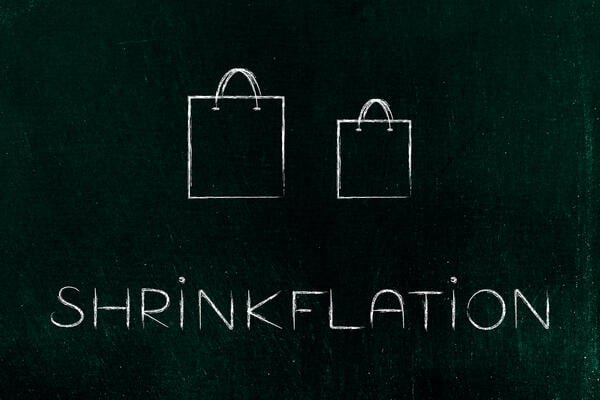
A large literature already addresses the question of grade inflation, but none (to my knowledge) has considered the accompanying problem of shrinkflation, which the Harvard policy does nothing to address and may exacerbate. Shrinkflation occurs when prices remain the same but the good itself is downsized. For instance, a “pint” of Häagen-Dazs ice cream now contains just 14 ounces rather than 16 ounces, and in recent years sizes of toilet paper and paper towel rolls have declined. In the context of grades, shrinkflation is manifested by a fall in rigor, learning and academic standards, generally denoted as the “easy A.”
Shrinkflation is readily detected in toilet paper, but academic classes are what economists call experience goods, which cannot be evaluated unless one actually takes the course. (Further, in the case of credence goods, even a monitor in the classroom is unable to accurately evaluate the content if the subject matter is highly specialized.) As such, covert academic shrinkflation is much more difficult to detect and confront than overt grade inflation.
A new study, “Artificial Intelligence and Grade Inflation,” provides evidence for shrinkflation in the context of AI usage. This working paper analyzed courses at a public university from 2018 to 2025 and found that “AI-exposed courses” experienced a large upward shift in A grades. Importantly, the rescaling was not uniform, affecting relative scores across different types of assessments (unsupervised versus supervised) and types of tasks (for instance, one might expect that subjects requiring embodied tasks, such as sculpture and painting, would be less affected.)
In short, growing student use of AI produces a new form of shrinkflation, where genuine learning declines in classes but the grade remains the same or is inflated upward. Harvard’s policy of placing a cap on A’s does not address this factor and may even perversely increase the incentives for lower-ranked students to turn to AI to keep themselves in the market.
Toward a Macroeconomic Model of Grade Inflation
The economic problem of price inflation is easier to control (raising interest rates, tightening money supply). Grade inflation is more difficult because of the collective action problem: Each professor, acting in their own self-interest, ends up devaluing the entire academic enterprise. The problem is compounded because many administrators treat students as customers who should be kept satisfied at all costs; faculty whose enrollments fall owing to higher academic standards are chastised, and those with huge excess demands for their classes are celebrated even if everyone knows that shrinkflation has set in and the course content is questionable.
The Harvard policy resembles efforts Zimbabwe took at rescaling its currency—lopping zeros off banknotes and re-denominating—which is merely a cosmetic operation that does not alter the underlying causes of the problem. Professors inflate to procure favorable student evaluations, avoid conflicts and come out ahead in the zero-sum game of enrollments. And, just as currency re-denomination fails if monetary expansion continues, a grade cap fails if the underlying incentive structure remains unchanged.
More effective policies would directly confront and alter the incentive structures for professors and administrators. When I first arrived at Bowdoin, the dean reported each semester on the grade distributions for every department (the hardest graders were in economics and chemistry). Publishing grade distributions openly again would allow stakeholders such as employers to discount inflated grades themselves in the manner of inflation-indexed contracts: Rather than tinkering ineffectively with the nominal signal, you make the real signal visible again. Apart from the economic value of free and full information, such a measure might provide a commitment device that allows unwilling participants in grade inflation to deflate voluntarily.
In sum, like all price controls, Harvard’s mandated cap is likely to fail in its objectives, because a cap does not eliminate the underlying factors that lead to grade inflation. Like most top-down initiatives, this policy will likely engender unintended consequences, such as disincentives for collaboration and cooperative learning in the classroom. Most importantly, pandering professors (who are at bottom responsible for these distortions) are more likely to instead achieve their goals through the conduit of academic shrinkflation, which is impossible to monitor, much less sanction. In short, the proposed cure might be even more costly for the academic enterprise than the initial malady.
You may be interested

Idaho mother who claimed her toddler twins died after being vaccinated now faces murder charges
new admin - Jul 07, 2026An Idaho woman who said her toddler twins died last year after being vaccinated faces murder charges connected to their…

UC Berkeley Opening Nancy Pelosi Institute; She’ll Teach
new admin - Jul 07, 2026[ad_1] Nancy Pelosi (center), the longtime Democratic House Speaker, is retiring from Congress at the end of this year. Drew…

Democrats Haley Stevens and Abdul El-Sayed face off in primary debate for Michigan Senate
new admin - Jul 07, 2026Michigan's remaining Democratic Senate candidates — Rep. Haley Stevens and former Michigan health official Abdul El-Sayed — are set to…