



The art of a great day out this summer with the National Trust

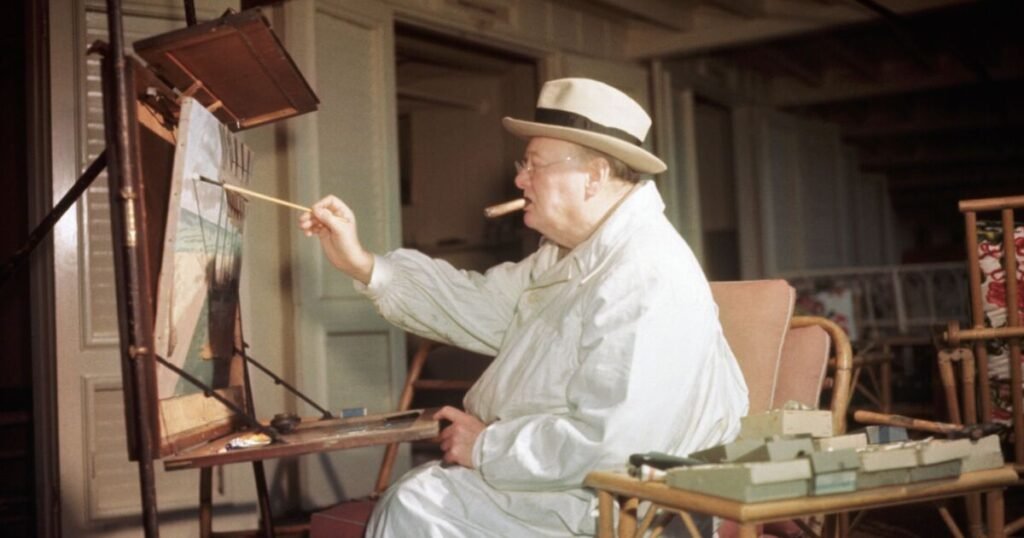

Winston Churchill at work on another painting in 1946 (Image: Bettman)
The National Trust cares for one of the most significant art collections in the world from 4th-century mosaics at Chedworth Roman Villa in Gloucestershire to modernist interiors at 2 Willow Road London. These collections tell a story not just of art, but of place. Many are deeply rooted in the landscapes that surround them, shaped by the views, coastlines and gardens visitors can still experience today.
For generations, artists were drawn to such settings. In the 18th century, the rise of the “picturesque” transformed how people saw the natural world, encouraging them to view landscapes as scene, rich with meaning. Figures such as William Gilpin helped popularise this approach, inspiring a culture of close observation, sketching and a search for beauty in nature itself.
That connection between art and landscape continues to evolve. Today, National Trust properties are not only guardians of historic collections but also living spaces where contemporary artists reflect environment and history in bold new ways. They offer something few galleries can – the chance to experience art in the very landscapes that inspired it. Together, these places show that art is not confined to galleries – heritage and creativity can sit side by side.
From country houses shaped by centuries of collecting to estates now hosting some of today’s most exciting artists, these destinations bring past and present together for culture-filled summer adventures.
Chartwell, Kent

Quiet Waters by Winston Churchill is on display at Chartwell, Kent (Image: National Trust / Kate York)
Amid the unrelenting pressures of leadership, Winston Churchill turned to painting as a powerful source of focus and calm – describing the practice as something that “came to my rescue”. Churchill’s former home Chartwell in Kent is focusing on his passion for painting this year, with personal objects like his painting coat, art materials and never-seen works on display to explore his creative legacy.
At the heart of the display is a painting by Churchill that has never been seen publicly in the UK, on loan from The Beaverbrook Canadian Foundation in Canada. Created away from the public eye, it shows how painting outdoors helped Churchill slow down, refocus, and recover from the stresses of life. Quiet Waters depicts a tranquil landscape and was given by Churchill to his close friend Lord Beaverbrook for his 80th birthday in 1959.
Unusually, though he generally preferred bold and brilliant colours, this scene – with its complex reflections on the surface of the water – caught his eye, and is rendered in more muted tones, reflecting his remark: “All nature is equally interesting and equally charged with beauty”. Until November 1.
Petworth, Sussex

Petworth in Sussex was a favourite of JWM Turner… Felicity Aylieff’s ceramics are currently on display (Image: National Trust / Megan Taylor)
Famed for its outstanding art collection, Petworth is closely associated with one of England’s most famous artists, JMW Turner, whose long relationship with the house – and its owner the 3rd Earl of Egremont – was shaped by the inspiration he found in the collection and surrounding parkland.
Encouraged by his enlightened host, Turner was given unusual freedom to explore and create. And a number of his paintings – including two of Petworth itself – can be viewed in the house. This summer, the estate is yours to explore in an unusual way too. Running through the house and park, Expressions in Blue: Monumental Porcelain by the British ceramicist Felicity Aylieff, is displayed in this magnificent historic setting. Partly inspired by the collection, they reimagine traditional Chinese porcelain on an ambitious scale. Until September 27.
Claydon, Bucks

Work by the likes of Tracey Emin and Antony Gormley is on display at Claydon, Bucks (Image: BBC/Passion Docs/Sam Pickles)
At Claydon House, a very different energy unfolds this summer as elaborate 18th-century interiors provide an unexpected backdrop for contemporary art. White Cube at Claydon brings internationally renowned artists including Tracey Emin and Angel of the North sculptor Antony Gormley into this idyllic setting.
Sculptures and installations appear where you least expect them, spilling out into stunning gardens and disrupting the house. The result invites visitors to move between past and present, and to experience art, architecture and landscape as part of the same story. Until September 14.
Red House, London

Red House in London was the home of William Morris (Image: National Trust / Andrew Butler)
Designed by and lived in by William Morris, Red House is a manifesto for art in everyday life. Built in 1860 as a creative retreat in Bexleyheath, South East London, it became a gathering place for Morris and his circle of pre-Raphaelite friends, who painted, carved and designed – turning the very house into a living canvas.
Morris drew inspiration from the gardens outside, translating tangled hedgerows, flowers and foliage into the iconic patterns that today fill homes across the world. The hand-painted murals evolved into his celebrated wallpapers. Visitors can immerse themselves in the birthplace of an entire philosophy – that creativity, craftsmanship and nature are inseparable.
Flatford, Sussex

Stunning Flatford in Suffolk inspird John Constable’s work (Image: National Trust / Justin Minns)
The landscapes around Flatford are among the most recognisable in British art, immortalised in the work of John Constable, who grew up here in the village of East Bergholt. Today, the landscape is largely unchanged, with small fields, hedgerow and woodland beside the winding river Stour.
Marking 250 years since his birth in June 1776, a programme of events this summer invites visitors to step into these scenes and take inspiration from the same views and landscapes that inspired Constable’s iconic and utterly English work. Events run until September.
Dudmaston Hall, Shrops

Visitors exploring the art galleries at Dudmaston Hall, Shropshire (Image: National Trust / Trevor Ray Hart)
Dudmaston offers a distinctive perspective on art and landscape through a bold vision, shaped by the remarkable legacy of Sir George and Lady Labouchere. A diplomat and visionary collector, Sir George quietly assembled a daring collection of modern art by living artists at a time when embassy walls were filled with traditional paintings.
When the Laboucheres made Dudmaston their home in 1966, they brought this outlook with them, placing modern works within a traditional country house setting and opening up new ways of seeing art. Today, sculptures by Henry Moore, Barbara Hepworth and others reflect their belief that art could cross borders and challenge convention.
This summer, Inspired by Nature brings together botanical studies and artworks that respond to the surrounding landscape set against Dudmaston’s stunning gardens. Until October 31.
Powis Castle and Garden, Powys

Spectacular borders in the gardens at Powis Castle in Powys, Wales (Image: National Trust / Mark Bolton)
Set high above the Severn Valley and former home of Clive of India, Powis Castle pairs dramatic terraces and gardens with one of the National Trust’s most internationally significant collections. Shaped by centuries of travel and global exchange, its interiors reveal how art and objects were collected and displayed. Outside, that relationship continues, as formal gardens and sweeping views demonstrate how landscape itself can frame and enhance the experience of art.
Dunham Massey, Cheshire

Art on display in the courtyard at Dunham Massey, Cheshire (Image: National Trust / Paul Harris)
Set within expansive parkland, Dunham Massey brings together two distinct ways of seeing the natural world this summer. In the Orangery, The Botanical World of Mary Delany presents intricate “paper mosaiks” – botanical studies meticulously built from finely cut paper.
This detailed engagement with nature sits alongside historic landscape paintings in the house, tracing the evolution of the estate over time. Providing a contemporary counterpoint, ORIGIN introduces an immersive sound and light installation inspired by natural rhythms and plant life cycles. Together, the works reveal how artists have reinterpreted the natural world, moving from careful study to sensory and conceptual approaches. Until November 1.
Stourhead, Wilts

Sunlight coming through the trees at Stourhead, Wiltshire (Image: National Trust / Paul Harris)
Perhaps the ultimate expression of the picturesque, Stourhead’s landscape was described as “a living work of art” upon its 18th-century opening. This summer, Drawn to Trees adds a contemporary layer, with delicate etchings by Luke Adam Hawker placed across the grounds. Inspired by the Celtic Tree Zodiac, the works explore the symbolism and character of different trees and invite visitors to consider their own relationship with the natural world. Until November 1.
Mount Stewart, County Down

The stunning Formal Garden at Mount Stewart, County Down (Image: National Trust / Andrew Butler)
The dramatic landscape surrounding Mount Stewart mirrors the collection inside to become a work of art itself. Designed with a painter’s eye for colour and composition, the gardens unfold as a series of carefully orchestrated ‘rooms’, shaped by bold planting and seasonal change.
Reflecting Arts and Crafts principles, they demonstrate how nature can be curated and experienced as a living, evolving artwork that unfolds across the year.
You may be interested

Democrats Haley Stevens and Abdul El-Sayed face off in primary debate for Michigan Senate
new admin - Jul 07, 2026Michigan's remaining Democratic Senate candidates — Rep. Haley Stevens and former Michigan health official Abdul El-Sayed — are set to…

How 4 Programs Instill Learning by Doing
new admin - Jul 07, 2026[ad_1] Experiential learning has become a defining priority in higher education as colleges and universities nationwide expand opportunities for students…

T-Shirt Thoughtcrimes at Florida International
new admin - Jul 07, 2026[ad_1] At Florida International University, seven students are being punished for wearing T-shirts. A university banning words and prohibiting expression…