



Five questions for Dr. Rubin, who’s armed with a mic and a bowtie

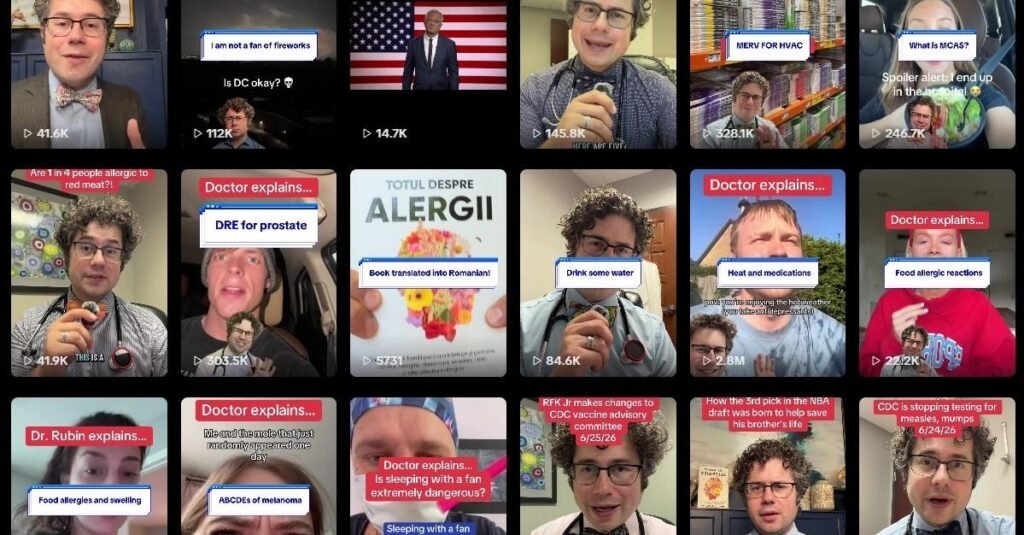
Bullshit is cheap but truth is expensive. Anyone with half a brain cell can post wild misinformation that goes mega viral, which wastes the time and expertise of highly trained people who feel an obligation to inform others of the truth. Today I want you to meet one of those highly-trained people, Dr. Zachary Rubin, who works on the front lines against scientific and medical misinformation.
Rubin is a pediatric allergist and immunologist and author of the book All About Allergies. He likely came across my TikTok feed because I crave anti-misinformation content; one of my other favorite people doing this work is Rubin’s colleague Dr. Idrees Mughal, aka Dr. Idz, who fights the good fight against wellness grifters and other miscreants. You can find Rubin on Instagram, TikTok, and YouTube.
Rubin knows how to post, often appearing with a small mic in his hand and always with his signature bowtie. His style of speaking invokes authority but never condescension, which is one of the reasons I think he’s a great science communicator.
Rubin has a medical practice, but I asked him five questions about his other job: helping rid the world of junk science and making us all better informed.
The journey to becoming a doctor is long and difficult. Before we get into your work online, please tell me why you embarked on this path.
I’ve always been fascinated by how the human body works. Medicine appealed to me because it combines science, problem-solving, and the privilege of helping people during some of the most vulnerable moments of their lives. I was fortunate to see these moments early in my life because my dad is a pediatrician. Allergy and immunology was especially compelling because the immune system touches nearly every aspect of health, and many of the conditions I treat can dramatically improve when patients finally receive the right diagnosis and treatment. Becoming a physician has been incredibly challenging, but it’s also one of the most rewarding decisions I’ve ever made.
You’re a great communicator of science and medicine. (Your signature bowtie is a nice touch, by the way.) Your videos demonstrate a rare combination of talents that the world needs, especially as we’re plagued by a firehose of misinformation. You could have just kept quiet at your practice with your patients. Why wade into the muck online?
I realized that misinformation doesn’t stay online; it walks into my exam room every day. Patients deserve access to understandable, evidence-based information before they ever need to see a doctor. Social media allows me to reach millions of people with the same conversations I have in clinic every day. My goal isn’t to tell people what to think. It’s to help them think critically about health claims, understand what the evidence actually shows, and feel empowered to ask better questions.
What’s the number one thing you wish people understood about science and/or medicine?
That uncertainty isn’t a weakness, it’s one of science’s greatest strengths. Science isn’t a collection of immutable facts. It’s a process for getting closer to the truth. Good scientists are willing to change their minds when better evidence emerges. Unfortunately, that can look like inconsistency to the public, when it’s actually how progress happens. Confidence should always be proportional to the quality of the evidence.
What’s your favorite thing about countering misinformation online, and what’s the most challenging?
The most rewarding part is hearing from someone who says, “I changed my mind.” That’s incredibly rare today, and it reminds me that respectful conversations can still make a difference.
The hardest part is that misinformation spreads faster than nuance. A confident but incorrect statement can go viral in minutes, while explaining the evidence often takes far longer. Add in algorithms that reward outrage, and it becomes an uphill battle, but that’s exactly why more physicians and scientists need to be part of the conversation.
America is turning 250 years old. This country has been behind a lot of great science and medicine. What are we doing wrong, and what could we do better?
The United States has an extraordinary history of scientific discovery because we’ve invested in research, encouraged innovation, and welcomed people with diverse ideas and expertise. I hope we continue to value those strengths.
One area where we can improve is scientific literacy. We should spend more time teaching people how to evaluate evidence, not just what to memorize. At the same time, scientists and physicians need to become better communicators. If we don’t explain our work clearly and transparently, someone else will fill that void. Trust isn’t built by having all the answers, it’s built by being honest about what we know, what we don’t know, and how we’re working to find out.
You may be interested
Make rough towels soft and fluffy once more with 65p kitchen staple
new admin - Sep 20, 2026If stiff and scratchy towels are one of your biggest pet peeves, we've got a 65p solution for you to…

Keep cucumbers fresh and crunchy for weeks with simple storage solution
new admin - Sep 20, 2026A chef has shared a quick and easy cucumber storage hack that may help keep them fresh and crunchy for…

'I'm a housekeeper and I always remove 1 item from hotel room after check in'
new admin - Sep 20, 2026A housekeeping manager has shared the one thing she always does when staying in a hotel - and it's all…