
Florida Board Approves Stuart Bell as UF’s Next President


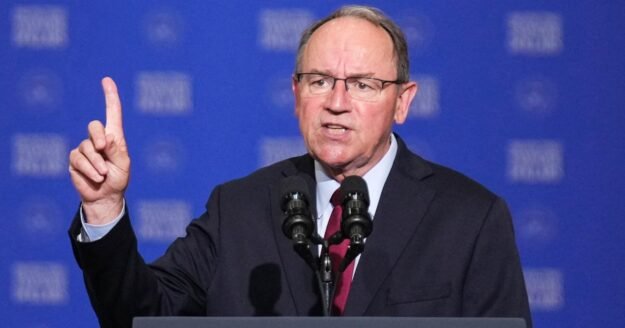
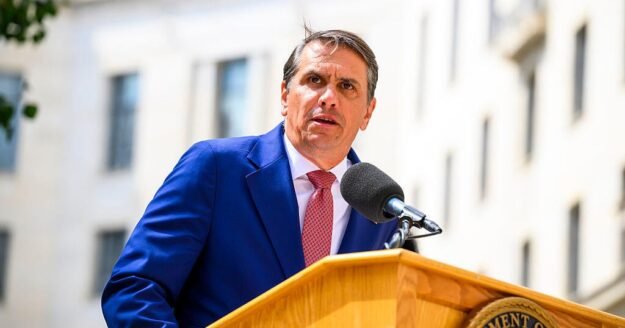
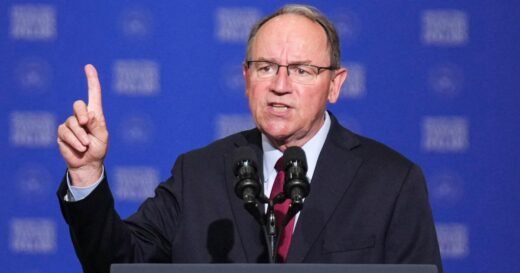
Prior to the vote, the incoming president, center, faced several questions from board members about his stance on DEI.
The Florida Board of Governors voted Wednesday to make former University of Alabama President Stuart Bell the next president of the University of Florida, giving the flagship research university a permanent president after two years without one.
During a special meeting, all but one governor backed Bell following a winding question-and-answer period, during which the board members pressed Bell on his DEI track record, plans to fill leadership vacancies at the university and position on free speech. Winning the board’s approval was the last hurdle Bell had to clear to become president after the University of Florida Board of Trustees in June voted unanimously to hire him. The governors’ support was not guaranteed; the board rejected the University of Florida’s last pick, Santa Ono, a year ago.
“I’m ready to get to work,” Bell said in a statement following the vote. “The University of Florida is an extraordinary institution with exceptional talent, remarkable momentum and limitless opportunity. I look forward to working alongside our students, faculty, staff, alumni and supporters as we continue building one of the world’s great public universities.”
Bell will immediately assume the presidency, replacing Interim President Donald Landry. His official inauguration will take place “later this year,” according to a news release.
The board was supposed to vote on Bell a week ago during its regularly scheduled meeting, but Board Chair Alan Levine delayed the vote, citing concerns also raised by U.S. Sen. Rick Scott that the University of Florida board ran afoul of state regulations in part by allowing Chair Mori Hosseini to approve a $2 million exit package for Landry. Florida Board of Governors member Nick Sinatra alluded to last week’s drama during Wednesday’s meeting, telling Bell, “I know it doesn’t feel like it and may not have felt like it at times, but we’re excited to have you here.
“I thought some of the accusations that were flowing out around you and against you were very much unfair, and I made that clear,” he continued. “But I want to move forward here today, and I think it’s really important that we all—publicly on the record—move forward.”
Prior to the vote, the incoming president faced several questions from board members about his support of policies to increase student diversity while president of the University of Alabama. Bell repeated the same refrain he told the university’s Board of Trustees: “I am not coming to Florida to bring DEI or woke back,” he said. Bell’s work at Alabama was focused on growing in-state enrollment, “and so we had a real focus on rural areas and all the demographics that go with that rural focus,” he told the board.
Aubrey Edge, who cast the sole “no” vote, grilled Bell on the matter, asking him to address Alabama Faculty Senate meeting minutes from three years ago—well before Alabama’s law banning diversity, equity and inclusion programs took effect—that described Bell as having said that DEI initiatives would remain operational under a different name.
In response to the law, “We closed every DEI office,” Bell said. “We continued with the mission of making sure that every student—particularly in rural areas, where we had a lot of students that were not attending university … saw higher education as an opportunity for them … That was the focus, and the continuing focus today, I believe, at that institution.”
Vice Chair Timothy Cerio asked Bell whether he had read the state university system’s statement on free expression. Bell said he had not, but that he supported the Chicago statement on institutional neutrality and that such positions allow “free discussion and free expression and civil discourse to occur on our campuses.”
Board member Carson Good asked Bell where he stands on “free speech versus hate speech.”
“I think that we have to be very careful on our campuses. Certainly we don’t have to look much past Oct. 7, in that there was a lot of hate speech that was going on on campuses that truly interfered with our mission,” Bell said. “So I’m a proponent of free speech among our students, but certainly there are guidelines there. There’s going to be some guardrails” on hate speech.
Bell also came out strongly against campus encampments.
Alabama “did not have encampments … We believe that students ought to be able to have civil discourse, and we had that occur on our campus, and we’re also very clear about what you [cannot do]. You’re not going to interrupt our ability for students to go to class. You’re not going to change the ability for us to have classes,” he said. “If you try to have an encampment, the next day we’ll have a tent sale.”
Good also asked Bell if he believed critical race theory should be taught at universities, to which Bell replied the theory has a “limited place” in curriculum.
“We’re not trying to teach our students what to think; we’re trying to teach our students how to think,” Bell said. In K–12 teaching program classes, “I don’t see a place for that in that field. Certainly in nuclear engineering, I’m sure that [CRT] is not going to be in that field. Are there some areas [in which] our students should be aware of what that theory is and what that theory says? There may be, but we’ll have that discussion.”
Several board members were also concerned about the growing number of vacancies at the University of Florida, including an open provost position and several deanships. Members asked Bell how he’ll approach filling those roles, and how quickly he plans to do so.
“Work hard, work fast. As an engineer, we have strengths and we have weaknesses. One of our strengths is we develop a plan and we move quickly,” he said. “We’ll be working very hard to build that team, so I’ll be launching a number of searches, and we already have launched a number of dean searches. We’ll complete those quickly. I think it’s important to have your senior leadership, your president, in place, because when you’re out trying to recruit—whether that’s deans or [vice presidents]—they want to know what they are joining.”
You may be interested
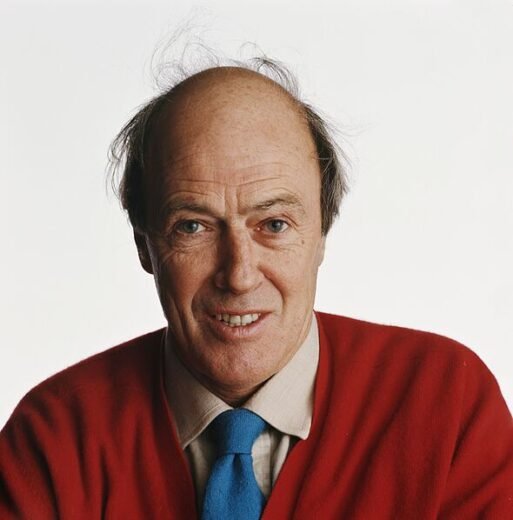
4 Roald Dahl books will remain relevant forever thanks to 1 key reason
new admin - Sep 13, 2026Roald Dahl's books, I believe, are timeless classics unlikely to go anywhere soon, as generations and generations of kids have…
Wisconsin Congressman Tom Tiffany suffers minor injuries after emergency landing in a lake
new admin - Sep 13, 2026Wisconsin Congressman Tom Tiffany said Sunday he sustained minor injuries after the plane he was traveling in made an emergency…

The 20 murders that shaped modern Britain
new admin - Sep 13, 2026Top criminologist Professor David Wilson has examined the crimes that gripped the nation from Victorian times to the modern day…