
ED Issues New List of Professional Degrees After Court Order


More students will have access to higher loan caps following a court order.
Photo illustration by Justin Morrison/Inside Higher Ed | mohd izzuan/iStock/Getty Images
More graduate degree programs will be eligible for higher loan caps, according to a list published Monday by the Education Department.
Previously, just 11 degrees were considered professional programs for the purposes of applying new loan limits that take effect Wednesday. But a federal judge put the Education Department’s policy on hold last week, ruling that the agency didn’t have the authority to make up its own definition for professional programs. Congress included a definition in the reconciliation bill that put the loan caps in place.
In an online post, ED officials said that they are confident the department’s definition is lawful and will defend it in court. But while the litigation continues, the department will use the statutory definition to administer the loan caps. Now, 29 programs will be treated as professional degrees, including three nursing degrees. (Associations and advocates for nursing have been among the more vocal critics of the department’s loan caps proposal.)
“These interim administrative designations are provided solely to facilitate implementation of the Court’s order and may change as litigation in the case proceeds,” ED officials wrote.
Students in programs labeled as professional can borrow up to $50,000 a year or $200,000 in their lifetime. Other graduate students will be limited to just $20,500 a year and $100,000 over all. Graduate students could previously borrow up to a program’s cost of attendance, but Congress ended that loan program, effective July 1.
The department’s list designates programs at six-digit Classification of Instructional Program code level. CIP codes are a labeling system used by the department to classify fields of study; the more digits in the code, the more specific the degree type.
Department officials also said that institutions can choose to set program-level loan limits, under a provision from the One Big Beautiful Bill Act that also takes effect July 1.
“During the pendency of the ongoing litigation, institutions may wish to consider, for programs now temporarily classified as awarding professional degrees pursuant to the court’s order, limiting loan amounts to the graduate-level caps to mitigate potential disruption to student borrowers resulting from changes in program classification that may arise from the ongoing litigation,” they wrote.
You may be interested
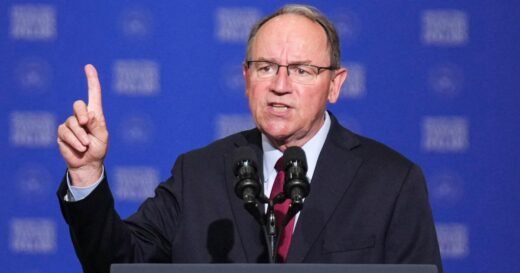
Wisconsin Congressman Tom Tiffany suffers minor injuries after emergency landing in a lake
new admin - Sep 13, 2026Wisconsin Congressman Tom Tiffany said Sunday he sustained minor injuries after the plane he was traveling in made an emergency…

The 20 murders that shaped modern Britain
new admin - Sep 13, 2026Top criminologist Professor David Wilson has examined the crimes that gripped the nation from Victorian times to the modern day…

Clarks' £89 trainers with 'soft cushioning' have price drop in six colours with deal
new admin - Sep 13, 2026A money-saving offer means shoppers can save on the Clarks Code C Lace trainers Source link