

A Study Isn’t “Worthless” Because It’s Incomplete


To the editor:
The Foundation for Individual Rights and Expression (FIRE) recently released a study by David Primo, a professor of political science and business sdministration at the University of Rochester, measuring faculty viewpoint diversity through campaign-contribution data. The average faculty donor landed only slightly to the right of progressives like Bernie Sanders and Elizabeth Warren.
Disclosure: I serve on FIRE’s Board of Directors. FIRE commissioned the study; the analysis was conducted independently by Primo.
Last week, John K. Wilson pronounced the study “worthless” because most faculty never donate, so a sample of donors cannot describe the average professor (“FIRE’s Flawed Study on Political Donations and Viewpoint Diversity”, June 1, 2026). On the narrow point he is right. But “worthless” is a serious verdict—one that, applied consistently, would discard nearly every measure we have. Surveys, voter-registration data, and donation records all have weaknesses; none is complete. The question is not whether Primo’s measure is perfect. It isn’t. The question is whether it tells us something useful.
It does. Primo matched roughly a quarter of 112,000 faculty to the Stanford contribution database and scored them on the same scale used for politicians. Critics rightly note how many professors fall outside that sample—73 percent never appear in the matched data. Those are important cautions. Yet the limitation points toward the study’s most interesting finding: among faculty active enough to donate, conservatives are nearly absent.
Here the selection effect cuts against the easy dismissal. If giving captures the most politically engaged faculty, committed conservatives—who donate too—should be easier to find, not harder. Think of the Federalist Society law professor or the supply-side economist. Instead, the conservative tail stays remarkably thin.
What the study does not show deserves equal attention. It does not prove discrimination or that conservatives are silenced. Donation data capture composition, not conduct—who is in the room, not how the people in it treat one another. A department can lean heavily left and still argue well. Treating skew as proof of repression claims more than the evidence supports.
Composition still tells us something, even if it isn’t conduct. The issue is not partisan representation but whether important assumptions are still being contested. A discipline that loses its dissenters loses some of its capacity for self-correction. The danger is not that disagreement becomes forbidden, but that certain questions stop being asked.
History shows why this matters. Ideas once dismissed as unfashionable—from school choice to deterrence in criminal justice—advanced because dissenting scholars stayed part of the conversation. Fields stay healthy when their assumptions remain open to challenge; when disagreement narrows, so does the range of questions scholars will pursue.
Other evidence converges. FIRE’s 2024 survey found only 20 percent of faculty believed a conservative scholar would fit well in their department, against 71 percent for a liberal one. Different instruments, similar conclusion.
The study justifies neither panic nor ideological quotas. But it does justify attention. It suggests many disciplines have grown substantially less ideologically diverse than they once were. Whether that reflects hiring, pipelines or self-selection remains open. First we have to acknowledge what the evidence increasingly shows: the narrowing is real.
You may be interested
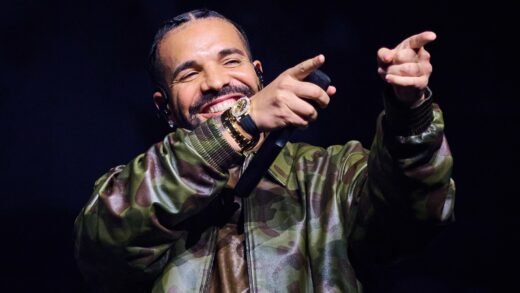
Everybody Likes Drake Again: What His Comeback Means
new admin - Sep 14, 2026[ad_1] Not to be dramatic or anything, but not too long ago, listening to people talk about Drake, you’d think…

Volkswagen’s slippery new EV breaks a bunch of efficiency records
new admin - Sep 14, 2026No, that’s not a Tesla Cybercab. That’s Volkswagen’s Mission Efficiency, the world’s slipperiest electric vehicle. The near-production 2+2 seat electric…

How Democrats and Republicans are addressing AI safeguards and data centers
new admin - Sep 14, 2026The political debate over AI regulations and data centers is heating up ahead of the 2026 midterms. Dan Kanninen, former…