

Where First-Generation Students Find Support

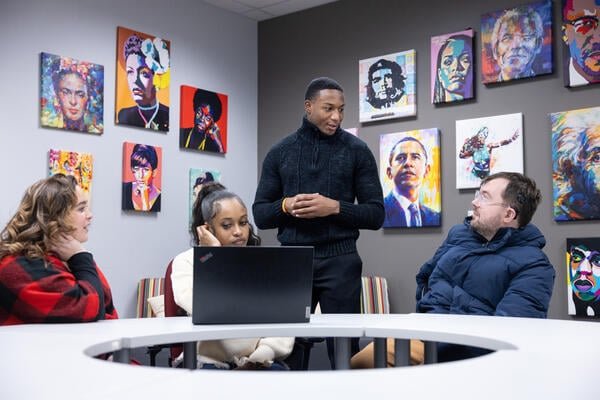
First-generation students—those whose parents did not complete a college degree—make up more than half of undergraduates nationwide. Yet not much is known about the support networks they draw on as they navigate academic and personal challenges.
A new study from the Community College Research Center suggests many first-generation students have more college-related support than is commonly assumed. It found that more than 70 percent of respondents turned to siblings, cousins or other family members who had attended college, challenging assumptions that first-generation students lack college-connected relationships.
The report draws on survey responses from more than 2,000 first-generation students attending California community colleges and public universities, as well as interviews with 58 students. Researchers asked respondents how they built relationships and relied on networks of family, friends and institutional support to navigate both academic and personal challenges during their first year of college.
Nearly 70 percent of respondents said they had at least one source of support for academic issues such as course selection and coursework, while 76 percent reported having support for nonacademic challenges such as emotional well-being and transportation. But the individuals who filled those supporting roles varied, from childhood friends to professors.
Melissa Herman, senior research assistant at the center and co-author of the report, said the results illuminated the “very wide range of experiences” first-gen students have and can help institutions determine how best to support them.
“How do we identify students who truly seem isolated, rather than using this first-gen bucket as a catchall for figuring things out?” Herman said.
Mapping support networks: When asked to identify people they turn to for academic support, 39 percent of respondents identified childhood or high school friends, 30 percent named friends from college, and 28 percent pointed to parents. Among institutional actors, 29 percent identified academic advisers and about 10 percent identified a faculty member.
For nonacademic support, students most often turned to parents (49 percent) and childhood or high school friends (48 percent).
Herman said the findings suggest students draw on peer, family and institutional relationships in different ways depending on the type of challenge.
“They might not go to their dad for math tutoring, necessarily, but there were other sort of hard skills that students were able to get from their parents in terms of ‘How do I manage my time? How do I keep track of tasks?’” Herman said. “We should still think of parents, even if they don’t have college experience, as having skills that they could impart to their children.”
Herman added that these patterns contradict the notion that support for first-generation students is primarily located within colleges themselves, since much of it is distributed across informal family and peer networks.
“The big thing for colleges thinking about families is that they really should think about the broader set of family members as potentially being involved,” Herman said. “How do we make students feel that it’s OK if you don’t bring your mom to orientation, but it’s cool to bring your uncle or whoever is going to be an important part of your college-going experience?”
Networks as brokers: The report found that parents, siblings and cousins often provided both emotional support and practical guidance, helping students navigate college processes including financial aid applications, course registration and connecting with campus resources. Friends emerged as key supports particularly when students were dealing with stress or personal challenges.
Herman said colleges should think of friends, siblings, cousins and extended family members as “brokers” who connect students to resources and opportunities.
Faculty, advisers and other campus staff played a more limited role in students’ support networks.
Students who formed connections with faculty or advisers said those relationships helped them overcome academic challenges, identify campus resources and clarify academic and career goals. Some also described faculty and staff as important role models, particularly when they shared similar backgrounds, identities or professional interests.
Herman said this reflects the idea that support roles on campus are not limited to formal advisers.
“Everyone on campus could potentially be a broker,” she said. “There’s times where faculty or other people on campus were very systematic about taking students to the writing center [or] the IT department—the kinds of places where students maybe wouldn’t realize they had resources or would feel uncomfortable going.”
Barriers to support: The report found that 16 percent of respondents did not self-identify as first-generation, even though they met the federal definition. Herman said this suggests colleges should not assume students will automatically understand or adopt the labels institutions use to describe them.
“If colleges are trying to serve this population, or really serve any student well, knowing that some students come in not knowing what a lot of terms mean is important,” Herman said. “If a student doesn’t even know if they identify as first-gen, that’s a barrier to getting the help that you need.”
The findings also indicate that some first-generation students feel isolated or are not fully aware of available campus support; more than a quarter of respondents reported challenges in understanding how to find resources and services on campus.
Some students also may hesitate to seek help from family members or feel uncertain about how to navigate college systems. Herman added that one of the most immediate steps institutions can take is to ensure that students are assigned a consistent adviser who can guide them throughout their college experience.
“There’s a huge difference between the students who had access to one person that they could always see versus every time they go to the advising office they’re in this random line and meet with whoever is there,” Herman said. “The extent that more colleges can give students a process where they’re only meeting with the same person over and over, or at least have the option to do that, to me that’d be huge.”
Get more content like this directly to your inbox. Subscribe here.
You may be interested

Not baking soda or vinegar – make sinks sparkle with household staple
new admin - Jun 08, 2026Sinks will sparkle like brand new if using multi-purpose cleaner (stock image) (Image: Getty)With everything our sinks go through, from…

Trump tells Iran and Israel to “stop ‘shooting'” as ceasefire teeters on war’s 101st day
new admin - Jun 08, 202611m ago Iran announces halt to military operations Iran's military on Monday announced a halt to all military operations…
Ohio State Settles With Nearly 300 Strauss Victims
new admin - Jun 08, 2026[ad_1] Ohio State previously reached six other settlements with survivors of Strauss’s abuse. Aaron M. Sprecher/Getty Images Ohio State University…