


Pell Recipients Face Higher Food Insecurity

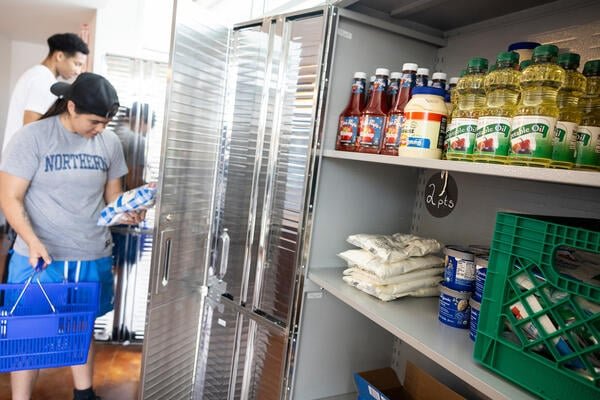
Pell Grant recipients are nearly twice as likely to experience food insecurity as students who do not receive the federal grant, according to a new analysis from the Institute for Higher Education Policy.
Drawing on data from the Beginning Postsecondary Students Longitudinal Study, the analysis found that 42 percent of Pell Grant recipients experience food insecurity, compared to 22 percent of students who do not receive Pell Grants.
Marián Vargas, assistant director of research and co-author of the report, said recent changes to the Supplemental Nutrition Assistance Program combined with a projected $16.9 billion Pell Grant funding shortfall could worsen food insecurity, making it harder for students to stay enrolled and complete their degrees.
“Students should not have to choose between eating and staying enrolled in college,” Vargas said. “Supports like Pell and SNAP are essential tools for expanding opportunity and supporting student success, but right now the supports are not keeping pace with students’ financial realities.”
“Sustained investment in affordability and basic needs support can help more students persist and complete their degrees, and it’s absolutely essential if we want to create a new socioeconomic reality in this country,” she added.
Key findings: The analysis also found disparities in student persistence and attainment. Only 65 percent of Pell Grant recipients persisted in college or earned a credential within three years of enrollment, compared to 76 percent of students without a Pell Grant.
“Pell is indispensable. However, we can see from this report that right now it is insufficient,” Vargas said. “The program is covering the lowest share of college costs in its history, leaving students with fewer financial resources to afford college and creating additional barriers to persistence and completion.”
Vargas said policymakers should focus on strengthening federal aid programs rather than reducing support for students with the greatest financial need.
“We’re in a time where we should be bolstering the Pell Grant, increasing its funding and ensuring more long-term stability rather than putting it at risk,” she said.
Persistence and attainment rates were lowest among Black, American Indian or Alaska Native, and Native Hawaiian or Pacific Islander Pell Grant recipients.
Among Pell recipients, persistence and attainment rates for those groups ranged from 47 percent to 59 percent, well below those of white and Asian American students. Among students who did not receive Pell Grants, Hispanic students joined Black, American Indian or Alaska Native, and Native Hawaiian or Pacific Islander students as the groups with the lowest rates of persistence and degree attainment, between 64 percent and 68 percent.
Vargas said the disparities reflect broader inequities in students’ financial resources. Previous research found that Black, Hispanic, American Indian or Alaska Native, and Native Hawaiian or Pacific Islander students are less likely to receive parental financial support for college and often receive smaller amounts when they do.
“These student groups have much less financial resources to work with over all, and that could affect something like access to food,” Vargas said. “If you’re having to manage the exorbitantly high college costs students are facing now, if you’re having to manage it completely independently, it could increase your food insecurity.”
Why this matters: Vargas said the Pell Grant now covers the smallest share of college costs in its history, while many students eligible for SNAP never receive benefits because of eligibility barriers and administrative hurdles. She also warned that changes to SNAP under the One Big Beautiful Bill Act and an unresolved Pell Grant funding shortfall could deepen those challenges.
“Without swift congressional action on the Pell Grant, millions of students from low- or moderate-income backgrounds could face reduced aid or loss of eligibility, which could threaten college access and completion,” Vargas said, noting that similar cuts occurred after the 2008 recession.
“Who’s going to be most affected? It’s going to be students from historically marginalized backgrounds, like [Pell] program recipients, like Black, American Indian or Alaska Native [and] Native Hawaiian or Pacific Islander students,” she said. “Students who we should be bolstering and making sure have the greatest access to socioeconomic mobility are instead going to have more barriers thrown in front of them.”
Get more content like this directly to your inbox. Subscribe here.
You may be interested

You can’t ignore Google Zero anymore
new admin - Jul 24, 2026The web and Google once had a deal: Google collects data and indexes webpages and in exchange sends oceans of…

Giants Receiver Malik Nabers Avoids PUP List To Begin Training Camp
new admin - Jul 24, 2026[ad_1] NEWYou can now listen to Fox News articles! Jaxson Dart will be able to throw to his No. 1…

Restaurant visits fall, grocery store lettuce sales dip. Here’s how cyclosporiasis is affecting businesses.
new admin - Jul 24, 2026Foot traffic to popular food and restaurant chains has declined as the outbreak of cyclosporiasis, linked to lettuce from Mexico,…