Recording Academy CEO Harvey Mason Jr. on AI and the Grammys

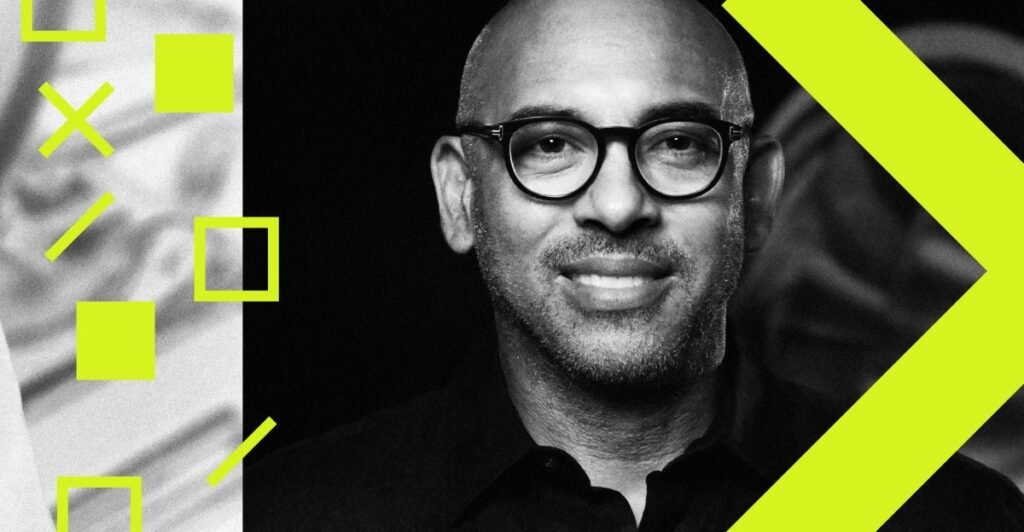
Today I’m talking with Harvey Mason Jr., who is CEO of the Recording Academy — that’s the outfit that puts on the Grammy Awards. I last talked to Harvey in 2024, when it was obvious that generative AI would upend the music industry, but still not exactly clear how that would happen.
Well, it’s been 18 months since that conversation, and you’re going to hear Harvey say that AI is now “omnipresent” in music production. And Harvey knows what he’s talking about — he is himself a legendary producer who’s worked with everyone from Janet Jackson to Beyoncé. Harvey has said that every session he’s been in recently has had AI in it, and I really wanted to know what that meant — what kinds of tools are musicians using, in what way, and what kind of music is it making for us? Is it any good?

Verge subscribers, don’t forget you get exclusive access to ad-free Decoder wherever you get your podcasts. Head here. Not a subscriber? You can sign up here.
Because, as it stands, there’s an exponential increase in the rate of AI music creation. Streaming platform Deezer reports that more than 50,000 AI-generated songs are being uploaded every day. All that AI-generated music is getting harder to identify and filter out, while at the same time, tools like Suno have become mainstream parts of the creative process for musicians of all kinds. So I really wanted to know how Harvey experiences all of that and balances his role running the Grammy Awards, especially since the Recording Academy’s rules say that AI music isn’t eligible for the industry’s highest honors.
There’s a lot going on in this one. Harvey and I also talked about the Grammys moving to Disney after years on CBS and what it means to reach new younger audiences with award shows in the age of TikTok. If you’re a Decoder listener, you know that I’m always saying that whatever happens to the music industry happens to everything else five years later, and this conversation really underlined that for me.
Okay, Harvey Mason Jr., the CEO of the Recording Academy, on the future of AI and music. Here we go.
This interview has been lightly edited for length and clarity.
Harvey Mason Jr., you’re a songwriter, you’re a producer, and you’re the CEO of the Recording Academy. Welcome back to Decoder.
Thank you. Good to be here, man.
I’m excited to talk to you. It’s been about a year and a half since you were on the show. A lot has happened in a year and a half. I actually just want to start with a lightning round of the Decoder questions. I ask every CEO the same question, but I have so much on my list that I’m just going to do a check-in on whether these things have changed.
You’re the CEO of the Recording Academy, and that’s the organization that puts on the Grammys. You run MusiCares for Charity. It’s the social support system for most of the musicians in the United States. How is the Recording Academy structured? How many people work there, and has it changed at all in the past year and a half?
It’s definitely changed. We continue to grow and progress and try to do more, reach more people. As you said, we serve music and all the people that make it in a lot of different ways through our Grammy organization, which includes the Grammy Museum, MusiCares, as you mentioned, our advocacy efforts in DC, working with state lawmakers around the country, and then of course the Grammy show. And so we’re a little over 300 people, so it’s not a massive organization, but we punch above our weight, and we do a lot of work, and we’re very active.
The way that it’s changed is that I think we’re doing a good job of keeping up with the changes that are happening, and that is nonstop, especially with technology, new styles of delivering music, creating music, and consuming music. And then also trying to make sure that we’re staying in tune or relevant with what’s happening in music genres, things that are happening. New popularity comes up. People are consuming different styles of music, music from different parts of the world. All those are things that are ever-changing, and I love that our organization is moving quickly and staying ahead of a lot of those things.
Are you investing more on the policy side, on the production side, where you’re saying you’re changing? What part specifically is growing?
Well, one of the things that is really going to make a big change is our partnership with Disney at ABC. We were at CBS for 50-something years. And so, for the first time this year, we will be with Disney, on ABC. That gives us the ability to do so much more, as you said, investing in content and storytelling. We have more opportunities for using our Grammy brand and to tell music stories in different ways — documentaries, scripted, and other forms of music content, because Disney, as our partner, has an appetite for more of that than we had previously. So that will be a change. We’ve created Grammy Studios, which is exciting. That’ll be our arm to create a lot of that content, and we’re really approaching content for a strategy. So when we’re doing events, masterclasses, or we’re doing Grammy houses around the world, we’re going to be filming them and creating content around those.
The other question I ask every CEO who comes on is about decision-making. What’s your framework for making a decision? I’m just going to tell you, 18 months ago, when you were on the show, you said you like to think a lot and then make a decision really fast. Has your framework changed at all?
No. If I didn’t include the collaborative approach of decision-making, I was probably thinking too fast, and you might have caught me on the lightning round. A big part of my decision-making is gathering information from people that I trust and people that are around me. And people who are experts, because I don’t pretend to be the expert in every department of what we do. I do think I have a great group of people who give a lot of different insight and diverse perspectives, and really specialized thinking. And I come from sports. I played basketball, as you know. I’m a songwriter, as you know, and those are team efforts. You write songs together; you’re not sitting in a room all by yourself, at least the way that I work. You do that with other people. And the best idea wins, and the same for sports. You have a role on a team. If you’re great at that one role, you do that. You don’t try to do everything. So that has always been my style of leadership or decision-making.
Describe that structure. So your group of people around you, the Recording Academy, is about 300 people. Just how is that structured? How many people work for you, and then what roles do they play in a large organization?
Sure. So we have a president, we have a chief of strategy, and I have a chief of staff. We have different department heads. I have about 12 people reporting to me at this time, and we’ve gone back and forth on that number, and it changes from time to time. I’ve done a couple of reorganizations over the six years now that I’ve been in the role. And each of those department heads manages a department, but they all report up to me. We ultimately have meetings to make the decisions that we think are the most important. Right now, we’re undergoing a strategic plan build, which is, I think, incredible. And it’s been an amazing process for our organization. Each of the department heads is bringing ideas, and we’re coming up with objectives and goals, and real strategies to accomplish those goals. I really enjoyed the process. And then, of course, budgeting against that is another thing that’s going to be a fun challenge for us. So we’re right in the middle of that process.
The reason I ask all this is that I feel like if we rewound the clock 5, 10 years ago, I could understand the music industry. And my thesis on the show is that if you pay attention to what happens to the music industry, you will know what will happen to every other creative industry five years from now. The change is always fastest in music.
Five years ago, okay, we’ve come through the shift to streaming. Artists understand they’re going to get paid pennies on the dollar from Spotify, even if they got a billion streams. We have to find other revenue lines. We’re going to do sync licenses, where everyone’s going to do a Keds ad. We’re going to be on tour all day and all night.
Keds, that’s a deep cut, but thank you.
You know it. Now it’s like that’s all upended. I want to ask you about the vibes of the industry right now, and it’s not just AI that’s upending the industry. I’ve been reading the music press this past week. Everyone’s talking about blue dot fever. This notion that there are blue dots and all the Ticketmaster seating charts that represent empty seats, and big artists are canceling tours. You got Meghan Trainor, the Pussycat Dolls, and Post Malone, who just canceled about six dates. Well, first of all, I’m just curious: do you think blue dot fever is real?
I do. I don’t know all the ins and outs of it, but from what I’m reading, and I’m probably reading a lot of the same things you are. It seems like it’s a very, very serious issue, and it seems like we’ve been trying to deal with ticketing issues for some time now. There are some discrepancies in the information that we’re hearing. Hopefully, we can get to the bottom of some of it. Obviously, there are legal cases going on, but the vibes in the industry from what I’m seeing are that there’s a lot of trepidation. There’s a lot of concern.
There are fears around some of the ticketing issues, but also AI. And I’m sure that’s the topic that is at the tip of everyone’s tongue. But I also see a lot of opportunity. There’s more music being created and more music being listened to. There are a lot of live opportunities out there. I know you mentioned some that have been canceled, but there are others that are doing really, really well. I was just at Coachella a couple of weeks ago. And what a spectacle, what an amazing event and series of events. Now you see they sold out for next year without even announcing a lineup. So there are things that are working really, really well.
The reason I’m pushing and I’m starting with live [performances] is again, five, 10 years ago, I think the industry figured it out; there’s stuff we can monetize, and there’s stuff we can’t. And the idea that the music itself was hard to monetize, I think that was a paradigm shift in the industry. You’re going to cut a record, and that thing is not going to make you all the money, unless you’re at the very top of the game. It’s all the other stuff that’s going to make you money. That pressure has led to rising ticket prices. Post-COVID, everyone’s going to be on tour forever.
But also, the demand has led to some rising ticket prices. I think there’s a high demand to see a lot of artists, depending on who they are. And again, you’ve said some artists that didn’t have as much success selling, but there have been other events where money’s not even the object. People just want to go see great entertainers and great music. So I think it’s a combination of both.
Do you think ticket prices are just going to keep going up? I worry that ticket prices are just going to keep going up.
Well, considering what’s happened to other commodities or other things in our world that we live in, it doesn’t seem like there’s any end in sight. You look at gas, you look at food, you look at rent, the cost of living. I hope that ticket prices find some kind of level, because I would hate that to be an experience that only certain people get to take advantage of. I think music, watching music, and being entertained by songwriters, creators, and singers, that’s a part of who we are. And that’s stuff that we need just to feel human and to feel alive and to be able to find that common ground with other people.
I would like to think we find a way to allow people to go to concerts. But again, if you look at where we’re headed as a society, it just seems like the cost of things is running away from us.
Right next to that, there’s a big lawsuit against Ticketmaster. The federal government settled, and Ticketmaster agreed to some changes with the federal government, as part of that settlement. I think the state attorneys general did not think it was strong enough. They pursued the case; they’ve won; something else is going to happen. Do you see the Ticketmaster case having an impact already, and do you see a bigger impact in the future?
I definitely think it’s going to have an impact. I think it is going to depend on how it plays out. There’s still a couple of rounds left in that, from what I can tell and what I’m hearing. Once that shakes out, then we’ll be able to see what the effect will be.
I feel like it was understood how to make money in live events, and that is shaky right now. The idea that tours are getting canceled or we’re oversupplying a market with rising costs, and people are going to pick gas and groceries over seeing their favorite artists — that’s unsettling, I think, in the industry.
But I also think that’s going to be such an appealing proposition for live events more in the future than even now. I would bet that, depending on ticket prices and accessibility, of course, things to be considered. People are going to want to go see live music. They’re going to want live experiences. You’re seeing more and more people on computers and phones, AI, and the way they’re working remotely. I personally believe being together, like we’re doing this podcast, is much better than doing it on Zoom. Listening to music is going to be much better for people than just doing it on headphones. They want to be somewhere where you can be among your peers, among people who love the same music and feel that, experience it.
Again, I was at Coachella. I felt that there’s nothing like going to a live concert. So I truly believe, yes, there’s lots to sort out, whether that’s the legal issues, the ticket pricing, the bots and the blue dots, and all the different things, but people are going to want to see live music.
How long did it take you to plan your Coachella outfits? [Laughs]
I watched Coachella from social media, and I was like, “Oh, there’s a whole other thing happening here.” That’s the other dynamic. The music industry has become way more commercial. Coachella is the influencer Olympics; it has all of the brand activations. There’s something there where it’s, okay, the money has to come from somewhere. It’s going to come from credit card companies or travel agencies or whatever’s happening, brand activations.
Tell me about that vibe right now, that we have to commercialize the industry in order to support these artists.
Well, I don’t know if it’s a great thing or a horrible thing. I can’t tell, but it’s definitely happening. And it is a way for artists to make additional revenue, but it all stems from the music. Music is driving so much of this, and the culture around it is so important. And that’s why I love the work that I do, because I get to be around those people. If you can figure out how to package up all the different things you just talked about, the ancillary revenue opportunities, you have to remember, back at the source, it’s the music, it’s the songwriting, it’s the performing, it’s the recording. And that’s why, to me, the academy is so important because we’re continuing to push to advocate and support those opportunities for our music people.
So yeah, I love all the different things that people have figured out how to make money — they monetize music, performances, live, or merch, and even food. You see food coming together with music; you see sports coming together with music. Those are great things. Those things make me excited because of my passion for music and music people.
Again, the reason I’m starting here is that I want to ground the conversation with AI. I feel all that pressure in the music industry. I can see all those gears turning. Then, right next to that, AI is upending the process of songwriting, the process of producing music. And I do think it is happening faster in the music industry than in other creative pursuits. You can just see it happening every single day in music.
Music people are pretty quick to jump on new technologies, and we adapt relatively quickly, I think. And you’re going to see it have an impact across all creativity and different art forms, I’m quite certain. But as you said, music people are early. It’s had an impact already, and I’m sure we’re going to dive into it.
So the last time you were on the show, I’ll just read you some of the quotes. “I don’t think you can tell me that AI can create Songs in the Key of Life, Nevermind, or Illmatic.” And then you said, “It’s all going to be a mess until we get it sorted out because yes, it’s difficult.” It’s been 18 months. Has your thinking evolved dramatically on how AI can deliver quality, and how musicians should use it?
It has, honestly, and it’s crazy. I never thought it would change, but actually, that’s not true. I knew it was going to change, because it’s all been changing so fast. But the quality of what it’s able to create has improved dramatically. I remember 18 months ago, you could tell when something was AI-generated. And now it’s to the point where people are playing me things and telling me that AI made it, and I’m surprised. I’m impressed by the quality of it. And all that scares me because I do represent roughly 30,000 music people and then millions of music people around the world that have grown up their whole lives trying to figure out how to express themselves by using a guitar or a keyboard and writing their heartfelt lyrics. Now you can prompt some of that stuff. And it’s darn good, which I don’t know if I love or don’t love, but it’s evolved over the last 18 months.
You’re still a working producer and a songwriter. I know you’re still in sessions. You gave a quote in January. You said, “I’ve seen AI in every studio, in every session. I’m not remembering a song I’ve been around or a room I’ve been in that was not using some form of AI.”
I have been mulling that quote since January, when you said it on stage. I’ve been dying to have you in this chair to ask you about that quote. How is it being used? How is it changing the process of songwriting from your vantage point as a producer and a songwriter? And then obviously, as somebody who represents the interests of all the songwriters?
So the quote, let me address that first of all, because I work in pop music generally, pop and R&B. And in those genres of music, I think it’s pretty omnipresent. There are other genres that are not that way. So I don’t want to mischaracterize it because what I do and what I see may not be everyone else’s experience. But when I’m in a room, AI is generally always there. It’s being used to create chord progressions. It’s being used to fill out drum loops. Some people are just creating entire tracks using AI. Others are using AI to come up with lyrics. Maybe they’ve written a few lines in the first verse. They want the second verse to have the same rhyme scheme and rhythm, and they’ll just enter the first one and say, “Make a new one for the second one.” Some people are being… They’re putting in a title, and it’s giving out ideas. And some of them are just using it as a rhyming dictionary.
But AI is across so many different aspects of songwriting right now. Definitely, people are using it to create background vocals, to make stacks, to create demos of singers that they may be writing a song for. It’s pretty wild, the power of AI. And how I feel about it is that I have mixed emotions. I am definitely disturbed by the fact that I worked my whole entire life, and all the people that I work with have been grinding for years in studios and in bedrooms on laptops and with instruments, to try and figure out how to make great art. And now there’s a possibility of people doing that who have not put in the work or don’t have that same passion, and they can just type in a prompt and create a song.
I talked a lot about my niece. She does a lot of AI creating, and she sends songs to my wife and says, “Look at the song I wrote.” She’s in sixth grade. And so it’s definitely a challenge for me, but I also have to understand that both in my role as a producer and my role as a CEO, there’s got to be a balance because AI is here, people are going to use it. There’s competition out there. Songwriters, artists, producers, they’re all competing for a certain number of ears.
And a lot of them, they don’t care how they get to those ears; they just want to get to them. So I am struggling with making sure we’re preserving human creativity while also allowing technology to evolve the craft and the art form of creating and writing songs. So it’s not an easy struggle for me because I am a creator, but I’m also overseeing or trying to help serve music people in the music community in my role as CEO.
We did a story a while ago. Our great friend, Charlie Harding, wrote about AI in the country music industry. And the country music industry is an industry. It’s more structured than other kinds of music.
There are songwriters, there are session musicians, there are track players. It’s a machine. And he was like, “AI is showing up in structured ways here.” The idea that people are going to make a demo track for an artist… that’s going away because the songwriters can just say, “Make me a song that sounds like whatever country artist,” and I’ll pitch it to them directly with their voice. And none of the artists would cop to it, but we heard it from all these songwriters. “Yeah, we’re just using the artist’s voices.”
There’s a real dynamic there that is spreading to other parts of the music industry. Pop music, as you mentioned, is starting to use it, but it’s not as structured. It’s not as controlled. How do you see that diffusion happening across genres?
Well, I’m a little surprised, to be honest, that it is permeating the country scene. I would think that would be one of the last to accept AI or any input from it.
Oh, I have a very different view of country music. I think there’s an image, and then I think there’s an industry.
A reality. Well, I’ve definitely witnessed some people in that space using AI, and it just has to be… You have to figure out how you’re going to use it. Is it going to be a tool or is it going to be a replacement? And that is going to change per industry. I’ve seen people who are doing film scores now using it in a way that I never imagined. They’re playing individual instrument lines into the generative platform, and then that will, in turn, create a full arrangement. So maybe you’re playing a line on a piano, and then it turns it into strings, violins, violas, cellos, and basses, and it splits it out on a score. And then they’ll just hire the orchestras to play it. But they will not have to do any of the arranging, the composing, or even making the charts. It’s doing all that for you. So you’re going to see it used in different ways in different forms of music making, which you’re already seeing, as you said, in country versus pop versus composing.
I’m going to read you some stats that I think are just fascinating. The Hollywood Reporter did a big AI and music poll last fall, but it tracks with the polling that we’ve seen more recently. Most people, 52 percent, do not want to listen to music made with the help of AI. Sixty-six percent of people said they’ve never listened to music knowing it was made by AI. I don’t know if you can do that anymore, but that’s what they said. And then there’s a lot of data that just says people dislike AI generally.
But you have to look at who they’re asking and who are the people that are filling out those surveys, and who are the people that subscribe to their magazine or will look at their website. As you get into younger people, I would imagine those numbers might change.
So, younger people… This is polling that we have cited a lot on this show and across The Verge. Younger people, the more they use AI, the more they dislike it. So Gen Z has this ferocious dislike for AI. I bring this up not to litigate the poll numbers with you. I’m just curious about the sort of widespread use of AI, and the knowledge that most artists have that their fans don’t want them to say they’re using AI.
So Michelle Lewis told Rolling Stone the music industry has a quote, “Don’t ask, don’t tell policy about AI music.” Suno is one of the big generative AI platforms, maybe the dominant one; its CEO, Mikey Shulman, says, “Suno is the Ozempic of the music industry. Everybody’s on it. Nobody wants to talk about it.”
That’s the gap, right? Everyone’s using the tools, everyone sees the power of the tools, but we cannot tell our fans straight out that we’re using AI to make the music. Do you see that gap closing or do you see it widening?
I don’t know. I don’t know if it’s going to close or widen. For us at the academy, we are in a challenging position because we have to award excellence in music. And we are now every year deciding what is going to be the threshold of acceptability for AI. So that’s going to probably have an effect on how the gap widens or closes because we ask when you submit, “Did you use AI?” But acknowledging it’s like Ozempic, some people are going to tell you they’re on it, some people are not. It’s a little bit of taking people’s word for it until we can find the technology or deploy the technology, which I know is supposedly out there, that can determine when AI is being used, and how much it’s being used. We are a little bit at the mercy of people telling us and disclosing when they’re using it.
We’ll see what the perception is as people become more comfortable… In the history of humanity, I think we’ve had a pattern of becoming much more comfortable with new technology as we’ve used it and it’s been a part of our society, and it doesn’t usually take us very long. I remember people that I was with saying, “I’m never putting my credit card on the internet. That’s ridiculous.” Or, I’ve even met people in the music space who said they’d never use Pro Tools, AutoTune, Melodyne, or some of the other things that have developed and allowed us to be more creative and more efficient with our creativity. So we’ll see what happens. In 18 months, we should talk again, and we’ll see how people are feeling.
Did you see the recent sort of social media discourse about whether the “D.O.A. (Death Of Auto-Tune)” held up as an idea from Jay-Z? It’s like, now it’s everywhere. It didn’t actually die. It took over everything.
It took over everything. Yeah. I haven’t seen that, but it’s a funny subject to think about.
I’ve got big artists saying basically, adapt or die. Diplo, “I can get the best voice from AI. I don’t need anybody to sing the song anymore.” Literally, he said adapt or become an Uber driver.
Timberland is doing straight AI artists. He’s got an entire record labeled for his AI artist. 50 Cent just loves posting memes of soul covers of 50 Cent songs. Grimes exists. Taryn Southern is out there. What’s your take on how it’s the bigger artists who are going to adopt AI faster because they have the name recognition, they can put out AI music, and people will listen to it because it is 50 Cent, Grimes, or whoever? And the younger artists are struggling for attention because they’re swamped on social channels full of slop.
Some big artists will adopt, others are going to reject. And I think it’s very similar to the other tiers of music creators. Some young new artists are going to see it as an advantage, and they’re going to want to use AI because they can create faster, and they can create more things. And some are going to rebuff the whole idea of using technology like that to create. I don’t think you’re going to find any one-size-fits-all. That’s what’s going to be cool, or I think somewhat acceptable about it. I am always going to advocate for humans, and I think that’s still going to be an important part of the art form, which is how we express ourselves as a society, as humans, as we’re interacting with each other and talking about that human experience. That’s how we communicate. That’s how we feel about each other; that’s how we come together. I think that’s always going to be important.
The other thing that’s going to be important is that humans are going to create the coolest, newest stuff. I don’t think, and in 18 months we can talk again, but I don’t think AI is going to go out ahead of us and beat us at coming up with a new sound, a new genre, something that’s fresh and exciting, that lands and resonates with listeners. They will, at some point, maybe figure out how to do that. But what they’re going to do now is they’re going to listen to all the cool stuff that we make. Then, they’re going to iterate on that, and they’re going to probably add a little twist here, mash some stuff together, and come out with a new song, a new voice, or a new singing.
But as humans and as creators who are living life and experiencing things, we are going to be the ones that push the art form forward. I truly believe that, and this month we’ll see. So you’ll have both. You’ll have people using AI and just creating a whole bunch of music, and you’ll have other people say, “I want to do it my way. I want to create through my experience and through my pain and through my interactions.” And that’ll be cool.
So you were talking earlier about how to win a Grammy, and you have to certify that you made it with humans. You only want to give the award to the human part of the music. That’s obviously getting fuzzier. You’re describing it getting fuzzier. If Diplo submits a track and he’s like, “All the backing vocals are AI.”
AI doesn’t make you ineligible. It doesn’t exclude you from the process. We just have to make sure that human creativity is at the forefront and there is human creativity. So if somebody submits songs with AI background vocals, they’re not going to get a Grammy for performance because AI is doing the performing. But you can still submit for songwriting or some of the other categories. And conversely, if AI has written the song but you have a human singing it and they sang the heck out of it, that person can be submitted for a performance award.
We acknowledge — and this is why it’s a fine line — that we’re walking the tightrope right now. And we want to make sure we’re honoring human creativity; we want to honor excellence. We have to acknowledge that AI is being used, and at some point we’ll have to decide: do we want to completely ban AI from the process and say, if you used AI at all, you are excluded from the Grammy process? Or are we going to say AI is the next version of a tool for music making and people are using it in different ways? Some of them are really interesting and creative, but some of them seem egregious and too much. We’re going to have to find that sweet spot, and that’s what we’re doing every single year.
We review this policy, we look at it and make sure that we’re doing the thing that our board of trustees, our members, and our creative community want, because we listen to our creative community. So that’s what I see. The future is navigating that, and I think it’s going to evolve over time.
Where’s the line right now? How much is too much?
Right now we call it more than a de minimis amount of human creativity involved in the process. So as long as you can show that a human was involved and it wasn’t just a tiny amount, then we will say it’s acceptable. But as soon as it gets beyond that point of none or not enough human interaction, then we have to pull back. And it’s not a perfect system. I mean, it is a very, very tough system to create because again, we don’t know exactly the percentage of human creativity or human interaction. We don’t have the ability to determine that today. I hope that we do in the future. We acknowledge that it is not the most perfect system, and music, by the way, is subjective as you know. So we’re evaluating and trying to award something that means something different to everybody.
We just want to try and get it right, and we want to try and celebrate music and music people in all the different forms of it. And at this point, we are acknowledging that AI is a tool that is being used. At some point, we should talk about the legislation because we need guardrails. We need people telling us and us enforcing the rules around how AI can be used.
I know you’ve been advocating for specific litigation. I do want to come to that. I just want to stay on this aspect of it for one second. You’re saying that to win a Grammy Award, you need to show us that there’s more than a de minimis amount of human involvement. I can’t just prompt Suno to make a hit record: “Make a song like Harvey would make for Janet Jackson.” Which actually sounds like a great Suno prompt. I’m going to do that when I get out of here.
Okay, that’s not enough. How do you prove it? Do you have to submit paperwork? Do you have to submit screenshots? What’s the proof?
We have screening committees that review and evaluate people’s claims, and at some point it does come down to people’s opinions and people doing the analysis and asking questions, asking for proof, asking for documentation. We’re not always going to get that, but we’re going to try. And as I said, it’s not a perfect science. We don’t have a black-and-white determining box that you can check that exactly proves that you’ve done what you’ve said you’ve done, but I know that our community is an honorable community.
People who make music are… Creators are different people. I don’t think anybody wants to cheat and win a Grammy on grounds that they can’t prove. And I would hate to think that somebody would want to do that. Maybe it happens, and hopefully we’ll catch them before it does, but it’s just not the perfect system. It’s going to be challenging to determine exactly who did what. And until we can get the technology that breaks it down for us, we’re going to have to rely on our community to be forthcoming.
I feel like we’re having this deep conversation about the artistic process, creativity, and vibes, and I’m just hitting you with a stat after stat. Deezer says 50,000 AI-generated songs are being uploaded to their platform every day. You’re describing a process where a bunch of people get together, and they look at all the submissions for the Grammys and whatever evidence, and they do some process. Are you going to get overwhelmed with the amount of AI material that’s coming your way?
We’ll see. So far, we haven’t. We had about 24,000 submissions last year. Now it’s up a little bit from the year before, and we’ll see what happens this year. And if that starts to happen, then we’ll have to make changes. The cool thing about our organization, at least over the last five or six years, is we’ve really been quick to change.
We’re watching what’s happening, we’re listening, we’re hearing from our music people, and we’re saying, how can we make sure we’re doing this the right way? So if we start to get overwhelmed, AI becomes an issue for us, we can’t determine what’s happening, we’re getting inundated, or the whole thing is getting diluted by AI, then we’re going to make some changes. But right now, I think we’re in a pretty good spot.
There are other parts of the industry that are attempting to do the same things. Spotify, for example, wants to change its royalty structures to account for AI music. They have a label now, like a human-certified label. Does that align with your thinking? Is there a more holistic approach across the industry that will help with this?
That would be great. I know a lot of us are talking amongst ourselves about how we can align and how we can build some of those processes and lanes for separation. I also think that’s going to evolve over time. And as we started talking, it is a deep conversation, philosophical thought. At some point, is it as important to determine what is synthetic or AI-generated and what is 50 percent generated? What is zero percent generated? And at some point, do consumers start to wear down and tire a little bit of that and just say, “I just want to hear great music. I’m not sure that I care about the tools so much right now.” Then it leaves it to us on the back end to make sure we’re protecting human creativity.
I’m not sure if it will be 18 months from now. Maybe we’ll be more concerned about it, but maybe we’ll be less, and it’ll be like drum machines. You’ll say, “Some AI was used in this recording, but do I care?” I care as the CEO of the Grammys, and I care about representing human music people. And again, we’re going to have to, in the background, continue to fight and push and advocate for human creativity, but consumers aren’t worried right now if a vocal has autotune on it. They’re not thinking about if the strings are real strings in the ballad that they just listened to and that they loved.
So I’m not sure I have the answer, but we’re going to see how it changes over time and how consumers’ appetite for different forms of creativity and different tools being used in that process play out.
There was a time when people really cared about autotune, right? Cher’s producers lied about using autotune on “Believe.” That used to be a thing that they would literally lie about because they didn’t want anyone to know how they’d done it or copped to it. And you’re saying that’s going to fade away with AI the same way it’s faded away with-
I’m not certain it’s going to. I’m going to say that’s an option that it could. People become normalized to it, and they just want to hear great music. They’re not concerned about the tools as much. But in saying that, I have to, again, reiterate that my belief is that humans and human creativity are always going to be important, are always going to be the most desirable, and always be the thing that pushes the art form forward.
I like your optimism. My pushback here is that drum machines, for the most part, were not made by defense contractors. Maybe Yamaha had some sort of defense contractor, but for the most part, the instrument companies, the sampler companies… Pioneer was not making military targeting systems.
Anthropic, OpenAI, Google, all the big model companies are defense contractors. They’re caught up in the top of the government controversies every single day. They’re asking everyone for billions, if not trillions, of dollars. We’re going to put the data centers in space. At least from my perspective, it seems like the interests of artists and creatives, authors, they know it’s bad, but they’re like, “Hold on, we have war. We’re going to do war with the AI models. We’re going to argue about cybersecurity because maybe we’re going to crash the whole world.”
Have they been responsive to you? The last time you were on the show, I asked if you met with Sam Altman, and you’re like, “I’m hoping to.” Have you met with him since?
I haven’t met with him directly, but I have met with his team and people from Open and from Claude. We’re doing a lot of talking, and definitely the other platforms, Suno and Udio and others. So the dialogues are ongoing. From my perspective, or at least maybe I’m overly optimistic. I know I probably am. You already told me I am today.
But I think everybody wants to do this the right way, and maybe they’re tricking me. From what I can tell, they realize the importance of music and creativity, and nobody wants to upend that completely. At least the music people that I talk to that are running those companies, they’re fans, and they love music, and they love creativity, and they want to add to that ecosystem. So we’ll see where it goes.
I am optimistic, but I think my optimism comes more from the fact that I know our community and I know music people. I know how we think. I also know how competitive and talented our music people are, and I’m just always sure that we’ll persevere and we’ll use the tools. We’ll figure out cool new ways to do great new things with them, and we’ll iterate on what we’ve done before, and we’ll come up with a new way of making music and expressing ourselves. So that’s really where my optimism comes, less so from thinking that all the platforms are going to get in line and do exactly what we want because we know that’s not going to happen or less so that we’re going to have the perfect legislation that’s going to be drafted and passed and approved this year because I know that’s probably not going to happen, but I believe in our people.
As you talk to all these companies, which of them seem the most artist-friendly? Which of them seem the most distant? How’s the dynamic?
When I’m in the room, they’re all artist-friendly. They’re all very nice, and they all love creators. [Laughs]
I’m just thinking about OpenAI doing Sora and just like launching it in the world and being like, “We stole everything.” Or I just keep picking on OpenAI, doing Studio Ghibli or saying, “This voice from our voice synthesizer sounds suspiciously like Scarlett Johansson,” until there’s a lawsuit. Some of them seem much more poised to be aggressive, and some of them seem a little calmer.
Some of them are more… They’re just not as concerned about it, and they’re not focused on it, a little more frivolous with how they’re treating the artist community. Maybe I’m misinterpreting it. It doesn’t seem like they’re doing it to be spiteful, to be harmful. They’re all trying to figure this all out at the same time.
I have heard some people say they just want to move fast and break things. You’ve heard that probably more than I have, and they’re going to ask for forgiveness rather than permission. And those are things that are scary from a creative community perspective. The people that have written songs and hold copyrights and intellectual property, we never want to hear that. We’ll ask for forgiveness later. We’re going to use what you’ve created and what you own and what you legally have possession of, and we’re going to use that for our own benefit. That’s a dangerous precedent and one that I don’t think any of us on the creative side would support, but you are seeing some of that, so that needs to be worked out.
There’s an interesting split here. There’s legislation that you’ve brought up. The No Fakes Act, which protects voice, image, and likeness. There’s the Train Act, which would give creators access to the records of what was trained on so you could demand royalties. There’s a CLEAR Act, which is just a transparency act. Just tell us what’s in the models. I would love all those to exist. As you said, I don’t know if this year is the year for Congress to act with alacrity on AI.
I just got back from DC, and it doesn’t seem like this is the year. They’re having so much infighting, but there is a lot of alignment around these, which surprised me. It’s bipartisan, bicameral support especially for the No Fakes. Everybody knows that’s the right thing to do, and how can we get it done? Let’s get the language right. Let’s not try and make it perfect. Let’s get something on the books right now, and then we can refine it. That’s at least my thought.
You would think Donald Trump, of all people, would understand that the use of his voice is a powerful thing that he should… But it doesn’t seem like it matters. My most nihilistic version of this is that copyright law exists as a framework for big corporations to make deals, and for everyone else, it’s just a free-for-all. We’re just going to take stuff and remix it, and Mark Cuban and Taylor Swift are doing crypto ads, and that’s just the end of the … There’s no holding back. And maybe there will be some laws on whatever timeline there are laws. In the meantime, you’re going to get the platforms deciding that, because copyright law is the structure by which they make deals, they have to do something.
YouTube has likeness detection now. That is just a private legal framework. They just made up some rules about likeness, and you can sign up for it, and just the way that Content ID works on YouTube, they’re like, “We saw your face. You’re selling shoes. Do you want us to take it down?” And they’ll take it down. That’s a lot of platforms inventing a bunch of frameworks.
Do you think that’s going to be effective? Do you think there’s something to learn there as you push Congress or other governments to do stuff, or does that feel like just another kind of chaos for artists to deal with?
It feels like a first step, and it feels like something that is headed in the right direction because those are things that are attempting to protect the artists and the ownership that they have. I appreciate people trying to do that, but it does make it difficult for the artists. Having some federal framework, some federal legislation, or even an industry-wide framework that we could all abide by would be even better, but everybody’s just trying to figure this stuff out. People are trying to run their businesses. Artists are trying to run their businesses. Streamers are trying to run their businesses. It’s a dynamic that is very difficult, and I don’t know that we faced a time like this before.
Everybody likes to say, “We’ve seen this before. We’ve seen this before.” And to some degree that’s true. We’ve seen sampling, we’ve seen streaming, we’ve seen, as I said, drum machines and disruptive technologies in the creative process, but this one, for some reason, feels different. Maybe I’m showing my age when I say that because everybody says that about the issues that are in their generation, but the change to the human creative process and the ownership of that is in question or at least being discussed right now. I don’t think it’s been as acute as it is now or has the potential to be now in the history of where we are in creativity and music.
I don’t sit in your shoes. I don’t have to play the roles you have to play. I can just be direct. I look at the state of the world economy, and I think those guys shouldn’t be as rich as they are, and all of the artists should be much richer than they are.
I totally agree. Let’s go!
Are you allowed to be that frustrated and express that as clearly as, I think, your fans, as your constituencies, and the music community want you to say it?
Yeah, I’d like to think so. I agree with… Artists and creators and people who make music are special. They just are. And what they do for society and what we do for the world, what we do for individuals, for communities, for countries… I’m a music person, so I just see it through that lens, but I think that the people who do that should be taken care of, should be compensated, and they should have the ability to control what they make. They should have the ability to decide how it’s being used, how they’re compensated, and how they’re credited. I just strongly believe that.
In my career, I’ve worked with so many special people, and I’ve sadly worked on the last record of a lot of very talented people. I worked on Whitney Houston’s last record, Michael Jackson’s last record, Luther Van. And I remember distinctly when they passed and thinking to myself, “We’ve lost something so important and so meaningful.” People have their challenges, they have struggles, issues. Everybody has something they can get upset at an artist about. But at the end of the day, when an artist makes a record and you feel that record, you’re driving your car, you’re dancing at a wedding, or you’re at a concert, there’s nothing in the world like that Those people and the people that allow that to happen, we have to watch out for them, regardless of some of their shortcomings or some of their faults because of what they put into the world. And I just think that’s powerful.
Are you allowed to bring this fire to your meeting with the AI companies? That’s really what I’m asking here. For my audience, I sense frustration. This is going to go out on YouTube, and I invite you to take a scroll through the inevitable YouTube comments we’re going to get, which basically come down to why isn’t Harvey arresting Sam Altman, right? That’s the vibe I get on this show all the time. These guys, they’ve stolen everything, and the people who should be getting the value, the people who make us feel joy, are getting nothing. That’s how people felt about Spotify. That’s increasingly how people feel about YouTube. Are you allowed to bring the fire to your meetings and in your advocacy, or are you playing a more subtle game?
I try to bring fire with me no matter where I go, but also, it is a relationship, and it’s a long-term play. This is not going to happen instantly. And how you’re interacting with people is going to affect the outcome. I do believe, as I said, they’re trying to run a business just like I’m trying to run a business or protect the business, and finding a solution is not going to be me just bulldozing them. It’s going to be how do we come together to find something that works for both of us?
I have to say, much like streaming, when streaming came out, people were up in arms about it. “Streaming is horrible. We’re not getting paid,” but on the other side of that, you see how many more people are listening to music. You see how many more people are finding new artists that they never knew before, how many people are being encouraged to go to concerts because they discovered the song that they love on a streaming platform. So there are trade-offs.
If somebody goes in and just blows up streaming right off the bat, we lose a lot of other opportunities that are unintended, or you might not have thought of. So approaching the AI people is the same thing. Yes, we have some issues, but yes, you’re also bringing something that could potentially benefit all of us, music creators, society at large. And so how do you manage that is, I guess, the challenge?
There are some bulldozers in the music industry. When streaming came out, Taylor Swift bulldozed her way into a rate structure that eventually most of the industry adopted. She put a big article in the Wall Street Journal about not being on Spotify at that time. Universal Music exists. That is maybe the biggest bulldozer of all.
Sir Lucian Grainge, one of the biggest bulldozers of all. He’s suing and settling with Sunos and Udios literally in very tactical ways. The fight is whether the songs in Suno can be exported as MP3 files to be shared freely or whether you have to listen to them on a platform, which provides at least some gatekeeping. I don’t know if that’s effective. I don’t know if that’s an effective restriction. I can think of 50 ways to get around that as an old college music pirate.
But this is the level that the bulldozers are saying, “Okay, we are going to restrict your platform.” Do you think that kind of power in the music industry can lead the charge on pushing back?
Yes, it can. Will it be effective? We’ll see. At some point, I’m sure they all realize this much more than I do because they’re incredibly smart and powerful and thoughtful, but consumers want what consumers want. And friction between consumers and music, or consumers and how they access their music, those are things that you can push against as much as you would like to, and it’s probably not going to work because people want to listen to their music. So yes, I think strong leadership, lawsuits, and trying to be protective is important, and it is hopefully going to make advancements in the right direction. But at the end of the day, as I said, people want their music. They want to listen to it, and that’s probably going to change based on a lot of things: the lawsuits, the bulldozers, but also fans of music.
I want to ask one more question here, and then I want to talk about the Grammys and Disney for one second to wrap it up. You’ve been in the studios, you’ve seen artists use these tools in all kinds of ways. I’m assuming you’ve used the tools in all kinds of ways. What’s the most innovative sound?
I’ve never used the tools.
You have never used the tools?
[Laughs] I was going to say. That’s the breaking news.
[Laughs] No, no, no. I have. Sorry.
That would be surprising!
What’s the most innovative sound? What’s the most innovative technique that you’ve seen the tools enable? Because that’s the thing that, to me, would maybe make the sale. Not, I’m going to make soul covers of 50 Cent. There’s something about that that’s just kind of cheap. But we’re going to enable a new sound, a new method of songwriting that enables a new kind of story to be told. Where have you seen the bleeding edge?
What I’ve seen that’s interesting is people using the platform to create songs and generate stems, and stems are the multi-track split-outs. So you have all the drums on one track, bass on track.
So you say the platform, you mean like Suno?
Yeah, creating stems. And then having live musicians iterate off of the stems. So they’ll say, okay, here’s a really cool groove of a song that we love, but now let’s do a live drum, a live bass, and a live keyboard player. Not using the stems from the platform, but having those inspire live musicians to build on top of that. So I think that’s kind of cool because it’s almost like you’re having a writing partner in the room that has infinite ideas. And you can say, well, let me try it like this. Then you hear something that inspires something in you as a musician or as a producer.
To me, those are interesting uses. I like it less than people who just prompt and get a sound, and just stick that in their song and say, oh, I got something from the platform, I’m going to use it. I like it more when they get that, and they hear it, and it triggers something, and you go to the next level from what you’ve just heard. And I think that’s a cool use of it.
Let me put that in a sort of broader arc of music. We’ve talked about drum machines a lot. I’m a Depeche Mode fan.
They became a drum machine band because the drums were too loud in their apartment. So the drum machine enabled Depeche Mode, and then synthesizers enabled all of the post-punk first wave. That’s my music. New Order exists because of a huge technological set of achievements that they then used to make a style of music. Turntables and mixers. We got first wave hip hop. Then we got samplers. We got another wave of hip hop. AutoTune, you got Akon, whatever that is. I can point-
Yeah. One of the most underrated and correctly rated artists of all time, at the same time, T-Pain. All right. I can point to, here’s a technological innovation that led to a sound, that led to a genre, that led to a movement. What do you think that looks like with AI? Is it going to be the same kind of thing, or is it slop? Because the danger is slop.
The danger is definitely slop. I don’t think it’s going to be one thing because AI is all across the board, and it’s being used in so many different ways. The drum machine was a very specific example, whereas with AI you can’t define its individual use. Everybody uses it differently. Every genre uses it. Now I’m finding out from you that even country’s using it. So I don’t think it’s the same thing where you’re going to say, “Oh, that’s that AI sound.” I don’t see that happening.
I think that, to me, I look at all this data, all these feelings people have, and the whole industry can’t point to the thing that they’re delivering. We’re going to ask for all the GPUs, all the power, water rights, and you can’t buy a stick of RAM for a PC anymore. And you can’t point to the one thing that you made that’s worth it. You can point to everything. We’re going to change everything. And that everything is almost too diffuse.
I’m sort of wondering when, sure, Timbaland’s going to do an AI artist, but I already know what that artist is going to sound like, and I already know how the audience is going to react to that. There’s not a sound. There’s not a K-pop of AI that’s going to reorient the listener or the audience. Do you see anybody trying that, trying to push on it?
I don’t know. I don’t even know what that would look like. I don’t know what the result of that is. I think that you’re going to see new and different uses of the technology, and people are going to continue to push the boundaries. When you talk about Timbaland or Diplo or how they’re using it. I mean, we’re in the 1.0 version of this, and people are just getting used to seeing it in their toolbox. And once people have access to it for a little while, much like you saw the evolution of sampling… It used to just be that you could take the song and just sing over the whole thing. Now, it’s take a piece and chop it, then flip it and reverse it, and then speed it up and pitch it down. So you’re going to see new uses of this tool, and that’s when you’ll start to understand what its real power is.
Let’s end by talking about the Grammys a little bit. That’s obviously the thing that the Recording Academy does; it’s the thing that funds everything else. We started by talking about your decision-making process. You made a big decision. You’re going to leave CBS, you’re bringing it to Disney, it’s going to stream across platforms. You talked about the content explosion that we’re in for. Just walk me through that decision. Why make the change?
We’d been at CBS for over 50 years. They’ve been great partners. They were going through some ownership changes, as you know. They were trying to figure out what their focus was going to be. And we also knew, as a Grammy organization, that we had expansive ideas and thoughts about where we could go as a brand. We wanted to be more international, more global. We wanted to reach more music people. You’re seeing, in music, genres or borders and languages are breaking down. There’s music from all different parts of the world: K-pop, Afrobeats, music from the Middle East, India, other areas, Latin, of course. We knew we needed to continue to grow our organization and our reach, and we felt Disney and ABC would be a great partner for that.
It also really aligns with what they’re doing, as they’re expanding into new areas and new territories. And they’re a company that, I mean, I don’t know about you, I’ve admired that company and the leadership over the last dozen years or more. How they’ve changed and how they’ve evolved, how they’ve kept up with technology, how they’ve always, at the heart of that, been true to the artists, been true to storytellers. They’ve been really passionate about making great things. So there was a lot of alignment for me personally, and then also for our organization with Disney that just made logical sense.
Was this a bidding war? Were they the biggest check, or were they the biggest check and the best vibes?
There were multiple people involved in wanting to be in the media rights business with us, which I’m very appreciative and thankful for. And I think that is a testament to the work that our organization has done, our board, our members, our staff, and leadership over the last six years to get the organization to where we are. We were making sure we were relevant, making sure we were respected, making sure we were honoring music as accurately as we could.
And so because of those things, our international opportunity, the availability of music in other parts of the world, and our agency that we have to celebrate it, we were a desired property. Again, I’m fortunate for that. It was not about the biggest check for us, though. It was about making sure that we could further our mission, perpetuate the right narrative out into the music community, that we are here to serve music people, uplift music. Because of what we talked about earlier, the importance of it, and what I think music means to the world and to society.
Disney was a great partner because of that alignment. Yes, there was a financial component because, as you touched on, everything we do — our advocacy, our education, our music preservation, our legislation, all of our work around MusiCares, all that stuff is paid for by our media rights deal. So we have to get the right deal. And we are a not-for-profit. A lot of people don’t know that. We’re not doing this for profit. We get the money that comes in the door, and we push it back out into our music community to help music people. If you think about the LA wildfires, we did $30 million of relief to music people who lost their houses or their instruments or needed medical care. So those are the things that drive our decision, my decision, when it comes to doing a new media rights deal.
One of the things I think about with award shows in particular is that they were very powerful in what you might call the monoculture era. Everyone has seen all the movies. Everyone has listened to the radio. Everyone has heard most of the songs. That is dwindling. Everyone’s in a little filter bubble on whatever algorithmic platform, listening to whatever TikTok hit the labels have paid to make big today. That’s making the award show a more diffuse product.
I can watch the Grammys, and I haven’t heard of half the artists. How do you solve that problem? Because the value of the award show needs to stay high to fund all the other stuff.
Well, as we touched on earlier, I still believe in live programming and live events. And that is going to be a premium offering. People want to see things that are timely, that you can’t record and watch later because there’s that social element of it. Did you see what happened on this stage, or did you see who won this? So that’s, to me, an advantage that we have that’s similar to sports. When you watch a sporting event, you want to watch it in real time because you want to see who won and who played well or what the stories were. So I hope, and I truly believe, that that is an advantage for an award show if done right.
As far as the diffusion and the different genres, if we can make the show compelling and we can continue to tell human stories, which I think we’ve done over the last few years, and our production partner Fulwell and Ben Winston have been instrumental in this, you bring audiences to the show because they’re compelled to watch the stories and the human interest elements. And we’re looking to expand that with our partnership with Disney. I think that’s an important component of it because it’s not just about what song you love. It’s about the process. It’s about who the people are that are making those songs, and then to see it displayed in a way that nobody else can do. I think we do that at the Grammys.
So, we should expect more. I know you produced the Michael Jackson documentary. Should we expect more music biopics with Disney, more short-form artists, human-interest stories with Disney?
I’d like to think so. I’d like to think that we are partnered with, I think, the best storytellers around. And using that platform, their expertise, knowledge, research, and appetite for more music content is something that we are excited about. We want to tell more stories about music people because to me they’re timely and they’re compelling, and it’s what we need more of right now.
So our hope is that Grammy Studios will continue to evolve and grow, producing more content around things that we’re doing, shows in other parts of the world. Tell stories about music people in other parts of the world. And of course our show is going to be the highlight, and it’s music’s biggest night. That’s this year, February coming up, and it’s going to be exciting. Our first show on Disney ABC.
A lot of the young audience lives on what you would call social media platforms. They’re on TikTok or Instagram Reels. Are you going to try to address them there more, or are you going to let the industry handle that?
No, absolutely. We want to be where music fans are and where people who are excited to watch music want to consume it. That’s one of the exciting parts about our partnership with Disney+ and ABC. They are very open to making sure we’re using all the different avenues and outlets for sharing our content, sharing our story, and sharing music with people.
And we’ve seen a little bit of a decline around linear from our show. We’ve kind of gone up and down. We crept our way back up to a pretty good number. But what we’ve also seen and experienced is a massive explosion of consumption in other mediums on the digital side, on our website, on YouTube, on the platforms. So obviously, consumers are changing, and how people are watching is changing. Our hope is that we can keep up with that, especially now in our new partnership.
Is TikTok still the place where all new music gets broken?
A lot of it, definitely. I won’t say all, but it’s a massive influencer, and it’s a huge platform for music people. And I see a lot of people spending a lot of time and energy trying to figure out that strategy. How do we use it? How do we leverage that platform to get attention and eyeballs? And you touched on it earlier. It’s an attention economy. There are so many things coming out. I hear 75,000, you said 50,000 AI songs per day, and then another 100,000 songs on Spotify that are coming out. So there’s so much competition for attention. TikTok is something that has proven to bring a lot of eyeballs and ears to the table.
All right. Last question. It’s the toughest one of all, and then we’ll let you get out of here. Why didn’t Sabrina Carpenter win any Grammys this year?
Because our voters didn’t vote for her this year. It’s a tough one. I love Sabrina. She had a great record, but the answer to your question is very simple. It’s always about the voters. And there’s quite often music that is incredible, that is amazing and so exciting that doesn’t win. We have eight nominees, and seven of them lose, sadly. It’s subjective, it’s challenging. But the good thing that I’m proud to say is it comes down to the voters and who they vote for.
Our process has evolved over the time that I’ve been here. We’ve removed some steps. There were committees that used to be involved. There were other things that would help determine the nominees and the winners. Now it’s a straight vote. How they vote is how you see the results coming out on television. So as much as Sabrina deserves to win and many other artists deserve to win, the voters dictate who gets that trophy.
All right, Harvey. Well, I hope you keep that process as human as possible for as long as possible. It seems important.
Very important. Thank you, man.
Thank you so much for being on Decoder. This is always a pleasure.
Questions or comments? Hit us up at decoder@theverge.com. We really do read every email!
Decoder with Nilay Patel
A podcast from The Verge about big ideas and other problems.
You may be interested
Miley Cyrus Drops ‘Let’s Get Married’ Video With Fiancé Maxx Morando
new admin - Sep 18, 2026[ad_1] The Grammy winning artist released the video a day before her new album, Bass Persuades, arrives Miley Cyrus has…
Who Is Drew Lock? 5 Things To Know About Seahawks QB Starting For Sam Darnold
new admin - Sep 18, 2026[ad_1] NEWYou can now listen to Fox News articles! Lock it in!The Seattle Seahawks are putting 29-year-old quarterback Drew Lock…
Farmer who voted for Trump says “I can’t stay in business” amid rising costs
new admin - Sep 18, 2026Farmer who voted for Trump says "I can't stay in business" amid rising costs - CBS News Watch CBS News…