The Who’s Roger Daltrey Talks Solo Tour, and the Who’s Future

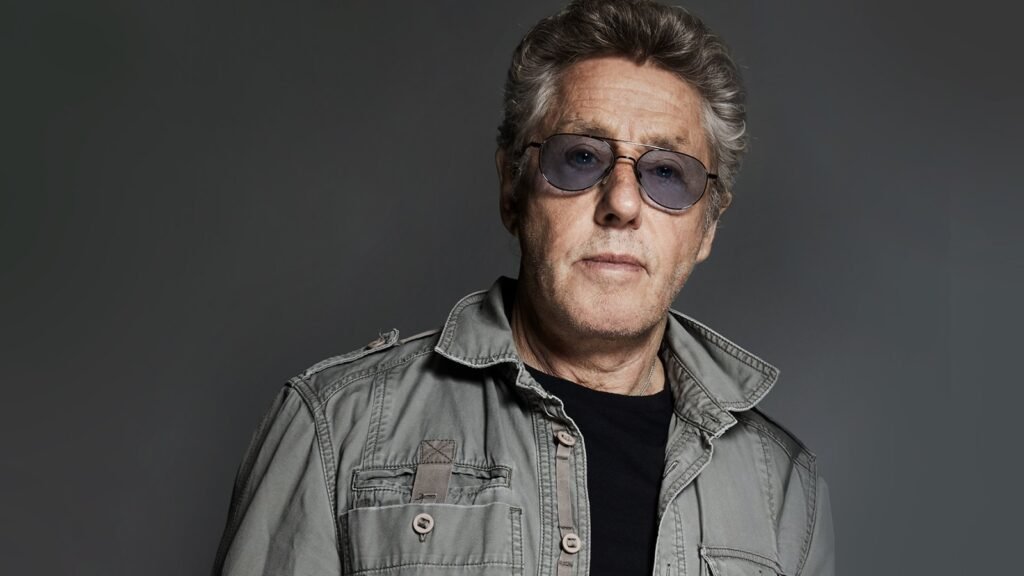
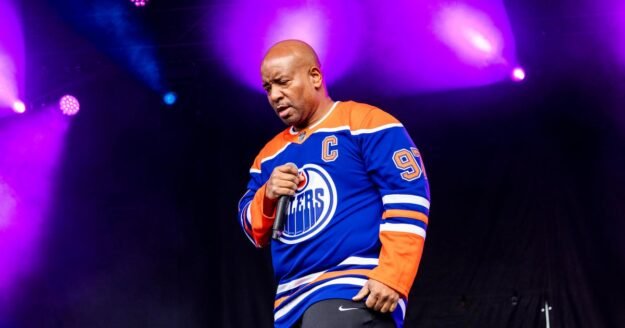
Roger Daltrey has more tour dates booked for his upcoming solo tour than he played last year on the Who‘s North American farewell tour. It seems improbable that the singer, 82, would want to do more, but as he explains over the phone, touring solo is an “easier go” for him than fronting the Who. In fact, “grueling” is the word Daltrey uses to describe Who tours, since they’re so demanding, but the way he says it, with both resoluteness and genuineness in his voice, suggests he’d still want to tour anyway, anyhow, anywhere he chooses — if he can manage it.
“The Who carries an awful lot of legacy on its shoulders,” Daltrey says. “And whether it’s mental pressure or what, it’s hard work. And the Who is so much louder than the band I play with on my own, it’s physically exhausting.”
He continues: “I can do two shows back-to-back with my solo band easily. With the Who, it’s only ever possible where I’ve got a three-day break after the second show, because it takes so much out of the voice. I have to push that much harder to get above the noise of the Who. Pete [Townshend] is an incredibly loud guitarist. I love what he plays and I love it loud, but it takes an awful lot more effort out of the voice to get above that.”
Daltrey’s solo career began mostly as something to do while Townshend was writing the Who’s next album in the early Seventies, but the singer rarely performed live without Townshend in the decades that followed. He got serious again about life outside the Who in the past 20 years, ramping things up more around 2018 with the release of the R&B-leaning As Long as I Have You. Since then, he has embarked on runs of shows with a band comprising of several touring Who musicians (including Pete’s guitarist brother Simon Townshend), who play 90-minute sets of Who classics, cover songs, and Daltrey’s own hits, often with new musical arrangements. On “Won’t Get Fooled Again,” for instance, they don’t use a synthesizer and include a harmonica solo.
“It’s just a whole different ballgame, and I can explore regions of my voice that I never get to use with the Who,” he says. “My voice is something I feel I should use while I’ve got it. At the moment, it’s probably better than it’s been all my life. It’s extraordinary. I’m still singing the songs in the same keys; I just seem to be hitting the notes easier.”
He has no plan for retirement and adds that the Who aren’t fully done yet either, since they have yet to do farewell tours on other continents, which they’ll kick off likely next year. Moreover, he says the Who, which are releasing an orchestral live album, Live at Eden Project, on May 28, will play one-off gigs if they feel right. But until he and Townshend wrap things up for the Who formally, he’s planning on keeping going on his own. “Touring is finished for the Who, but for my solo career, I still feel I’ve got one last good one in me,” he says.
How important has touring as a solo artist been to you? You didn’t tour much in the Seventies and Eighties, when you were frequently putting out solo albums.
To be honest with you, I never ever took my solo career seriously. It was always a hobby. The only one I did take seriously was the first album I ever made, which I did because I found this songwriting team, Leo Sayer and Dave Courtney. They were searching around for record and publishing deals, and I jokingly said to them, “Write me a load of songs and I’ll make a solo album.” But again, I made that album at the time that Pete was taking off to write Quadrophenia. So it was just something to do in the time off and I really didn’t take it seriously at all.
What about McVicar, which was your biggest solo success in the U.S.?
McVicar was because I had to do a soundtrack for a film I wanted to make. The people that put up the money for the film insisted I put a soundtrack to it, and I had to sing the soundtrack, so that was again done for all the wrong reasons. But there’s some great songs there and it also kept my voice working.
Voices are very weird things. You’ve got to keep them working to keep them good. I’ve always said, “Use it or you lose it.” But you can use it too much and once people do that, I wish they’d shut the fuck up, and there are a few out there who should.
Why do you think you’ve managed to keep your voice in good shape?
I really don’t know. I got lucky. I got hit with a pre-cancerous condition about 12, 13 years ago, and I managed to find a genius of a voice doctor. He trimmed up my vocal cords and I’ve had no trouble since. I can still hit a high D, which is higher than Pavarotti singing the end of “Nessun Dorma” in full voice. I mean, it’s extraordinary.
People online think you’re not really doing the scream in “Won’t Get Fooled Again” anymore. They think it’s taped. Is that the case?
No, I can still do that. [The stage crew] may use a sound effect to give the voice an extra oomph. I don’t know what they got out front; I just do what I do onstage. I go into falsetto quite a lot, especially right at the end. It goes up. [Sings “Won’t Get Fooled Again” note.] It’s up there. It’s really high and it’s falsetto, but no, that’s me. Do you want me to do it for you now? The only trouble is it’s so fucking loud it’ll blow the phone up.
How do you feel being onstage in general these days?
It feels like what I do. I don’t think about it that much. I just go out there and have a good time. And I feel if I’m having a good time, hopefully the crowd will have a good time. And if I’m shit that night, I’ll admit, “I’m shit.”
There’s a live album by the Who, Live at Eden Project, out soon. That was a show you did in London with an orchestra for about 6,000 people in the audience. What made that gig worthy for a live album?
Well, it was right at the end of a tour. We stuck it in as an extra because I saw a video of Brian Wilson singing there and it looked fantastic. The gig just looked wonderful. I thought we might get a video out of it, so we recorded it. I said to our management, “Have a listen to that night, because that was a very special night on the stage and might make a good video.” When I saw the video, it was a fuckin’ disaster. There wasn’t a shot of Pete playing a guitar where you could see his hands. I think we had a team of baboons in there that night on the cameras because it was just so badly shot. It was unusable, but the soundtrack is amazing.
But Pete played particularly well that night. I think maybe because he was in front of all his sailing friends. It was down in Cornwall, so all these mates who he goes sailing with were all down there, so he didn’t want to play badly, did he? [Laughs.] And the orchestra are playing their socks off. So we just thought, “Well, let’s put it out as an album.” I think all those things are interesting because you can hear the development of things and orchestras are just like bands; some nights they’re fabulous, other nights are not quite so good. But that was a fabulous night.
The orchestral arrangements elevate some of the Tommy songs and “Love Reign O’er Me.” I’m sure you felt that, too.
I loved it with the orchestra, but I like it equally the other way, too. It was something I always wanted to do because I’ve always heard Pete’s music in classical form, so it suits orchestration and the harmonics. So I like it with it, and I still like it without it.
That tour made me feel like I wasn’t wrong, way back in 1994 on my 50th birthday, when I did Carnegie Hall with an orchestra. I wasn’t on the wrong track; it was just too early for the Who to do it.
The Who’s drummer at the Eden Project gig was Zak Starkey, who left the band last year. What happened there?
Well, nothing happened. We decided to have a change at drummer, that’s all. And Zak needed some time off for personal reasons.
He made it such a big thing in the press, which made it seem like something happened.
Yeah, well, he didn’t like having the time off, but he needed to have it.
Have you spoken with him since the split?
I have. Oh yeah, I talk to him all the time, of course.
Are things better between you now then?
Pardon? Stop digging. [Laughs.]
Stop digging? It’s a curious thing.
You can give him a call. Ask him.
He’s said his part. That’s why I thought you’d want to give your side.
I was accused of getting rid of him, and I didn’t get rid of him. It wasn’t me that decided to have a change. I was concerned that Zak needed some time off, but the actual decision to not have him on that tour was not made by me.
Right. It seemed like you were painted as the bad guy in the whole thing.
I don’t mind. I never mind being the bad guy. Fuck ’em. Take me on. [Laughs.]
Well, who did make the decision to fire him?
It’s none of anybody’s business. Zak needed some time off and he got it.
Scott Devours from your solo band ended up joining the Who on drums. How did he fit in?
I mean, I’d supported the idea to have Scott as the drummer, but I was open to any other drummer.
Speaking of drummers, what’s going on with the Keith Moon biopic?
We’re working on the director’s script at the moment and hopefully we’ll get a green light before the end of July. Getting a film together, especially biopics, without falling into all the cliched traps is not an easy thing to do, and I want this to be right. I’ll get one chance to do this, and I want to make sure it’s done well. I’d rather have it not ever out than have it out and be a bad film.

The Who at Madison Square Garden in 2025.
Sacha Lecca for Rolling Stone
Pete reportedly sold a bunch of the rights to his music, like a lot of other musicians have recently. What do you make of that?
Well, I don’t know. It’s just their right to sell it. I don’t do things for the same reasons. As long as I’ve got enough money to pay the rent and keep my farm going and pay my workers, that’s all I care about. I don’t want to sell the family heirlooms.
Have you and Pete discussed making a new Who album?
Well, I’d like to do another album, but I don’t know whether it will be possible. I’d like to do an album where we become more involved in the arrangement. In hindsight, partly because Pete’s demos were so good, I think one of the biggest mistakes we made in our career was trying to copy his demos. And I’ve often thought they might have been even better albums if we’d have just been more open to explore rather than trying to recreate himself in his studio. The only thing that really changes is the vocal because I change the top lines all the time.
When do you see you and Pete playing together again for your farewell tours of England, Australia, and the rest of the world?
That will have to be next year now. It won’t fall into this year because Pete’s going to have another knee op, which puts him out of action for a long while. And I’ve had a few things to deal with health-wise in the time off, but we’re hoping to finish it all off next year.
And that will be it?
Well, if we get invited to do a charity gig or something, if it’s a good charity that we support, we’ll be there. What I’m trying to say is we are not retired. We don’t want to do another tour of America. I love America. I love every place we go to in America, but after a while you seem to think, “Oh, fuck me. We’re back in Chicago again.” It seems like every week, and it starts to feel like a day job.
Now that touring life is winding down, how do you see the Who’s legacy? What did you do better than everybody else?
We were just different than everybody else. Americans don’t really know the Who from the early Sixties, but as the drummer of Deep Purple [Ian Paice] said recently in a magazine, “The Who started it all.” We were the first heavy metal band. Jim Marshall invented the 4×12 [speaker cabinet], 100-watt stack for Pete Townshend. All the guitar smashing that Jimi Hendrix became famous for, in his style, was basically copied from Pete Townshend, first of all. And the first rock opera, of course, we elevated rock to be maybe up its own ass in a way, you could say it. We were doing it before anyone, but it’s not important in the long run.
This year marks 60 years from when the Who released “A Quick One, While He’s Away,” the band’s first mini-opera. Did that feel like a turning point for the band?
Everything we did felt like a turning point. Just to go in the studio and come out with something under our belts that was new felt like a turning point.
When we toured the mini-opera [“A Quick One”] with the Herman’s Hermits tour and had a chance to play 10 minutes of music that joined together that made a short story, it did feel like a breakthrough. I used to sit down on the front of the stage to sing the thing about, “Her man’s been gone for almost a year,” and it felt like we were breaking ground after doing that, playing this, like, “You are forgiven, you are forgiven,” sounding like a load of fuckin’ choir boys. Went on to smash our equipment and blow the gear up in front of this screaming bunch of 12-to-15-year-old girls. They looked on in horror but kind of wonderful excitement.
When Pete first presented that to you, the lyrics and the story, what did you make of it?
Everything was done with a tongue in our cheek. Tommy was done in the same way. It wasn’t written as an opera; it was written as a group of songs. [The Who’s manager] Kit Lambert was always trying to get us to do a first, but Tommy was not totally written as an opera and Pete didn’t write all of Tommy. John Entwistle wrote “Cousin Kevin.” Keith Moon did “Uncle Ernie.” So it’s one of those things that gets lost in history, that it was something that we did have an ambition to do it, but we didn’t know we were creating it until it was out in the record shops and had become the success it had.
When did it feel like an opera to you?
It felt like an opera after we performed it live and I thought, “This is the best fuckin’ opera ever written.”
Oh yeah?
No, really. I really believe that, because I’ve been to grand opera, and I do love it. You can’t deny that some of the melodies and some of the orchestrations are fabulous. There’s no doubt about it and the voices are beautiful, but as with story lines and lyrics, they’re very thin on the ground.
So you don’t feel the Who ever topped Tommy as an opera?
We didn’t ever do another opera.
Quadrophenia?
That’s not an opera.
No?
It’s a stream of consciousness, it’s not an opera.
How do you see the guitar smashing and destruction of the early days now?
It used to break my heart every night because I had to struggle so hard to get my first guitar and struggled to make the guitars in the early days. To see them smashed always hurt a bit. But equally, I recognized the fact that this was writing our names on the walls of history.
I interpreted it as something of an artistic statement, like a musical Jackson Pollock painting.
Well, it is. It was a thing that Pete was being taught at art school. He was being taught about Gustav Metzger and auto-destructive art. And he was thinking, “Well, this could work musically.”
What really upset me about it was that everybody just latched onto the visual. What we were interested in was the noise it was making, because it was extraordinary. There we were, in the middle of the fuckin’ Vietnam War, and we were showing you what it might have sounded like in a trench getting bombed, musically.
People didn’t see it that way.
You journalists didn’t. No journalist ever picked up on it. I mean, the guitar used to scream like an animal being slaughtered.
You’ve said that this is maybe your last solo tour. How will you know when you’re done?
Voices are voices: They don’t last forever, that’s a fact. Mine is incredibly powerful and still is. I’m very lucky to have it there, but equally it might go tomorrow, and if it does go tomorrow, I won’t be seeing you in August, it’s as simple as that. I’m 82 years old and still got good energy, still can deliver it well. But I can’t do any more than that. I can only do my best and whatever happens, happens. If it’s still like this when I’m 90, I’ll still be doing it.
You may be interested
Should You Trust AI With Your Finances? What You Need to Know
new admin - May 28, 2026[ad_1] IE 11 is not supported. For an optimal experience visit our site on another browser.Pickle, Too Good to Go:…
Union Fire MLS Coach Of Year Bradley Carnell, Name Jon Scheer Sporting Director
new admin - May 28, 2026[ad_1] NEWYou can now listen to Fox News articles! Bradley Carnell, recipient of the 2025 MLS Coach of the Year…

Freedom 250 Lineup in Chaos as Some Artists Drop Out
new admin - May 28, 2026[ad_1] A lineup announcement of musicians who supposedly agreed to perform at the “Great American State Fair” on Washington D.C.’s…