


Summer air travel is shaping up to be a mess. Here’s how travelers can prepare.

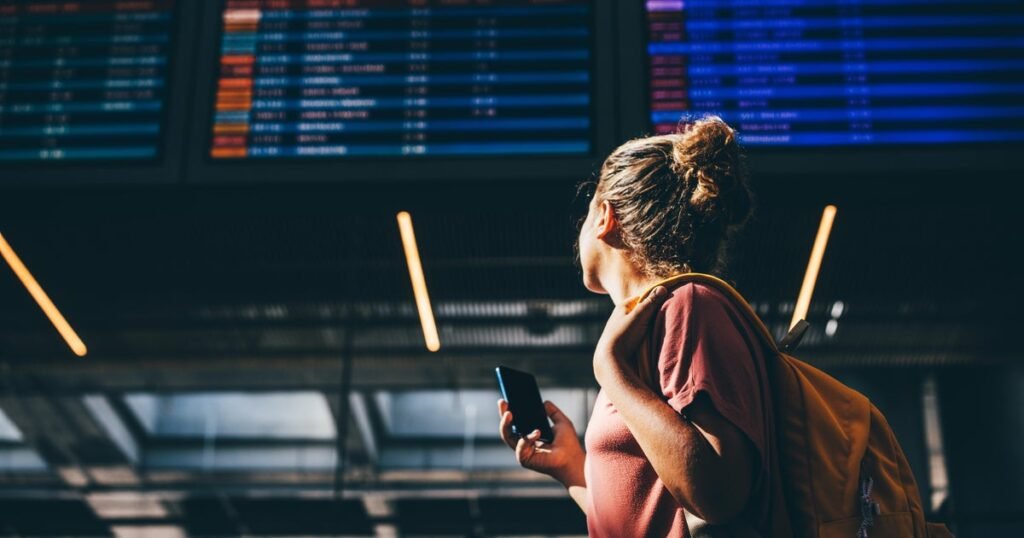
Rising airfares, airport delays and flight cancellations could make travelers wish they had opted for a staycation this summer.
On-time flight arrivals in 2025 were at their worst level since 2014, according to a new report from the U.S. PIRG Education Fund, a consumer public interest group. Last year, one in 12 flights arrived at least an hour late, while airlines canceled more than 100,000 flights.
The worst-performing airlines for cancellations were American, Frontier and JetBlue, according to the report, which analyzed data from the U.S. Department of Transportation. Allegiant, Hawaiian and Southwest canceled the fewest flights.
Airlines that did the best job of staying on schedule included Hawaiian, Delta and Southwest, while Frontier, JetBlue and American were the worst at keeping flights on time.
What’s making air travel so stressful?
A shortage of air traffic controllers, exacerbated by two recent U.S. government shutdowns, has made air travel more of a headache for passengers. But that isn’t the biggest driver of flight delays and cancellations.
Schedule mishaps most commonly occur when bad weather disrupts flights or when airlines plan more flights than an airport can accommodate, according to Teresa Murray, consumer watchdog director at U.S. PIRG Education Fund.
She noted that while passenger volumes were down 1% in 2025, 5% fewer bags were checked compared to 2024. If more people try to cram luggage into overhead bins to avoid baggage check fees, it could lead to delays at takeoff, she said.
Some airports, including Chicago’s O’Hare International Airport, have mandated flight cuts to reduce operational delays, Murray noted.
“We don’t think this summer is going to be any better, but there is a strong possibility that it could be worse,” Murray said, noting that high passenger volumes combined with federally mandated flight cuts at some airports and potential extreme weather events, like thunderstorms and hurricanes, could snarl passengers’ plans.
Major airlines say they’re anticipating higher-than-usual passenger volumes. United Airlines this week said that signature events like the World Cup are driving spikes in demand. It expects 53 million people to fly United this June to August, up by about 3 million compared to last year.
There’s also a new factor this summer that could make it harder for airlines to handle the anticipated crush of passengers. The Iran war is driving up jet fuel prices, leading airlines to not only raise fares but also cut back on less fuel-efficient and less profitable routes.
Yuvraj Datta, chief supply and revenue officer at Fareportal, a travel tech company that owns sites including CheapOair, an online travel agency, characterized the airline system as “unusually fragile” due to higher jet fuel costs.
“Fuel can account for 30% of a flight’s operating costs, which means they’re raising fares and cutting routes that cost them more money to put planes in the air than they’re making,” Datta told CBS News.
What should passengers know?
Katy Nastro, a travel expert at flight deals site Going.com, told CBS News that while cancellations are a pain, and can leave passengers stranded, or forced to shell out more money than they’d planned on a last-minute plane ticket, federal laws do offer passengers protections.
“We need to remind people that they do have the right to a refund if their flight is canceled and they choose not to fly or be rebooked,” she said.
She added that budget carrier Spirit Airlines’ exit from the market should also help improve carriers’ overall on-time performance averages.
“Overall on-time performance should tick up slightly, because Spirit was on the decline in terms of operations and everything else and dragging the average down,” she told CBS News.
This summer, fliers looking for cheap flights might find themselves in a bind. The lowest fares typically require passengers to make stops on the way to their destinations, while such itineraries are more prone to being disrupted.
She encouraged consumers to decide what’s more important: A good deal or peace of mind that they’ll make it to their destination as planned.
She added that it’s always wise to book a flight that departs between 6 a.m. and 8 a.m., because flights departing at such hours are 18% more likely to deliver passengers to their destinations on time, she said, citing Department of Transportation data.
“Typically, planes are already at the airports for that early flight, and later in the day, you run the risk of seeing worse weather accumulate,” Nastro said. “If something happens, there is a domino effect, because everything is connected in the aviation industry.”
You may be interested

Trump scraps signing of landmark executive order regulating AI
new admin - May 21, 2026[ad_1] President Trump abruptly delayed the signing of a landmark executive order on AI Thursday afternoon, telling reporters that he…

How much interest can a $40,000 long-term CD account earn now?
new admin - May 21, 2026A $40,000 deposit into a long-term CD could be worth considering for some savers in today's economy. Getty Images/iStockphoto A…

Sonos’s pint-sized Roam 2 speaker is 25 percent off for Memorial Day
new admin - May 21, 2026If your summer plans involve spending any time outdoors, whether on the trail or at a pool party, a good…