




Why does the Googlebook exist?

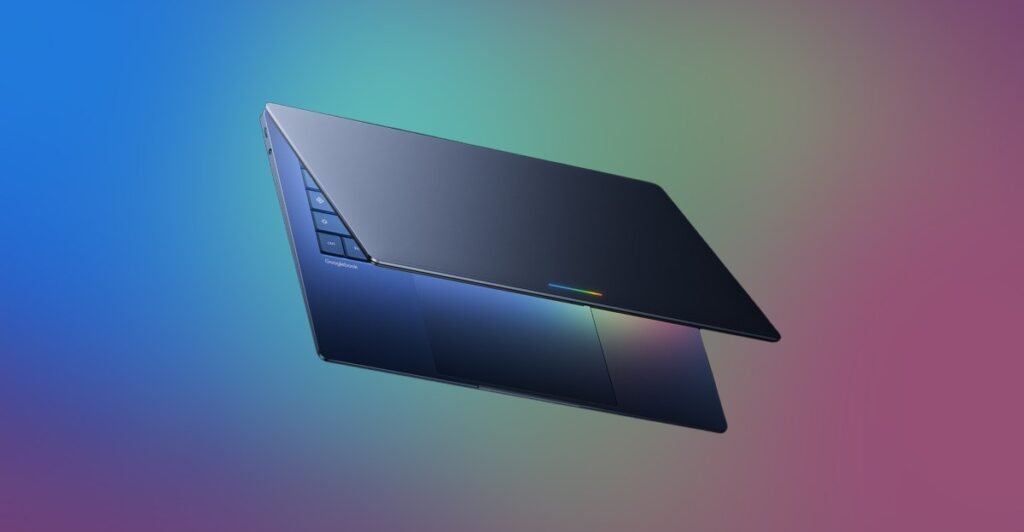
Google announced its new Googlebook laptop platform yesterday, and so far I’ve been left asking, “Why?” Why is Google blowing up its Chromebook and ChromeOS platform for this?
I’ve been excited by the prospect of Android and ChromeOS unifying under the long-rumored Aluminium OS. The theory was that Aluminium might unite Android and ChromeOS under one house, simultaneously turning Android phones into portable Chromebook desktops, fixing the mess that is Android tablets, and broadening the scope of actual Chromebook laptops.
Instead, we’ve got the Googlebook; an awkwardly named line of laptops with no hardware details (aside from a glowing light bar and a separate acknowledgement from Intel) running an OS that barely looks different from ChromeOS. Google didn’t spend time telling us what or who Googlebooks are for. It just gave us some small feature highlights and an assurance that Gemini will be in your face — even in your cursor.

It looks like a workable desktop experience with Android apps, but a competent desktop experience isn’t a unique offering — even from Google. ChromeOS is serviceable, and it’s already had Android app compatibility for a decade. Those apps will surely run better on an Android-based OS, but Googlebooks are still scaling a mobile ecosystem up to a desktop environment. That’s a constraint its competitors running Windows and macOS don’t have to face.
What problem in computing is Google solving with its entirely new operating system and hardware? Nothing here looks particularly groundbreaking just yet, and Google didn’t show enough in its tease to really wow us. It was just slightly more interaction between Android phones and a laptop, and some new Gemini tricks that look like evolutions of things already offered in ChromeOS. Chromebooks already replaced the Caps Lock key with a Quick Insert key to call up Gemini back in 2024.
I don’t want to write off an entirely new operating system as “you could have just made an app,” but, Google, maybe you could have just made an app? Like that app you already made for other platforms? The Googlebook demos of AI generated widgets, casting apps and pulling files from your paired Android phone, and having Gemini create images based on other pictures all seem like things that could be done on a Chromebook. If there’s a paradigm shift from blowing everything up and starting over with new laptops and a new OS built on the Android stack, I’m not seeing it yet.

When Chromebooks debuted nearly 15 years ago, they were trying to solve some real needs. They offered a lightweight operating system that could run on lower cost hardware, with minimal fear from threats of viruses and malware, and they were built around using Chrome. There’s a lot you can do with just a web browser, and for plenty of folks it can cover most of their laptop needs. Chromebooks took over classrooms and made it common in some schools to have students assigned their own computer.
Outside of the classroom, ChromeOS has gotten a little sleepy, despite some very good Chromebook launches last year. And while Google’s been working on whatever Googlebooks are, the rest of the laptop world has been cooking. MacBooks had their M-series chip revolution, and now the MacBook Neo exists to slay other computers hovering around its $600 price range (including the best Chromebooks). Windows on Arm is a maturing platform and offers some speedy processors with lots of battery life. Even x86 Windows now has excellent chip offerings from Intel and AMD that offer good performance and solid-to-impressive battery life. Basically, if you spend $600 on a MacBook Neo or over $1,000 on a MacBook Air or various Windows laptops, you’re getting a great computer.

It’s not as though these platforms are without their problems. While the chips for Macs and Windows laptops have been impressive, their operating systems have had some missteps. Macs have entered their messy Liquid Glass era, and Microsoft slopped up Windows 11 by adding useless Copilot integrations just about everywhere to force AI down your throat. Apple is tweaking Liquid Glass, and Microsoft is trying to defuse the backlash from Windows users by slightly course-correcting on Copilot and de-enshitifying its OS. But Google isn’t exactly avoiding controversy, either. It showed up with the Googlebooks flying a huge Gemini flag. No wonder some commenters were calling it the Google Slopbook.
So I’m left wondering what will you get if you get a Googlebook, other than “Gemini Intelligence?” What will Googlebooks offer that make them worth Google changing direction from Chromebooks? I know when I use a Mac I’m getting excellent performance for heavy-duty creative apps. I know when I use Windows that I get a wide range of flexibility and compatibility that includes all the games I could want to play. What will Googlebooks offer?
Google has to show us, for real this time.
You may be interested

Frustration mounts for thousands still without power after deadly Indiana storms
new admin - Aug 23, 2026Like so many in Gary, Indiana, Shatiya Hardin has been waiting for the minute her power finally turns back on."It's…

Arsenal Opens Premier League Title Defense With Shutout Win vs. Newly-Promoted Coventry
new admin - Aug 23, 2026[ad_1] NEWYou can now listen to Fox News articles! Newcomer Christos Tzolis helped set up two goals as defending champion…

Trump’s trade deal with Canada collapses
new admin - Aug 22, 2026Trump's trade deal with Canada collapses - CBS News Watch CBS News The U.S. plans to impose 50% tariffs on…