




How does diet impact brain health? Alzheimer’s Association shares nutrition tips with cognitive function in mind.

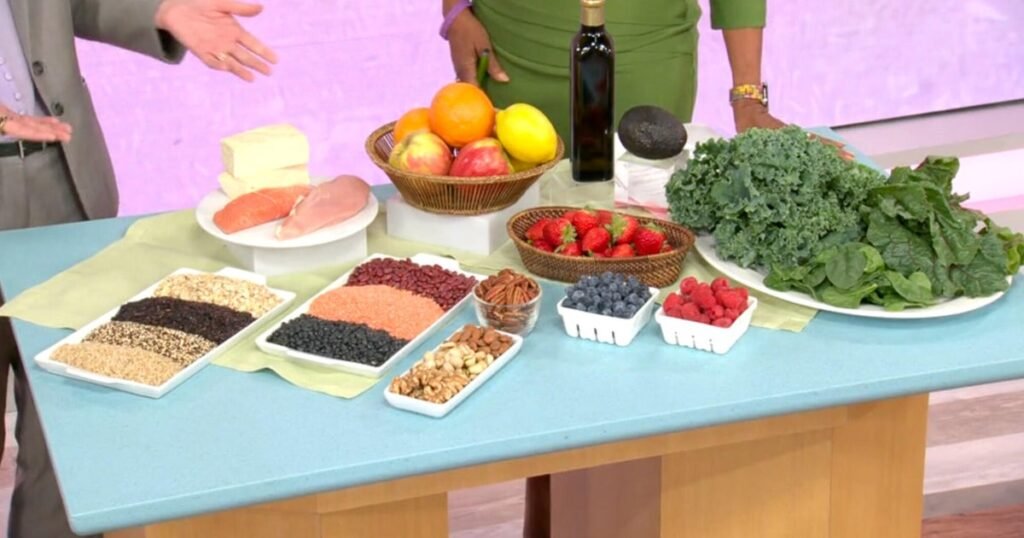
Foods that are good for your body can also have long-term benefits for brain health.
“CBS Mornings” is partnering with our sponsor the Alzheimer’s Association for a three-part series, “Brain Health: From Awareness to Action,” to explore the brain-healthy habits people can establish that may help lower the risk of dementia later in life.
Alongside other lifestyle changes like ramping up physical movement, Alzheimer’s Association CEO and president Joanne Pike says nutrition is one of the primary ways we can promote brain health.
“The Alzheimer’s Association conducted a lifestyle intervention research study that showed physical activity, nutrition and brain challenge really saves and increases your cognitive abilities,” Pike told “CBS Mornings” co-host Gayle King.
Diet and nutrition play an important role in the association’s new “6-Step Challenge,” which provides people with everyday tips to support their cognitive function.
Foods to eat, and limit, for brain health
A diet geared toward brain health — known as the MIND diet — emphasizes meals that are high in:
- Fruits
- Vegetables, especially leafy greens
- Whole grains
- Lean proteins
Those options “are nutrient-rich and dense, with great food value,” said Pike.
The diet, which is backed by years of scientific research, also recommends limiting processed foods and added sugar.
To help keep yourself on track, Pike suggests keeping a log of your food intake, “to understand what are you eating and how can you improve or make those simple swaps from things that might not be as healthy to something that’s a little bit healthier.”
People who participate in the Alzheimer’s Association’s challenge will receive guidance on how to incorporate these and other recommendations into their daily lives. The goal is to develop healthier habits that can be sustained for years to come, Pike added.
“This is a movement about increasing brain health over time, and also starting at an earlier age, understanding that your brain health at 40 and 50 is going to impact how you age,” she said. “You can’t be too young to think about your brain health.”
More information about the Alzheimer’s Association’s “(re)think your brain” initiative and “6-Step Challenge” is available online at rethinkyourbrain.org. Users can sign up for the challenge there, and elect to receive daily action steps and guidance via text or email.
You may be interested

U.S. Navy sailor on USS Lincoln says dad was arrested by immigration officials
new admin - Aug 24, 2026U.S. Navy sailor Joshua Aviles said he learned his father was arrested by federal immigration officials while on his ninth…

Popular eye drops pulled from shelves as almost 40,000 bottles recalled
new admin - Aug 24, 2026The warning has been issued over fears a batch of the eye drops were not correctly sterilised Source link

Last beagles rescued from Ridglan Farms, a breeding facility in Wisconsin
new admin - Aug 24, 2026The last of more than 2,000 beagles from a Wisconsin facility that bred them for medical research have been rescued.…