
Gas Prices and Commuter Schools


I was lucky enough as an undergrad to be able to attend a residential college. I lived in dorms for all four years and didn’t have a car. There wasn’t a gas station near campus, either, so if you had asked me in, say, October of my sophomore year what the current price of gas was, I would have shrugged. It wasn’t relevant to my daily world.
Students at my community college don’t have the option of ignorance.
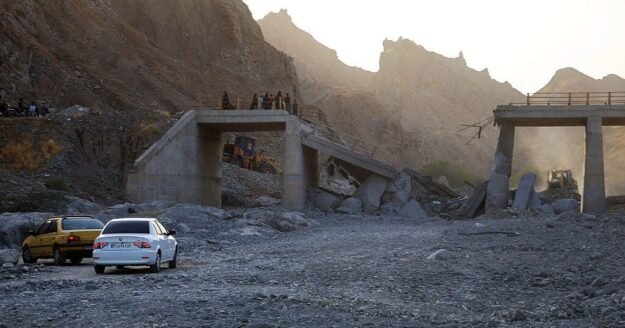
Last week, on the way to work, I paid above $4.50 a gallon. (Yes, I know that West Coast readers are laughing darkly at that, but it’s high by local standards.) Last year it was about a dollar lower. For a school that doesn’t have dorms and at which the public transportation options are few and far between, that’s a direct hit to students’ and employees’ budgets. That pales in comparison to the suffering of people whose desalination plant got bombed, of course, but it’s significant on a day-to-day level.
Worse, it’s not clear what will happen to prices in the near future. I don’t pretend to expertise on naval warfare, Iranian politics or the psychology of the current U.S. administration, but it doesn’t take expertise to connect the dots between a blockade and higher prices. Basic supply and demand pretty much covers it. Even if peace broke out tomorrow—I’m not holding my breath, but let’s go with it—it would take months for the entire supply chain to get back to prewar levels of production.
Most community colleges were built on the assumption that students and employees would drive to work. There are exceptions, like CUNY, but most of us don’t have access to the robust level of public transportation found in a few big cities. Some have dorms, but they remain the minority, and even at community colleges with dorms, not every student lives in one.
None of this would be terrible for students if financial aid flexed with the cost of commuting. Of course, it doesn’t. And I don’t know many community colleges sufficiently flush to shower employees with gas cards to compensate them. It’s just not happening.
I’ve written recently about the struggle to bring more students back to campus, as opposed to going online. If gas prices stay this high or go higher by fall, we may see even greater shifts to online classes. Even students who would rather come to campus may find it economically impractical. Say what you will about online classes, but they cut commuting costs directly.
Of course, most students don’t only go to class; they also have jobs. Add commuting to those and the impact is that much worse.
There’s a perfectly compelling argument to be made that over the long term, high gas prices are a good thing. They create incentives for greater efficiency and cleaner ways of going places. With climate change accelerating, moving away from gasoline at scale is a great idea. But the mechanism for that needs to compensate for the varying levels of impact on people of different means. And the current administration’s puzzling hostility to electrification puts up barriers to what may be the best short-term solution. I’ve seen some colleges put up what look like large-scale carports with solar panels on top, coupled with level two electric vehicle chargers below. It strikes me as a fantastic idea. As one energy executive put it, I don’t know what the price of gasoline will be in 10 years, but I know what the price of sunlight will be.
In a sense, my clueless sophomore self holds a clue to an answer. At 19, I didn’t know what the price of gas was because it was irrelevant to my world. That’s a good goal. Whale oil used to be crucial to urban life; if that were still true, our cities would be dark and whales long extinct. We avoided those fates by making whale oil irrelevant. If we did the same for petroleum products, we might find that Middle Eastern politics wouldn’t matter so much. That, alone, would be worth it. Add the economic benefits and environmental benefits of cleaner transportation and the argument is that much stronger.
In the meantime, though, our students are hurting. And I really don’t want to revisit the days of all online, all the time.
You may be interested
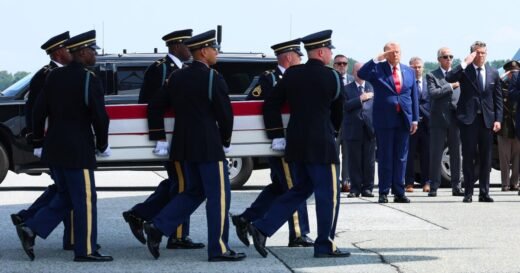
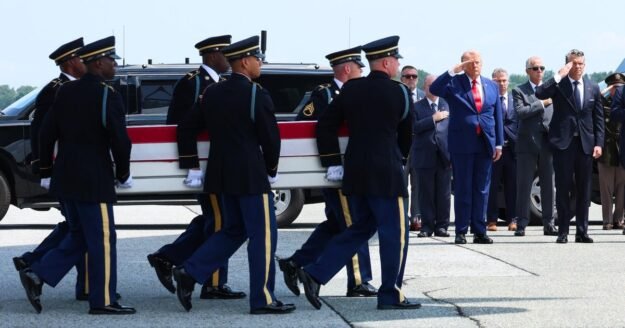
Trump, Hegseth attend dignified transfer of 4 soldiers killed in Middle East
new admin - Jul 26, 2026Four U.S. soldiers were killed in the Middle East region last week as the war with Iran escalated. On Wednesday,…
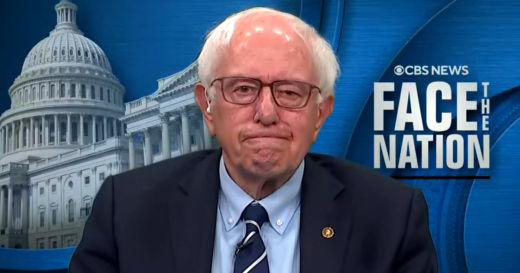
Transcript: Vermont Sen. Bernie Sanders on “Face the Nation with Margaret Brennan,” July 26, 2026
new admin - Jul 26, 2026The following is the transcript of an interview with Vermont Sen. Bernie Sanders, an Independent, that aired on "Face the…

Kacey Musgraves Strikes Three Shows Off of Her Middle of Nowhere Tour
new admin - Jul 26, 2026[ad_1] Gigs in Chicago (the tour's opening night show), Boston, and Brooklyn removed from schedule after they were added to…