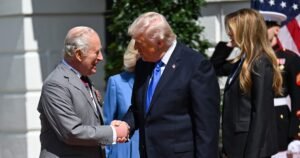



Zohran Mamdani would ask King Charles to return Kohinoor Diamond — but return it where?

New York City Mayor Zohran Mamdani touched on a very sensitive international debate ahead of meeting King Charles III on Wednesday by bringing up the controversial ownership of a British crown jewel.
Subscribe to read this story ad-free
Get unlimited access to ad-free articles and exclusive content.

Mamdani was at an unrelated press conference on Wednesday morning when he was asked how he envisioned his meeting with Charles at the 9/11 memorial alongside other local and state leadership. The mayor responded that the visit itself should focus on the victims of the tragic terror attack that happened nearly 25 years ago.
“If I was to speak to the king separately from that, I would probably encourage him to return the Kohinoor diamond,” Mamdani added.
00:53
NYC Mayor Mamdani on what he would say to King Charles
00:0000:00
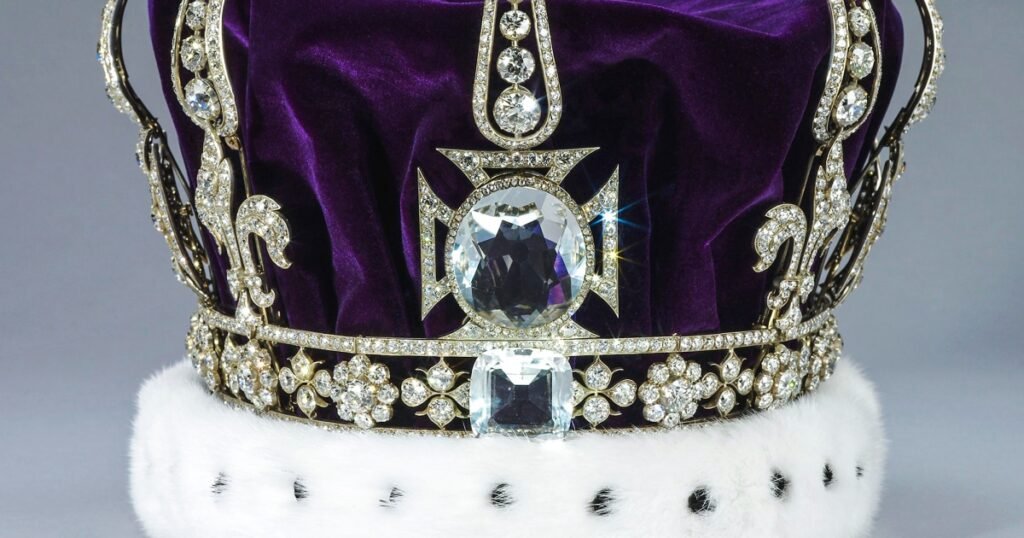
The diamond, also spelled Koh-i-noor, is believed to be have been mined in South India in the 13th century. It was originally 186 carats, earning it the name which means “Mountain of Light.”
Many consider the diamond to have been stolen by the British Empire through a controversial agreement with a 10-year-old king when the imperialist nation colonized India. There have been calls online to return the diamond, though even India’s claim to the diamond has been debated due to the jewel’s long history of changing hands.
Mamdani did not specify in his comments where the diamond should be returned to, as multiple countries including India have expressed a claim to the gemstone. The mayor is notably of Indian descent, as both of his parents are Gujarati Muslims and his father was born in Mumbai, India.
Buckingham Palace declined to comment when asked about Mamdani’s remarks by NBC News on Wednesday.
A long history of changing hands
The Kohinoor Diamond sits today in England among the monarchy’s Crown Jewels, the actual origin of the diamond is not exactly known. It is believed to have been likely found in the Golconda mines of the Deccan between 1100 and 1300, though some believe it may have been mentioned in ancient Sanskrit writings from thousands of years ago.
Its first confirmed mention in recorded history came from the writings of a man who invaded India in the 1500s to establish the Moghul empire, which ruled over Central Asia for hundreds of years. According to the International Antique Jewelers Association, the Kohinoor was featured in the peacock throne commissioned by Moghul leader Shah Jahan in 1628.
Just more than 100 years later, the throne was taken as a prize by Persian ruler Nader Shah when he invaded Delhi. Nader took the Kohinoor Diamond and placed it in an armband along with the famed Timur Ruby, according to the Smithsonian Museum.
The Kohinoor then spent 70 years in Afghanistan, where it was passed across leaders who won bloody battles against each other. It returned to India through Sikh ruler Ranjit Singh in 1813 until his death in 1839.

The jewel stayed with his son and successor, Duleep Singh, until the British Empire overtook Punjab a decade later. Duleep was only 10-years-old at the time and he became the last Sikh Maharaja of the Punjab.
Agents of Britain, through the British East India Company, exploited the instability in Punjab and sought to overthrow the child from the throne, according to Historic Royal Palaces, an independent charity that manages the U.K.’s unoccupied royal palaces.
Duleep was forced to sign the Treaty of Lahore, which explicitly stated he would surrender the Kohinoor to Queen Victoria. The boy was exiled from India, given to a British soldier who served as his guardian, and forced to convert to Christianity.
“The Koh-i-Noor was displayed in the Great Exhibition of 1851 as a symbol of British imperial power,” the Historic Royal Palaces website says. “It was then recut to conform to contemporary European tastes, which preferred the sparkle of a many-faceted stone.”
Today, the diamond is set in the front cross of the Queen Mother’s Crown.
Push to return — but where?
Multiple countries with connections to the diamond have appealed to have the British surrender the jewel, including India, Iran, Afghanistan and Pakistan. But appeals to return the jewel have grown with the rise of social media, most notably after the death of Queen Elizabeth II almost four years ago.
People feel outrage over the Kohinoor being used “as a trophy of empire,” Danielle Kinsey, an associate professor of history with a focus on the history of 19th century Britain and empire at Carleton University in Ottawa, Ontario, told NBC News at the time.
“To be purely pragmatic about it, at some point the monarchy will understand that keeping the diamond is more of a public relations liability for them than an asset,” Kinsey said. “I think the same is true for many, many looted artifacts in Britain today and the institutions that house them. Also, it’s the right thing to do if the royal family is serious about making apologies for the ills of British imperialism and how they profited from it.”
You may be interested
Trump gives his blessing to Iraq’s new pick for prime minister and invites al-Zaidi to Washington
new admin - Apr 30, 2026BAGHDAD — U.S. President Donald Trump called Iraq’s new prime minister-designate Thursday and extended an invitation for him to visit…

Rivian’s revenue is up as R2 production kicks into gear
new admin - Apr 30, 2026We’ve already got Rivian’s production and delivery statement from the first three months of the year. The company sold 10,365…
Busta Rhymes Settles With Ex-Aide Over ‘Defamatory’ Assault Claims
new admin - Apr 30, 2026[ad_1] The former assistant claimed the Grammy-nominated rapper punched him with a closed fist and blacklisted him from the hip-hop…