



Tenn. Passes “Charlie Kirk Act” Defending Campus Speakers

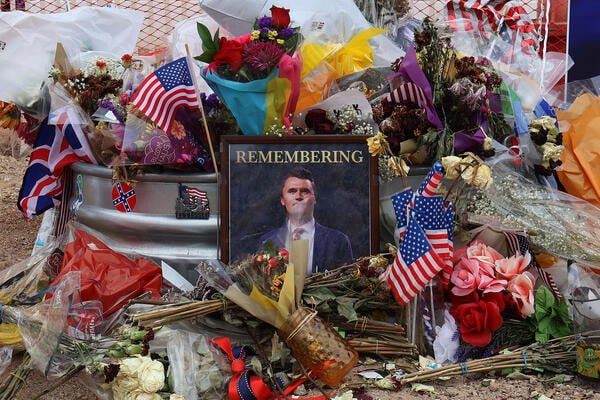
The killing last fall of Charlie Kirk, the conservative activist who founded the campus-focused group Turning Point USA, continues to echo in politics, triggering sometimes-heated debates over his legacy.
Conservative lawmakers in some states have filed higher ed–related bills named in honor of Kirk, who was shot to death Sept. 10 while speaking on Utah Valley University’s campus. Tennessee’s GOP-controlled General Assembly passed one last week that specifically protects the speech of invited campus speakers, and it now just needs Republican governor Bill Lee’s signature to become law.
Republican state Rep. Gino Bulso told Inside Higher Ed he filed the original House version of the bill for two principal reasons: to promote “robust civil debate on our public colleges and universities” and “to honor the life and legacy of Charlie Kirk for his work in promoting civil debate” on campuses.
Faculty have debated what “civil” debate really means and whether Kirk exemplified it; he demeaned minorities on his podcast and TPUSA published a database naming and shaming professors who allegedly advanced “leftist propaganda in the classroom.” Tennessee’s Charlie Kirk Act would protect invited speakers’ rights to speak—civilly or otherwise.
It would also ensure their ability to be heard by limiting counterprotesters’ rights to use what’s been colloquially called the “heckler’s veto” to disrupt events. It’s just one example of conservatives’ response to highly publicized attempts across the nation to deplatform controversial campus expression.
From Chicago to Tennessee
If signed, the Charlie Kirk Act (Senate Bill 1741/House Bill 1476) would forbid public colleges and universities and their faculty from disinviting speakers invited by other faculty or student groups “in response to threatened protests or opposition from students or faculty or because of the [speaker’s] viewpoints.” It would also protect invited speakers from being shouted down and from having their view of the audience—and the audience’s view of them—blocked by protesters’ bodies, signs or other objects.
The law would prohibit protesters from “staging walk-outs during an event or in the middle of an invited speaker’s remarks” that intentionally cause “material and substantial disruption.” (Multiple media outlets reported that a version of the bill passed that hadn’t. The Chronicle of Higher Education erroneously reported Friday that the Legislature passed language barring walk-outs that create a “need to pause the event for any period of time, however short,” adding that students could be expelled and faculty fired for substantially interfering with speech. Lawmakers removed those provisions from the bill before its passage.)
In addition, the Charlie Kirk Act would require public higher ed institutions to adopt policies on free expression and on “political and social action” that are “identical or substantially similar to” two influential University of Chicago documents: the Chicago principles on campus free expression and the Kalven report.
A group of professors appointed by UChicago leaders wrote the Chicago principles (or Chicago statement) about a dozen years ago; Tennessee’s bill would require universities to adopt some of them verbatim, including that “concerns about civility and mutual respect can never be used as a justification for closing off discussion of ideas, however offensive or disagreeable those ideas may be to some members of our community.”
The Kalven report, written in 1967 by a UChicago committee chaired by law professor Harry Kalven Jr., is an expression of an “institutional neutrality” policy. Such policies garnered new attention amid campus protests against the recent Israeli war in Gaza, as conservative organizations—plus some free speech and academic freedom advocacy groups—urged universities to refrain from taking a stance on the war and other issues.
The Tennessee bill would require verbatim adoption of parts of the Kalven report, including that universities can’t “take collective action on the issues of the day without endangering the conditions for its existence and effectiveness,” or “reach a collective position without inhibiting that full freedom of dissent on which it thrives.”
The bill also bans universities and faculty from denying student groups recognition or denying employers on-campus student interviews due to either the groups or the employers’ “sincere religious beliefs,” or their positions, religious or not, “concerning abortion, homosexuality, or transgender behavior.”
In a news release, Kristen Shahverdian, director of higher education and free expression at PEN America, said the bill would undermine free speech by calling “for special protections for certain kinds of speech” when “political speech is already protected under the First Amendment.”
“This bill underhandedly elevates certain ideological viewpoints, suggesting they deserve a kind of more protected status,” she said.
Bulso told Inside Higher Ed that “it was those topics that were, from a national perspective, the reasons that Charlie and many other conservative speakers were being disinvited—because the left, for the most part, is intolerant of contrary views.” (The bill doesn’t specifically mention one major issue on which campus speech has been restricted across the country: support for Palestine.)
Shahverdian also said the Charlie Kirk Act would place “demands on universities that will diminish free expression,” adding that “state laws forcing universities to adopt a policy of institutional neutrality are a recipe for censorship … In a political environment that often results in overzealous enforcement, state laws dictating how universities are run narrow the space for open exchange and deter opportunities for counter-speech altogether.”
Bulso said, “I think it’s perplexing that somebody would take the opposite position” on institutional neutrality. Echoing the Kalven report’s line that “the university is the home and sponsor of critics; it is not itself the critic,” he said, “The university itself should not be taking positions on political and social issues.”
The bill also includes a paragraph that it says is meant to protect academic freedom: Universities and faculty can’t “retaliate in any way or discriminate” against a faculty member for their viewpoints in scholarly work or “any speech or writing protected by the First Amendment,” it says.
Michael Hurley, a government affairs counsel with the Foundation for Individual Rights and Expression, said his group supports the amended legislation.
“The academic freedom provision is excellent,” Hurley said, citing the growing problem of professors being fired for posts on social media. He also praised the changes to the language on walk-outs, which now says they must intend to cause and actually cause “material and substantial disruption” to count as a violation of the act.
Kirk Bills That Haven’t Passed
Legislators outside Tennessee have also named bills for Kirk. But just because they bear similar titles doesn’t mean they’d have the same effects.
In November, Ohio’s Republican-controlled House passed the Charlie Kirk American Heritage Act, HB 486, which now awaits action from the state Senate. (Perhaps confusingly, Tennessee’s governor has already signed into law another piece of legislation there named after Kirk, called the Charlie Kirk American Heritage Act, that largely mirrors the Ohio bill.) It says, “An accurate and historical account of the influence of Judeo-Christian values on the freedom and liberties ingrained in our culture is imperative to reducing ignorance of American history, hate, and violence within our society.”
Public school teachers and public college and university instructors teaching American history “may provide instruction on the positive impacts of religion on American history, which may include the following historical accounts,” it reads, listing “the authentic history of the pilgrims,” “the role of the Ten Commandments in shaping American law,” “how religious influence shaped … the civil rights movement,” and more.
Republican state Rep. Gary Click, a pastor and one of the Ohio bill’s two primary sponsors, told Inside Higher Ed he’s “just reacting to censorship”—including self-censorship and “harassment from outside groups that want to prevent the accurate telling of American history.” When asked why he didn’t specify in the bill that faculty can also teach the negative impacts of religion, he said, “They’re already doing that.”
“We’re not creating a new law, we’re not creating a new permission; all these things are already legal—we’re just affirming them in this legislation,” he said, adding that those who teach about the positive impacts of religion are accused of proselytizing or violating the separation of church and state.
Click said he met Kirk the year before his death. “I agreed with most of what he said,” Click said, adding that people wanted to silence Kirk for his courage and faith.
“Some of the things that he would say might have an edge to them,” Click said, “but people out there hated him because of what he stood for, and I think some of that is ignorance.”
In Oklahoma, Republican Sen. Shane Jett filed SB 1187, which would require all public colleges and universities in the state to build a Charlie Kirk Memorial Plaza, including a statue of “Kirk sitting at a table with an empty seat across from him or a statue of Charlie Kirk and his wife standing and holding their children in their arms.” The Legislature would get to approve the details of each memorial under the bill, which didn’t move forward.
Across Oklahoma’s border, the Kansas Senate Education Committee introduced the Kansas Intellectual Rights and Knowledge—or KIRK—Act in January. Like the Tennessee bill, it dealt with free expression.
The Kansas bill would have allowed individuals and the state attorney general to file lawsuits over violations of the law and extended some protections religious student groups receive to political and ideological student organizations. It didn’t pass during this year’s legislative session.
You may be interested

How gift registries for divorces are helping people start over
new admin - Apr 22, 2026How gift registries for divorces are helping people start over - CBS News Watch CBS News Gift registries are common…
Avengers Doomsday Marvel leak – ‘Huge star returning to MCU longterm’ | Films | Entertainment
new admin - Apr 22, 2026It’s only been seven years since the Iron Man and Captain America stars bowed out of the MCU franchise, but…

NFL Draft: The Best Player Taken at All 32 1st-Round Picks Since 2000
new admin - Apr 22, 2026[ad_1] NEWYou can now listen to Fox News articles! Obviously, the first round of the NFL Draft has loads of…