




Colleges Must Be Inclusive of Transgender Athletes (opinion)


Even before the Supreme Court rules on transgender students’ participation in athletics, colleges and universities have received a clear message from Washington: Inclusive policies may come at a cost.
Recent actions—particularly from the White House and the Department of Education’s Office for Civil Rights—demonstrate that institutions can face investigations, funding threats or both, depending on how they interpret Title IX, which prohibits sex-based discrimination in educational institutions. Title IX was enacted to expand access to education. Over time, courts and federal agencies have increasingly recognized that discrimination “on the basis of sex” cannot be separated from gender identity.
Yet this administration has taken a different, more restrictive approach to Title IX. In his first weeks back in office, President Trump issued executive orders targeting transgender students’ participation in athletics and threatened to withhold federal funding from institutions. Last summer, the administration went after the University of Pennsylvania over the participation of Lia Thomas, who competed on the women’s swimming team from 2021 to 2022. To restore $175 million in federal research funding that had been frozen, the university agreed to prohibit transgender women from competing in women’s sports and stripped Thomas of her swimming records and titles.
More recently, San José State University sued the Trump administration, which has threatened the school’s Title IV federal financial aid funding over the participation of a transgender athlete on their women’s volleyball team from 2022 to 2024.
The warning is unmistakable: Inclusion may carry financial risk.
For college presidents, this is not abstract. Federal funding supports student aid, research and institutional stability. The pressure is real and, in some cases, existential.
But that is precisely why this moment matters.
Expanding access to education is about more than what happens in the classroom. Athletics are a key part of students’ educational experience. They build confidence, discipline and belonging. For many students, teams are where they find community—and themselves.
Excluding transgender girls and women from athletics does not simply resolve a policy question. It removes students from a formative part of educational life.
Colleges have the power to shape their campuses but may find it difficult to advance protections for transgender students in such a restrictive policy environment. Even sports authorities like the National Collegiate Athletic Association have revised their standards to bar transgender women, and women undergoing hormone therapy, from competing on women’s sports teams.
While these rules limit competition, they do allow student athletes to practice with teams consistent with their gender identities. They do not require exclusion from athletic life altogether. Thus, even under these constraints, colleges are not powerless. We can make choices that protect student belonging.
We can permit what the current rules still allow, including practice and the benefits that come with it: training, medical support and team community. And we can ensure that students are not excluded from athletics altogether simply because they are barred from competition.
We can strengthen opportunities beyond NCAA championship play. Club sports, intramurals and recreational athletics remain firmly within institutional control. These spaces can and should be structured to ensure that all students have meaningful opportunities to participate, compete and belong.
We can invest in student well-being. Mental health support, advising and affirming athletic environments are not incidental; they are central to student success. Institutions can train coaches and staff to lead with respect, protect student privacy and prevent harassment or humiliation in athletic settings.
We can ensure dignity in details: how students are addressed, how teams communicate, how travel and facilities are organized. These daily decisions shape whether students experience athletics as a site of growth or exclusion.
None of these steps eliminates risk entirely in the current political climate. But they make something else clear—colleges still have choices, and how they use them will determine whether students are supported or quietly pushed aside.
Colleges and universities now face a defining decision. We can treat this moment as a compliance exercise by adjusting policies to minimize exposure. Or we can lead, guided by the values we teach: evidence-based reasoning, fairness and respect for human dignity, especially when those values are hardest to uphold.
Leadership does not mean ignoring the law or financial realities. It means engaging them with integrity. Universities routinely navigate complex regulatory environments and make difficult decisions under constraint. This moment is no different.
The Supreme Court’s forthcoming ruling will shape the legal landscape. But it will not answer the deeper question facing higher education: whether institutions will uphold equal access when doing so carries risk.
Higher education has faced such moments before. Its credibility has often rested not on compliance alone, but on its willingness to stand for principles that extend beyond immediate political pressure.
We, as leaders of colleges and universities, have an opportunity and a responsibility to speak collectively. We can affirm that transgender students are part of the educational community and deserve pathways to participate fully in campus life, including athletics.
We as college leaders often say we prepare students for citizenship. This is one of those moments when we must demonstrate it.
If participation in athletics can be narrowed to the point where some students are effectively pushed to the margins, we should be clear: The issue is no longer only about competition.
It is about belonging.
You may be interested

Meghan Markle and Princess Kate have summer shirt – it’s under £100 | Royal | News
new admin - Jul 29, 2026Rather than following fleeting trends, the royals have invested in a shirt that works season after season. Crafted from 100%…

Trump administration has quietly throttled an agency devoted to the safety of American healthcare
new admin - Jul 29, 2026The Trump administration has effectively shut down most of the Agency for Healthcare Research and Quality's activities, closing the spigot…
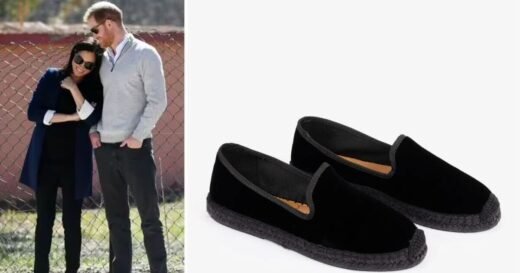
Save £100 on these summer shoes that look just like Meghan Markle’s | Royal | News
new admin - Jul 29, 2026[ad_1] Finding a pair of classic flats that feel timeless rather than trend-led can be surprisingly difficult, especially during the…