
Reggaeton Historian La Gata on New Music, ‘3:33’ Project

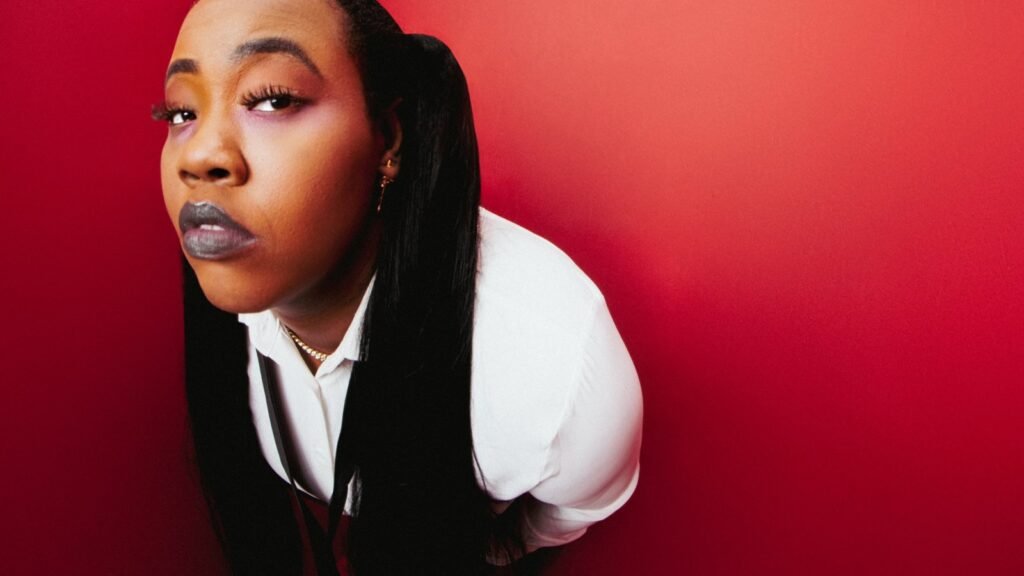
Katelina Eccleston, also known as La Gata, has made her mark by amplifying conversations about music, reggaeton, and pressing social issues. Through her social media platform, where she goes by Reggaeton con La Gata, she’s investigated, educated and challenged the narratives surrounding reggaeton. She has also taken her message outside social media with her podcast Perreo 101 and has written for multiple publications (Editor’s note: She’s also contributed to Rolling Stone.) She’s brought her conversations about reggaeton’s cultural impact to universities like Harvard, Stanford, NYU, and more.
But now, she’s stepping into a new chapter: exploring her own artistry through music. Bold and unapologetically herself, she channels her perspective into her debut EP, 3:33, a project that fuses rock and reggaeton into music that delivers incisive commentary on power, gender, and identity. The songs not only reflect her experiences but have become a form of healing from self-doubt and heartbreak for herself and her listeners.
How are you feeling at this moment with the project ready to launch?
Right now, I’m in Boston with my family, and I’m happy to be with my mom and my sister. Mentally, I’m in a really good place. As long as I’ve been critiquing, I’ve also been creating, the public just hasn’t known about it because, why advertise something before it’s finished, you know? I’m excited and ready. I’ve released projects before, instrumental stuff, but this is the first time I’ve recorded and released something like this, and it just feels like the perfect moment. Honestly, I don’t think this could have happened any earlier. The release day isn’t just for the project; it’s also the finale for the first season of my podcast, so it’s a big milestone for me.
Do you feel like the version of yourself right now is different from who you were when you first started this project?
Absolutely. I think there’s definitely been a sense of maturity. When I started, I just knew I loved music, and I walked into the studio wanting to make rock with reggaeton, and my friends were on board. But now, I’m attaching a message to my music, drawing from my life experiences and the wisdom I’ve gained, including what I’ve learned through my podcast and my work in general. So yes, I’m a very different person than I was when I first started making music. Releasing it now, I can feel that growth for sure.
What was your emotional state when you first decided to take on this project and share it with the world?
I’ve felt a deep sense of dedication. The name itself is personal: 3:33 is the exact time I was born, and the project releases on my birthday, so it just felt right. I knew it had to come out now, not later. This project helped me tap into my lifelong love of punk. People who know me remember my so-called “emo days,” but to me, it’s always been a lifestyle, not just a phase. I’m proud to bring that side of myself to the forefront and have it truly represent who I am.
Sonically, there’s a rage I’ve carried with me, and this project became the perfect vehicle to express it. It’s like all the puzzle pieces of my life, emotionally, psychologically, even professionally, finally clicked together through this music. That’s what makes this project so meaningful for me.
There’s always been debate, and even controversy, around reggaeton, especially when it first emerged. Some people, especially from the rock world, were critical of the genre, and that tension still exists today. But you’re blending both reggaeton and rock in your work. What inspired you to say, “I’m going to do both”?
As a critic, I’ve gone toe-to-toe with people who don’t understand reggaeton, or who even look down on it. I remember writing a piece for the LA Times responding to a musicologist who said he didn’t get the Bad Bunny phenomenon or reggaeton as a whole. And even early in my career, when I gave my first lecture at Harvard, someone challenged me about the genre’s reputation, especially regarding its treatment of women. I told her, “You’re not wrong, but this music reflects real life, and if you want to change the music, you have to change real life first.”
What drew me to blend reggaeton and rock is the versatility and complexity of reggaeton itself. People often say all reggaeton sounds the same, or that Black girls don’t have a place in it, or that it only belongs to one region. But reggaeton is diasporic and when you understand that, you realize how naturally it can be fused with other genres, like rock. I’m not reinventing the wheel, there have always been intersections, with artists like Wisin & Yandel exploring rock influences. Their song “Reggae Rockeao” inspired me to push that even further.
In the studio, the creative process was all about finding the balance, how much rock, how much reggaeton. Each song feels unique, and the project as a whole is just an introduction. I’m not done with this sound; I’ll definitely continue exploring roqueton and rock-dembow. But for now, this project is doing exactly what I hoped it would do.
This project feels rooted in self-preservation.
I think what I’m most intent on protecting is my desire to create. The past couple of years have brought a lot, including betrayal, heartbreak, both professionally and personally. 2025 was especially rough. So, artistically and on a personal level, I’ve had to take steps to make sure I’m okay. That meant walking away from certain situations and people, just to preserve that creative drive inside me. There have been moments when my heart was so broken I wondered if I even wanted to keep making art. But I know I deserve to create and to have my work out in the world. As an Afro-Latina, there are so many forces that try to keep me from taking up space or being unapologetically myself. I protect my softness, my ability to love, and the audacity to like myself. At the same time, I’ve learned I have to be tougher, too, to make sure that side of me perseveres.
Songs like “KUiDAO” and “No Somos Panas” explore trust and boundaries. How did you translate those personal experiences into music while still protecting parts of yourself? “KUiDAO” is such a fun track, but it’s also packed with intensity. The song has these dramatic highs and lows, it starts off calm and then the dembow just hits you. Everything about it was intentional and carefully curated. I actually wrote “KUiDAO” a long time ago, but the emotion behind it still feels fresh.
I wrote it during a time when there were a lot of heated public conversations, especially around Roe v. Wade. It made me angry that these issues are even up for debate. As an educator, I get especially frustrated because it feels like people just aren’t listening. There’s so much rage in this project, and “KUiDAO” channels a lot of that anger. This song is a warning anthem, at its core, the message is simple: leave women alone. It’s fun and it’s catchy, but the feeling is real. The punk influence comes through in the dark, metallic guitar chords, and I love that edge. Funny enough, I’d produced the beat years ago and stared at it for so long, not knowing what to say, then one day, I wrote and recorded the whole song in an hour.
“Flow Juguete” captures a sense of fatigue and resilience. In what ways does the song speak to the realities Latina women face today?
With “Flow Juguete,” I wanted to keep the message broad so that anyone could relate to it, and I think the visuals will help reinforce that. The song is about being like toy soldiers, not just on literal battlefields, but also online, where people are fighting battles they don’t fully understand. There’s a sense of people operating blindly, getting caught up in conflicts without really knowing what’s at stake.
As a historian, it’s been hard for me to witness how much unity and collective action we’ve lost since the days of the civil rights movement. Back then, there was a real sense of fighting together for issues that mattered to everyone. Now, it’s heartbreaking to see people dismiss important struggles as “not my problem,” whether it’s about race, ethnicity, or community. That kind of indifference is at the core of my frustration and rage in this song.
The song is a response to that, calling out the fragmentation, the rise of individualism, and the way we’re distracted by meaningless battles, whether they’re literal, emotional, or part of diaspora conflicts. Ultimately, the song is asking: Where are we headed if we keep turning away from each other?
On the project, you choose yourself, in your mental health, your well-being, your art. What was the price of that?
I used to believe that choosing myself would come at a cost. I was afraid of rejection, betrayal, and being manipulated. But now that I’m on the other side, and I’ve grown a lot since starting this project, I realize choosing myself costs me nothing. In fact, it’s the best investment I could ever make. When I put myself first, everything that follows feels authentic and aligned. The real cost comes when you don’t choose yourself. That’s when things around you become fake, and the people in your life are drawn to a version of you that isn’t real. I’ve learned that when I’m true to myself, the people who stick around are there for the right reasons. There’s no better feeling than that. So, for me, choosing myself costs nothing, but not choosing myself? That costs everything.
You may be interested

Golf analyst Brandel Chamblee rips LIV Golf amid speculation of uncertain future
new admin - Apr 15, 2026[ad_1] NEWYou can now listen to Fox News articles! With a "bombshell announcement" reportedly coming about LIV Golf, Golf Channel…
Live Nation Operated as Monopoly, Jury Finds
new admin - Apr 15, 2026[ad_1] Live Nation has been found liable in its blockbuster antitrust trial, a remarkable verdict that has the potential to…

Senate rejects 4th attempt to curb Trump’s war powers in Iran
new admin - Apr 15, 2026Washington — The Senate on Wednesday defeated another war powers resolution aimed at curbing President Trump's ability to use further…