



In Admissions Data Legal Fight, Colleges Want Protection

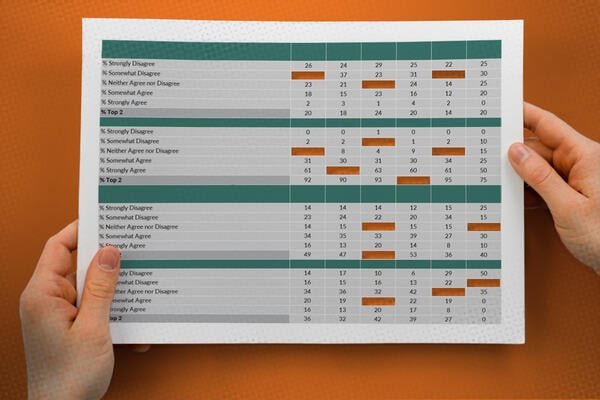
After a federal judge blocked the Education Department from collecting years of race- and gender-related admissions data for some public colleges, dozens more institutions are also seeking continued relief from participating in the Admissions and Consumer Transparency Supplement survey—which the federal government plans to use to look for what it considers unlawful race-based admissions practices.
The colleges made their case Monday at a virtual hearing before U.S. District Judge F. Dennis Saylor IV, arguing that the ACTS survey has and will cause irreparable harm for institutions, including those that have already submitted their data. (According to ED, the vast majority of institutions had sent some, if not most, of the required information by the final deadline last week.)
“The threat of irreparable harm here is real,” Betsy Henthorne, an attorney representing six higher education associations requesting to stay the survey, said. “There’s the burden of completing the survey, given the timing and the rollout issues. And then there’s the enforcement risk, or the risk of enforcement or fines based on inadequate or missing data, once that has been submitted.”
Relief from those harms, she added, “requires freezing the agency implementation as it is now” and preventing the department from enforcing the deadline, collecting data, accessing already-submitted data, publishing data and “enforcing either through fines or through enforcement actions based on that data.”
Saylor has yet to rule but is expected to extend the temporary restraining orders he issued earlier this month, giving several institutions—including those represented by the Association of American Universities, the Association of Independent Colleges and Universities in Massachusetts, and the Connecticut Conference of Independent Colleges—more time to complete the survey.
Monday’s hearing was the latest development in the ongoing backlash to the Trump administration’s efforts to collect admissions data in order to verify that they aren’t illegally considering race in admissions decisions after the U.S. Supreme Court ruled such practices unconstitutional in Students for Fair Admissions v. Harvard in 2023.
Last August, President Donald Trump directed ED to add the ACTS survey to the Integrated Postsecondary Education Data System, which requires colleges and universities with selective admissions policies to submit years of disaggregated admissions data—including the test scores, grade point averages, race, sex and income ranges of applied, admitted and enrolled students dating as far back as 2019.
But public comments submitted last fall showed widespread concern as higher education institutions and their advocates argued that the ACTS survey’s data collection requirements—the largest in IPEDS history—were too vague, requested data institutions do not collect, could violate student privacy and required an aggressive timeline that would overburden institutional resource offices.
Nonetheless, the department finalized the rule in December, giving institutions until March 18 to submit the data. (It later extended the deadline to April 8 for some colleges.)
A week before the deadline, 17 Democratic state attorneys general sued the department to block the data collection, arguing in part that forcing institutions to comply with the ACTS survey was “arbitrary and capricious,” in violation of the Administrative Procedure Act and exceeded the authority of the Office of Management and Budget. Saylor found that while the department has the general authority to collect such admissions data, “they do not possess the authority to do so under the circumstances presented here, given the arbitrary and capricious nature in which the ACTS was promulgated” and issued a preliminary injunction.
But that injunction only applied to public colleges and universities in the 17 plaintiff states. Since then, other parties have joined the suit and received an extension on the deadline until today.
However, colleges are looking for more than just extra time to complete the survey.
In fact, most have submitted something already. According to an exhibit the National Center for Education Statistics submitted to the court, as of April 8, 72 percent of institutions had submitted their data, though they were still waiting on finalization; 25 percent had uploaded at least three years of data that still needs to be edited and cleaned. Lawyers for the plaintiffs argued that those calculations are misleading and don’t represent the scope of work required to complete and release the survey by the planned deadline this summer.
Instead, many colleges don’t want the government to use the data they submitted at all.
That’s in part because they believe they “face an acute risk of enforcement actions premised on information that may be unreliable given the compressed timeline, the lack of clear guidance, and the absence of the vetting processes that have historically ensured data quality in IPEDS collections,” according to a motion to join the original lawsuit from Barnard, Bryn Mawr, Middlebury, Sarah Lawrence, Swarthmore and Vassar Colleges. “The Department has stated its intent to use ACTS data as a basis for enforcement, meaning that each of [the colleges] could be subject to investigations, fines, or other adverse consequences based on the data it was compelled to upload under these conditions. Preventing the Department from accessing or using any of the [colleges’] uploads is necessary to avoid these harms.”
But Brittany Bruns, a lawyer for the Department of Justice, said at the hearing Monday that the Education Department “does not intend to bring enforcement actions against schools that have a good faith reason for not submitting data,” adding that the ACTS survey includes provisions for institutions to indicate missing or incomplete data.
However, that assertion “does not feel at all comforting,” countered Jeffrey Nolan, a lawyer representing several independent colleges, “when it comes to the prospect of dealing with defending an investigation, dealing with penalty phases, being at the Department of Justice in front of an administrative law judge, and then having to take the inevitable result thereafter to the federal courts.”
And if or when the Trump administration does use the finalized ACTS survey to justify investigations, the concerns about the legitimacy of the data that colleges are raising right now could make it harder for the Trump administration to defend in court, James Murphy, a senior fellow at the nonprofit Class Action, told Inside Higher Ed.
“The White House has shot itself in the foot by doing this in such a sloppy way,” he said. “It’s likely that when most judges look at [federal investigations] that are based on ACTS survey data, they’ll already know it’s a total mess … Colleges that may be vulnerable will likely be in a stronger place.”
You may be interested

NASA’s Curiosity rover found a ‘sea of polygons’ on Mars
new admin - Jul 30, 2026The latest discovery from NASA’s Curiosity Mars rover is a field of honeycomb-shaped polygons covering a Martian valley called Valle…
White House doubles down on Trump’s claims that China interfered with elections
new admin - Jul 30, 2026The White House continues to claim that China interfered in U.S. elections, despite election experts disputing those allegations. China has…

Karol G Announces New Album ‘No Me Arrepiento de Sentir Tanto’
new admin - Jul 30, 2026[ad_1] The Colombian superstar announced the LP, which arrives Aug. 7, during her latest tour stop It’s official — Karol…