




The Strait of Hormuz blockade is causing a slow-moving food crisis

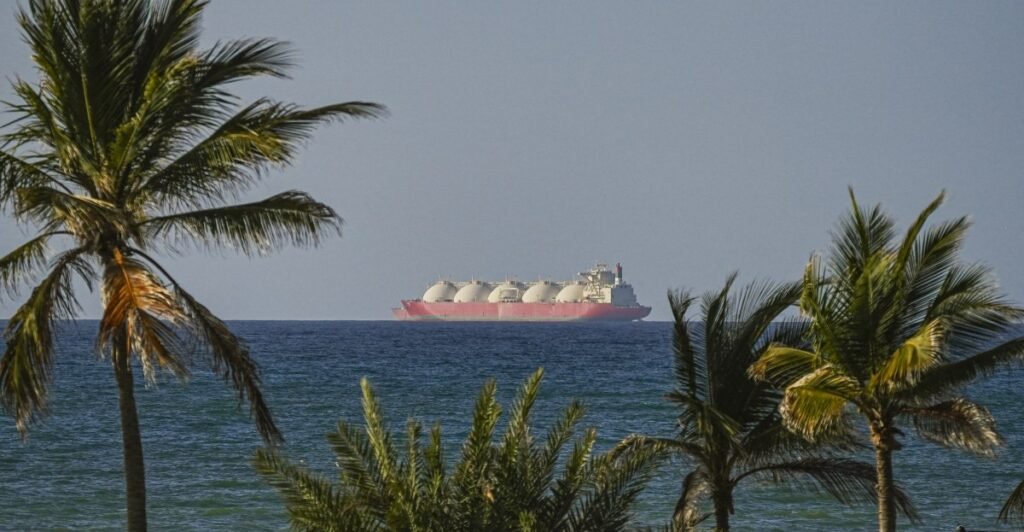
Farmers are very busy in the spring, under pressure to get crops into the ground just as the Northern Hemisphere begins to thaw. But this year has been different for many, thanks in large part to the escalating war in Iran and the closure of the Strait of Hormuz.
The Strait of Hormuz is a narrow channel, approximately 30 miles wide at its tightest point, between the Omani Musandam Peninsula and Iran. Roughly half of fertilizer feedstock exports — the various raw materials used to make fertilizer like urea, ammonia, sulfur, hydrogen, natural gas, and nitrogen — come through the Strait. And about roughly half of the world’s food production relies on fertilizer, according to Veronica Nigh, chief economist at The Fertilizer Institute. It’s vital to the food supply both in the US and around the globe.
Around a quarter of US farmers did not lock in fertilizer prices last fall, and many are now scrambling to cover costs stemming from a war they didn’t anticipate. Every day the Strait remains closed or restricted, it causes the five-plus-week crisis to extend further into the Northern Hemisphere’s vital spring planting season.
“This is a slow-moving food crisis in the making,” David Ortega, an agricultural economist and professor at Michigan State University, said. According to the International Fresh Produce Association, the fertilizer shock could cause everything from a 1- to 3-percent increase in grocery store food prices to fresh food shortages around the world.

Last week, the US and Iran agreed to a two-week ceasefire, contingent on Iran reopening the crucial waterway to shipping traffic. Within 24 hours, however, Iran closed the strait again, citing Israeli strikes on Lebanon that Tehran says violate the terms of the deal. As of April 9th, no ships are moving freely through the waterway, and the terms of the ceasefire are in active dispute.
This is leading to a growing anxiety among the nation’s farmers. “If you have a calendar that you have always followed for planting season, you just basically have to throw that thing out the window, because everything has just had a bomb dropped on it,” said Andy DeVries of DeVries Farm, one of the co-owners of a 1,200-acre soybean and corn farm in Iowa. “There’s just not much wiggle room, and you’re stuck between a rock and a hard place.”
DeVries says he and his brother, a co-owner of the farm, order around 80 to 85 tons of nitrogen and phosphorus fertilizer each year, locking in prices in August, ahead of the spring. Today, he says that the price of nitrogen fertilizer has risen by more than 35 percent locally, while the price of phosphorus fertilizer has increased by 19 percent.
“If you have a calendar that you have always followed for planting season, you just basically have to throw that thing out the window.”
— Andy DeVries, farmer
These decisions aren’t small either; they cost tens of thousands of dollars each, cutting deeply into farmers’ profits, which have already been significantly reduced by the rising cost of oil, immigration raids, climate change, and tariffs. DeVries says that if he had bought just his phosphorus fertilizer today, he’d have had to pay $35,000 more for it.
The Strait of Hormuz has been closed for more than a month, and the effects are already moving through the supply chain. Fertilizer prices in the US have risen 30 to 40 percent in the last four weeks, according to Jacqui Fatka, lead economist for farm supply and biofuels at CoBank.
As The Fertilizer Institute’s Nigh points out, the longer the closure and disruption of the Hormuz Strait lasts, the more likely it is that increased fertilizer prices will be passed on to food prices. “If the closure lasts a month or two, the impact will be minimal,” Nigh said, “If it’s three to six months, it overlaps the growing season in the Northern Hemisphere, and the increase will find its way into food prices and availability,” she continued. “March imports, April imports are more or less on target from where expectations were for demand. It’s the May imports that we’re starting to worry about.”


How fertilizer is made today
Nitrogen fertilizer is made using a 113-year old process that’s heavily dependent on liquified natural gas, or LNG. The Haber-Bosch process hasn’t really changed since 1913, when it was first developed, and it requires raw material inputs, including water, natural gas, and nitrogen. The reaction produces ammonia, which is then processed into urea, ammonium nitrate, and other nitrogen fertilizers.
Each year, the process consumes around 3-5 percent of the global natural gas stores. The process has been incrementally improved over the years, but crucially, it only really works efficiently when natural gas is cheap. Natural gas was already constrained by the ongoing Russian invasion of Ukraine in 2022, and since the war in Iran began a month ago, LNG futures in the US have risen 10 percent, while those in Europe and Asia have doubled.
Nitrogen-based fertilizer accounts for 59 percent of total global fertilizer use as of 2023, according to the Center for Strategic and International Studies (CSIS), and 45 percent of that nitrogen fertilizer is used to grow staple grain and cereal crops like wheat, rice, and maize around the world. That fertilizer is also used to grow corn and soybeans here in the US, which not only feeds humans but also goes into everything from animal feed to the ethanol in our gasoline.
Nitrogen fertilizer is made using a 113-year old process that’s heavily dependent on liquified natural gas, or LNG
While the US produces around 80 percent of its fertilizer domestically, it only accounts for about 10–15 percent of global fertilizer consumption, according to data from the University of Illinois. That gap matters because the countries that account for the other 85 to 90 percent of global consumption are less insulated.
As Lorenzo Rosa, principal investigator at Carnegie Science, and a researcher who studies the intersection of water, food, and energy, notes, the Haber-Bosch process requires economies of scale. There are around 400 facilities globally in the Global North with relatively few in the Global South that can produce fertilizer. While we have significant production in the US, according to Rosa, more than 1.8 billion people around the globe rely on imported natural gas and fertilizer to survive.
Researchers and policymakers have been trying to improve and change the chemical process, but progress has been stymied. The Biden administration’s Inflation Reduction Act funded production development of “green” and “blue” ammonia, cleaner alternatives to the Haber-Bosch process that would reduce dependence on natural gas. But those facilities are not online.
Under Donald Trump’s Big Beautiful Bill, the construction deadline for qualifying clean hydrogen and ammonia projects was moved up from 2033 to 2028, a compressed timeline that has already contributed to project cancellations and has raised concern among industry researchers about whether enough capacity can come online. The crisis unfolding in the Strait of Hormuz has arrived before any alternative is ready to absorb the shock.
“You can’t ramp production up and down, either,” Rosa said, noting that, similar to the time it takes for a natural gas train to come online, it can take months to years to get new fertilizer production online.
Fertilizer shocks tend to show up for consumers with a lag, because they essentially affect what farmers plant and how much they produce. That means the biggest impact is likely to appear later this year — late summer into fall — and become more visible in the winter of 2027, according to the International Fresh Produce Association’s global data.
“Food insecurity arises because of issues of access, and because of issues of affordability. Food is being produced, but it’s not where people need it,” Michigan State’s Ortega said.

Food insecurity for the globe
The biggest risk of this fertilizer shock isn’t just higher costs, it’s actually a longer-term behavioral response by farmers. If they use less fertilizer, that means lower yields, which in turn means they may switch crops (i.e., away from corn, which is nitrogen-intensive). They also may delay or reduce planting, which, according to IFPA research, triggers real food price inflation. Switching crops means lower output and even fresh food shortages, not just higher input costs, which pushes prices up for consumers, and leads to empty shelves at the grocery store.
Even if the US and Iran reach an updated ceasefire agreement in the next few days and agree to reopen the Strait of Hormuz tomorrow, it will take months to fully reopen and provide safe and consistent passage for cargo ships.
“[The fact that] a third of the world’s fertilizer flows through a very specific area that’s subject to conflict is a vulnerability we can’t ignore.”
— David Ortega, agricultural economist and professor at Michigan State University
On top of all this, fertilizer and its feedstocks don’t store well, mostly because they are highly combustible. As Nigh points out, most producers don’t keep more than a few weeks on hand before shipping it out, because it can be dangerous to store. Plants run year-round at full capacity, and as Nigh says, demand is “lumpy.”
“Right now facilities are reaching the point where they don’t have enough space, and they will be forced to shut down,” Nigh said, pointing out that once a plant shuts down, it takes anywhere from two weeks to a month to restart.
“This is an example of a shock where, when it comes to supply chains for agricultural inputs, we have to build resiliency into those systems,” Ortega said. “[The fact that] a third of the world’s fertilizer flows through a very specific area that’s subject to conflict is a vulnerability we can’t ignore.”
Most experts agree that restoring the Strait of Hormuz to its normal shipping capacity could take months, which would put the Northern Hemisphere deep into summer, when farmers have already made decisions about what to plant and what to forgo because of the shortage and conflict.
“You start to wonder what the new normal is,” DeVries said, noting that every time a politician tweets something, prices for everything from corn and soybeans to fertilizers and seeds fluctuate wildly. “Just be consistent, so we know what to expect,” he continued. “We’ve made it through worse times, we’ll figure it out and make it through this, but the shock creates arbitrary winners and losers. Is this just the new normal?”
You may be interested

Iran’s nuclear enrichment remains sticking point in U.S. negotiations
new admin - Apr 13, 2026U.S. and Iranian officials met Saturday in Pakistan for direct negotiations, but the talks ended without an agreement. Vice President…

On Reuniting, New Album ‘Arirang’ and Their Future Plans
new admin - Apr 13, 2026[ad_1] W hen RM is going through an existential crisis, which is pretty often, he might think of the words…

Giannis Antetokounmpo says he had no control over being kept off the court by Bucks
new admin - Apr 13, 2026[ad_1] NEWYou can now listen to Fox News articles! Milwaukee Bucks star Giannis Antetokounmpo remained peeved with the organization for…