




How social media is driving teens toward steroids and extreme body transformations

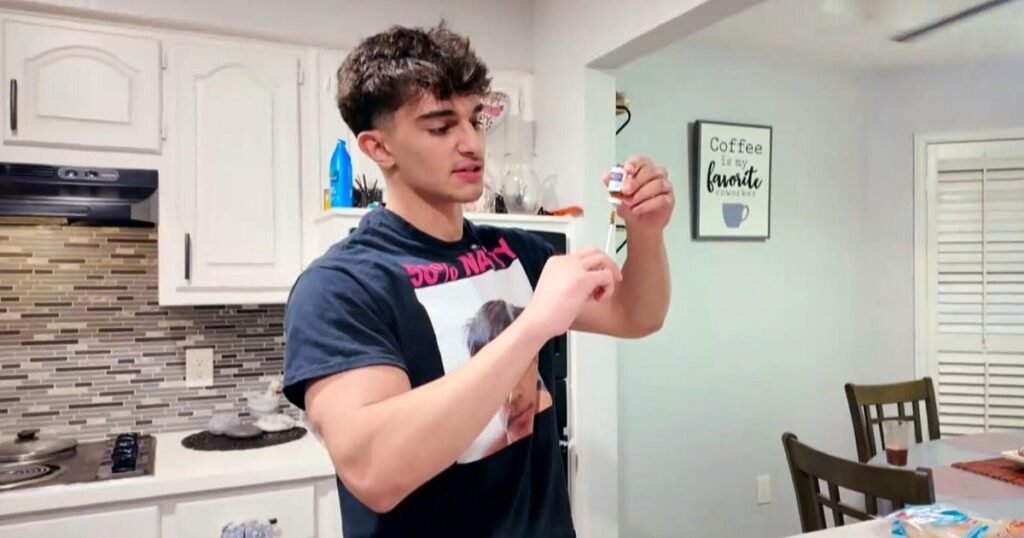
A growing number of teenage boys are chasing dramatic body transformations online — building massive muscles, shedding fat and documenting it all for millions to see.
But behind some of the viral physiques lies a troubling trend: the use of a powerful drug never approved for humans.
A rapid transformation — and a risky choice
At 16 years old, Zaid Laila says he didn’t want to spend years working out to build a body like those he saw online.
“Why wait 10 years … when I could do it in less than a year,” he said.
The high school student from suburban Dallas began documenting his journey on social media, where his transformation quickly drew attention. His videos show a leaner, more muscular physique — the kind often celebrated across social media platforms.
But Laila is open about how he got there: “A lot of steroids and a lot of working out.”
He told CBS News he’s been using anabolic steroids for about 10 months, including trenbolone, a powerful drug developed for livestock and never approved for human use.
A drug not meant for people
Trenbolone, often referred to as “tren,” is designed to increase muscle growth in cattle. It is classified as a Schedule III controlled substance in the United States, making it illegal to possess or distribute without a prescription.
Dr. Jason Nagata, a pediatrician specializing in adolescent health at the University of California, San Francisco, says anabolic steroids can damage the heart, liver and kidneys — and trenbolone may be even more dangerous.
“Trenbolone, because it’s so powerful, it has even more significant side effects,” Nagata said. “There is no safe [human] indication for this animal drug.”
Steroid use, from sports to social media
For decades, steroid use was largely associated with competitive sports, but the motivation has shifted.
“There are many people now who aren’t actually participating in any type of sports who are using these drugs only for the purpose of looking better,” Nagata said.
A 2023 study by the nonprofit Countering Digital Hate found TikTok videos under certain hashtags promoting steroid-like drugs have been seen at least 587 million times in the U.S. between 2020 and 2023, with 72% of those views from users between the ages of 18 and 24 years old.
Scroll through social media and the trend is hard to miss: transformation videos, gym influencers and before-and-after photos appear to showcase rapid results.
“With more social media, there have been really extreme pressures for boys to build muscle,” said Nagata.
Laila says those images played a direct role in his decision.
“Seeing people do it is what makes you want to do it,” he said, adding that the drugs are also easy to obtain.
“It’s not hard at all,” he said. “Anyone can get their hands on it if they try.”
A warning shaped by tragedy
More than two decades after losing his younger brother to steroid use, Don Hooton Jr. says the problem has only grown. His brother, Taylor, began using anabolic steroids in high school after being encouraged to get bigger and stronger for sports. After stopping the drugs, he experienced severe depression and died by suicide in 2003.
Hooton now leads the Taylor Hooton Foundation, which educates young people about the dangers of performance-enhancing drugs.
“We’re seeing kids today asking if trenbolone is safe,” Hooton said. “That’s a major problem.”
He says social media has fundamentally changed how young people are exposed to these substances. “[The] drug dealer has gone from a dark alley … to the safe four walls of our home,” he said.
“Everybody is filming themselves. They wanna be the next social media star, and they’re doing whatever it takes to change that physique, even if it’s using illegal drugs,” said Hooton.
Despite the risks, some teens remain focused on the short-term rewards.
“If I have a heart attack at 30, I have a heart attack,” Laila said.
What parents should watch for
The warning signs aren’t always obvious. Nagata told CBS News parents should look out for obsessive workout routines, teens avoiding meals with family and friends, or other changes that impact socializing.
In some cases, parents may even unintentionally reinforce the behavior by praising physical changes without understanding how they were achieved.
For Laila’s family, conversations are underway. His father, Haitham Laila, told CBS News he is deeply concerned about his son’s health and overwhelmed by the misinformation his son has cited to justify steroid use.
Zaid Laila says he understands the risks — but continues to make his own choices.
“I’m still going to do [steroids] ” he said. “I know what can come with it.”
You may be interested

Team USA equipment manager arrested on charges of domestic violence: report
new admin - Jul 18, 2026[ad_1] NEWYou can now listen to Fox News articles! Team USA men’s national hockey team and Florida Panthers equipment manager…

Target recalls over 200,000 children’s sandals after pearls detach, creating choking risk
new admin - Jul 18, 2026Target has recalled more than 200,000 children's sandals due to a choking hazard. The retail giant told customers who had purchased…

Warning issued to anyone who uses aircon – ‘worsened symptoms’
new admin - Jul 18, 2026A warning has been issued to Brits using air conditioning this summer. As temperatures remain hot across the UK, GPs…