



Path Toward Equity in Athletics Runs Through the Classroom


As I watched the 68 teams in the NCAA women’s March Madness tournament winnow to a Final Four, I was proud of how far the tournament has come. With superstars like UCLA’s Lauren Betts, South Carolina’s Raven Johnson and Louisiana State’s Flau’jae Johnson, it’s easy to forget that less than five years ago, the women’s tournament didn’t even get to use the “March Madness” name. Only after an outcry on social media about the stark differences between men’s and women’s championship tournament training facilities did the NCAA scramble to level the playing field; in 2022 it expanded the number of women’s teams in the tournament from 64 to 68 (to match the men’s brackets), increased the pool of money paid out to teams in the women’s tournament ($20 million compared to $270 million in the men’s pool) and, yes, allowed the women’s tournament to use the March Madness branding.
Once the NCAA treated the women’s game seriously, the audience followed. Viewer numbers rose and TV deals more than tripled in payouts from $35.7 million to $115 million last year. At a moment when college athletics is in a knot over money, more media dollars and greater fandom represent a great outcome for the NCAA after a social post shaming their inequitable training facilities went viral. More importantly, the investment showed female basketball players that their sport matters.
But any progress toward equity is at risk because of the current crisis across collegiate athletics. Women’s programs as well as non-revenue-generating Olympic sports and lower-resourced institutions that can’t pay the big bucks to recruit coaches and players are all vulnerable in the new semipro arena of college sports. Today the sector is dominated by football programs at Power 4 conferences—the SEC, the Big Ten, Big 12 and ACC—on multimillion-dollar spending sprees (hello, private jets). They hold the biggest influence in NCAA rule making; negotiate the most profitable media deals; command the largest name, image and likeness contracts; and drive exorbitant coaching salaries. As the money and power concentrate in the top football and men’s basketball programs, the foundation of college sports seems to be more fragile, putting hard-won equity gains—and the entire system—at risk.
Whatever solution emerges to fix college athletics, one principle is nonnegotiable: protecting students. From Division I to Division III, student athletes dedicate their lives and bodies to their sports, balancing their academic and athletic careers. A 2025 NCAA snap survey of 6,800 Division I student athletes found that academic worries and pressures to perform athletically were the top factors negatively impacting their mental health. Nearly half of female athletes reported feeling “overwhelmed by all they had to do” constantly or most every day. The right approach to collegiate athletics will preserve the founding ideals of equality and opportunity while still acknowledging the newly semiprofessional industry that collegiate sport has become.
One way colleges could serve their academic mission is to offer academic credit for competing in athletics. A 2025 paper from the Knight Commission argued for greater athletic-academic integration, noting that college athletes learn how to manage their time, communicate effectively and collaborate with people from diverse backgrounds. These are all skills employers consistently say they are looking for.
Proponents of this idea draw parallels to college music, drama and dance programs, which are also heavily subsidized extracurricular activities, but ones that eventually lead to degrees. The Knight Commission report describes sport as an intellectual and cultural endeavor, equal parts art and science, celebrating “the beauty of human movement, the emotion of competition, and the narratives of triumph and adversity” that uses “principles of biomechanics, psychology, physiology, and data analytics to optimize performance.” Texas Christian University’s breakout forward Marta Suarez, who designs and hand-paints her own basketball shoes, doesn’t just make this point—she wears it.
Some institutions already offer credit for participation in sports. Stanford grants students credit for training for the Olympics; the University of Delaware built a curriculum around life skills, leadership and career readiness for athletes.
Lou Matz, a professor of philosophy at the University of the Pacific and a former NCAA basketball player, took the idea a step further and designed an entire competitive sports major. One of the requirements is three years of playing a competitive sport at the college level or equivalent. The major would pair sports-related coursework with formal credit for students’ participation in athletics—the practice, competition, strength and conditioning, and travel.
Southern Virginia University is putting the theory into practice. Last fall it launched its bachelor’s degree program in sport performance, which requires at least two seasons of intercollegiate sport. The major will help student athletes “reflect on their athletic experiences through the lens of leadership, character, and purpose,” President Bonnie H. Cordon said.
Collegiate athletics has run away from higher ed institutions and their missions. Yet we know that student athletes tend to have better retention and graduation rates than their peers. Providing them academic credit, perhaps even leading to a degree, for their time on the court or field (or in the pool!) would be a way for universities to regain some control of students’ athletic experience.
All students deserve to have their programs and dedication honored. Formally recognizing students’ competition with academic credit would show them they’re being taken seriously and spread opportunity to everyone, regardless of sport, gender or institution.
You may be interested

Judge blocks Trump’s ban on CNN, MS NOW and Politico, restoring White House access
new admin - Sep 24, 2026Washington — A federal judge early Thursday morning temporarily blocked senior Trump administration officials from barring CNN, MS NOW and…
Examining China-Iran relations amid Trump-Xi summit
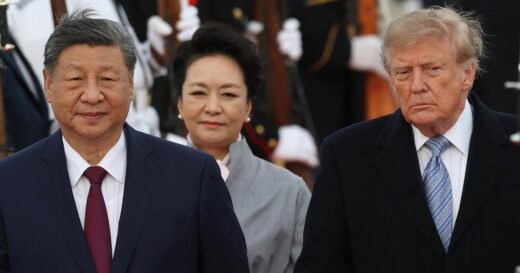
new admin - Sep 24, 2026President Trump greeted China's Xi Jinping at Joint Base Andrews on Wednesday evening in an unusual presidential welcome for a…

What You Should Know About Undiagnosed Rare Diseases
new admin - Sep 24, 2026Organizations that support research and care for people with undiagnosed medical conditions Cheyanna’s Champions 4 Children (CC4C) provides children with…