


Rethinking Aging on College Campuses

As colleges nationwide focus on artificial intelligence and workforce readiness initiatives to prepare students for their careers, the University of California, Los Angeles, is expanding its attention to a different population: older adults.
Through an age-friendly university initiative, UCLA is redefining what aging looks like on campus—vibrant, inclusive and rooted in lifelong learning.
The initiative began in 2018, when UCLA became the first campus in the University of California system to join the Age-Friendly University Global Network, a consortium focused on improving the lives of older adults through education, research and community engagement.
In February, the university built on that foundation by introducing a more coordinated, campuswide approach—including a cross-disciplinary task force and a new website aimed at promoting healthy aging and combating ageism.
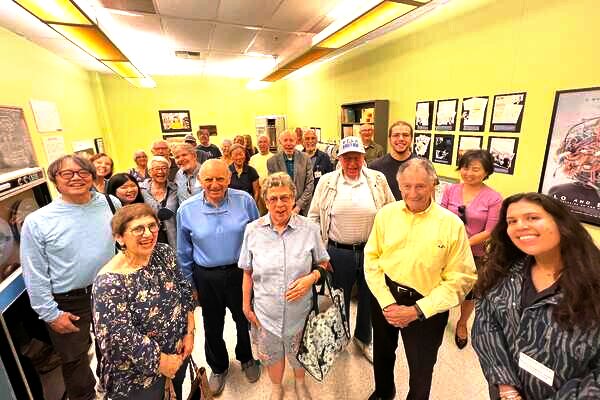
The initiative engages a wide range of older adults, including retired faculty and staff, alumni, and community members interested in continuing education. While some participants audit courses or pursue certificates, others engage through mentorship programs and volunteer opportunities.
Ayesha Dixon, a gerontologist and senior director of the Emeriti/Retirees Relations Center at UCLA, said the initiative at its core is about cultivating a positive social environment for older adults, in addition to creating more opportunities for intergenerational learning and exchange.
“Ageism is everywhere,” Dixon said. “Working in Los Angeles, we see it on the silver screen, we see it on TV. There’s always some sort of depiction of older adults as being decrepit or useless or the comedy punchline.”
“This initiative is really about reimagining what older adulthood looks like—and how campuses and other institutions can actively push back against those narratives,” Dixon said.
Supporting an age-friendly university: The university has built a range of programs and partnerships guided by the Age-Friendly University Global Network’s 10 principles.
10 Principles of an Age-Friendly University
- To encourage the participation of older adults in all the core activities of the university, including educational and research programs.
- To promote personal and career development in the second half of life and to support those who wish to pursue second careers.
- To recognize the range of educational needs of older adults.
- To promote intergenerational learning in order to facilitate the reciprocal sharing of expertise between learners of all ages.
- To widen access to online educational opportunities for older adults to ensure a diversity of routes to participation.
- To ensure that the university’s research agenda is informed by the needs of an aging society and to promote public discourse on how higher education can better respond to the varied interests and needs of older adults.
- To increase the understanding of students of the longevity dividend and the increasing complexity and richness that aging brings to our society.
- To enhance access for older adults to the university’s range of health and wellness programs and its arts and cultural activities.
- To engage actively with the university’s own retired community.
- To ensure regular dialogue with organizations representing the interests of the aging population.
To guide its work, UCLA convened a task force made up of emeriti faculty, staff and retirees with expertise in gerontology, psychology, public health and the social sciences. The group meets quarterly to recommend strategies for expanding intergenerational programming, reducing social isolation and ensuring equity for older members of the campus community.
“We have a really diverse group of people who can help strategize and bring these principles to life in practice,” Dixon said. “Framing everything through these principles was a labor of love, and being able to draw on their different backgrounds, has been invaluable.”
One result of those discussions is a new age-friendly website, designed as a central hub for retirees, emeriti faculty and community members seeking information on aging-related resources, research and courses. The site also highlights opportunities for intergenerational mentorship, volunteer programs and wellness workshops.
“Whether it’s a class on learning Portuguese or discussions on film and media arts, having these opportunities—often free or low-cost—helps keep people engaged,” Dixon said. “They can take one class or several, pursue a certificate, or simply participate.”
Dixon said that when the task force analyzed the university’s database of roughly 22,000 retired faculty and staff, about 41 percent had earned a certificate or degree from UCLA.
“It shows they’re invested in UCLA beyond just being employees,” Dixon said. “There’s a strong sense of identity and connection, and it reflects how the university is thinking not just about students, but about people across the full arc of their relationship with the institution.”
Tackling ageism on campus: Dixon said the COVID-19 pandemic reshaped the university’s approach to supporting older adults.
“There was a really big need because of social isolation,” Dixon said. “A lot of things were pivoting to Zoom or Facebook or Twitter, and older adults were new to these spaces. It became clear that the structure needed to evolve.”
That shift helped expand UCLA’s age-friendly efforts beyond social connection to include broader public health and lifelong learning initiatives.
“Aging has long been a focus in public health policy and research—whether it’s Alzheimer’s, dementia or diabetes,” Dixon said. “As one of the top public health and research institutions in the country, it’s important to offer programs that support people across the lifespan.”
For Dixon, that work starts with building intentional infrastructure to better serve older adults—an often overlooked population in higher education.
“It’s something UCLA and my department have focused on to show how other institutions can learn from this population,” Dixon said. “It’s always freshmen and football, but when you think about nontraditional learners, it really spans the entire lifespan.”
Get more content like this directly to your inbox. Subscribe here.
You may be interested

Grizzlies forward Brandon Clarke arrested in Arkansas on drug charges
new admin - Apr 02, 2026[ad_1] NEWYou can now listen to Fox News articles! Memphis Grizzlies forward Brandon Clarke was arrested on Wednesday in Arkansas…

Hospice where staggering 97% of terminal patients survive is accused of defrauding Medicare for $7.45 million
new admin - Apr 02, 2026The FBI arrested a married couple Thursday accused of fraudulently billing Medicare for $7.45 million while running a hospice with…

Tesla’s sales recover slightly, but the trend lines are all bad
new admin - Apr 02, 2026Instead analysts are looking at how this quarter stacks up against the previous one, and they’re not finding a lot…