


Louisiana May Broaden University Public Records Exemptions

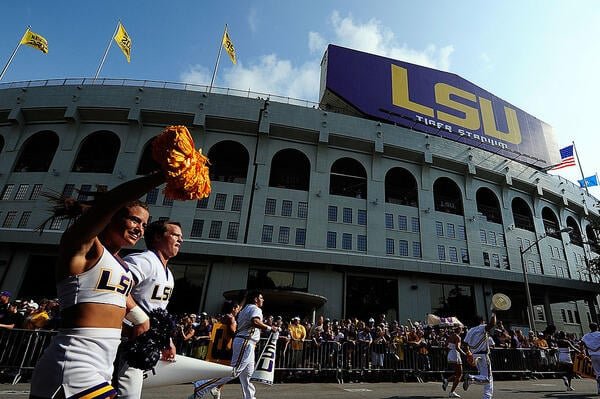
Louisiana is one step closer to broadening public records exemptions for its public universities.
On Tuesday, the Louisiana Senate voted 36 to 2 to advance Senate Bill 289, which would shield universities from having to disclose application materials for top jobs, the names of donors and some research materials.
Supporters of the legislation, which now heads to the Louisiana House, say it’s designed in part to protect prospective applicants for executive positions at universities—including but not limited to presidents, chancellors, senior vice chancellors and athletic coaches—by keeping private all application records until finalists are named. However, the exemption continues for the records of any applicant who is not named a finalist.
“As we know, sometimes someone does not want to do that, they want to be kept private so that where they’re serving now, they don’t know they’re applying to another university,” the bill’s primary sponsor, Republican state senator Mark Abraham, said at a public hearing about the bill last month. “I want to keep the confidentiality of executive-level job applicants.”
The bill would also exempt “any record that identifies or could lead to the identification of a private donor or prospective donor” to a public college, university or its affiliated foundation, “unless the donor provides written consent for disclosure.” But the amount of the donation and how it’s spent would remain subject to public records laws.
Lastly, the bill would exempt records that contain proprietary research, unpublished data, grant applications or information related to intellectual property and industry partnerships, “where disclosure would reasonably result in a competitive disadvantage to the institution or its partners.” Such records would become public once the research is published in a peer- reviewed journal or receives a patent, the grant period ends or “the institution determines the information no longer meets the criteria to remain private.”
Critics have said the legislation is too broad.
“I have concerns whenever there’s a reduction in the public’s right to know,” Steven Procopio, president of the Public Affairs Research Council of Louisiana, said at the public hearing last month. “I don’t think citizens and the public should have to justify why they get to see the government’s workings.”

You may be interested
Ohio governor calls Trump’s plan to deport Haitians “a mistake”
new admin - Jul 28, 2026Ohio governor calls Trump's plan to deport Haitians "a mistake" - CBS News Watch CBS News Camilo Montoya-Galvez sits down…

A major earthquake rocks Japan, prompting tsunami warnings
new admin - Jul 28, 2026IE 11 is not supported. For an optimal experience visit our site on another browser.Now PlayingA major earthquake rocks Japan,…

Stop Telling Students Computer Science Is Dying (opinion)
new admin - Jul 28, 2026[ad_1] Every computer science department head I know is having a version of the same conversation—with a parent at orientation,…