

What’s the Endgame of Increased Productivity?


If you are in the knowledge-work class—and I suppose I am, though, being self-employed, I don’t often think that way—you are hearing about the miracles of Claude Code and Claude Cowork.
Just this week my fellow longtime IHE contributor Joshua Kim buried what I found was a pretty striking observation in his reflection/review of Stephen Witt’s The Thinking Machine: Jensen Huang, NVIDIA, and the World’s Most Coveted Microchip, saying,
“If my experience with Claude Cowork is generalizable, then academic professional staff work is about to undergo a radical shift. Since I started to integrate Cowork into my workflows, AI has become the medium in which I manipulate information. Spreadsheets, decks and documents are now developed, edited and refined collaboratively with Claude.
“The process of discovering, synthesizing and adding value to information—the work of the academic staff laptop class—now almost always includes AI in the loop.
“Once you start to work with AI to do knowledge work, you want more AI. The challenge becomes not finding ways to apply the tools, but running out of usage tokens. The scarcity is not potential productivity, but compute.”
I found it striking because I spend a fair amount of time “manipulating information”—What is writing, after all, if not manipulating information?—and yet I have found a near-zero application of this technology to my work.
Not zero zero. I did recently get great utility out of asking a model to compile a list of every podcast I’ve appeared on for a questionnaire required by my publisher in advance of the paperback release of More Than Words. I am lazy about tracking this stuff because, why bother? Doing this by memory and through searching my emails or podcast platforms for my name would have been pretty time-consuming.
My AI agent did miss three appearances I could recall off the top of my head, but it found three others I would not have remembered to save my life. It made all this information into a handy, sharable Excel file. I was very pleased to have saved myself the trouble.
But also, I have to be honest with myself and admit that there is vanishingly little utility to this information in this context. I know why my publisher wants it. This is the kind of information a PR/marketing team desires when thinking about a publicity plan, but I’ve also had sufficient experiences with publishing to know that nothing much is going to come of it. Because of this reality, I would have resented the time it would have taken me to pull it together, but because I want my publisher to see me as a good and cooperative author—because that’s what I am!—I would have done it.
Still, why are we doing this?
I prefer to spend my time in this space observing and commenting and perhaps offering warnings, rather than predicting, but I will be curious to hear from Josh Kim and anyone else who is finding utility in these tools now to see what’s changed about their work a year from now, and I wonder if the transformation will not be quite as total as it seems at first blush.
I think there are a number of different things we should be on the lookout for when it comes to our work and the integration of these agents. Maybe these are just the things I would be worried about, but I think these will also apply to others.
Mistaking Novelty for Meaning
I wrote about this in a slightly different context at my newsletter last weekend in discussing the demise of the Sora video generator, an application that was supposed to revolutionize cinema but that has now been pulled from the market. OpenAI thought there was sufficient interest in short, user-prompted, AI-generated videos to sign a billion-dollar deal with Disney to license their characters for the platform, but it has now gone poof. Oops!
When it comes to our own work, I think it can be fun and intriguing to simply have some different way of doing something for it to feel exciting, but I also think this difference can be in the realm of novelty rather than enduring change.
For a time, a friend was excited about the Nano Banana platform in Google’s Gemini for spicing up the images in their presentations. Iterating these images through prompting was more fun than relying on unlicensed public art, and Nano Banana seemed like a step up in class from other image generators, but it was also more time-consuming, and this friend realized that people generally don’t care about the quality of one’s visuals in a presentation as long as you meet a minimum threshold of quality. The overall content and message matter much, much more.
The allure of doing something differently is obvious, but this is not the same thing as doing something better.
Using AI to Do Stuff That Doesn’t Actually Need Doing
I was personally witness to this recently when a reader of More Than Words emailed me to say they appreciated the book, but also, I was too skeptical of the potential of AI to help us do our work. I replied and we had a nice back-and-forth about our different perspectives, and this person described some of the ways they deployed AI agents to successfully complete tasks that seemed to always previously go undone.
I asked the obvious question about what happened before regarding these undone tasks: What were the consequences? This person replied, “Mostly nothing.”
These tasks had lived—for years in some cases—in a kind of limbo of something that maybe, possibly this person should be doing but didn’t have the time to prioritize. Now, time was not the problem, but they admitted that even with AI, there was no obvious utility to these things getting done.
The interesting part of this person’s response was that they figured they’d continue to let the agents do this work because what’s the downside?
I think the downside is that we shouldn’t produce things that have no actual purpose just because we can. I’m seeing a future where AI agents produce and respond to the work of other AI agents, and I begin to wonder what the point of all this production is.
We should be using the fact that these agents can produce some of these artifacts without human input or intervention as an invitation to ask whether or not these things should exist at all.
Initiating a Cycle of Self-Alienation and Dehumanization
I am not particularly worried about Josh Kim—part of his work is being professionally thoughtful about the work of higher education—but I have seen testimony from others who simultaneously express great enthusiasm for, in Josh’s words, “using AI as the medium” in which they do their work, that from the outside looks like a form of, for lack of a better word, mania. This newsletter post from Joel Gladd—himself a user of AI agents—is an interesting walk-through of the potential ramifications of spending lots of time using AI to extend human capacity, including what look like, to my mind, a couple of cautionary tales.
Humans are not meant to be cyborgs. The notion of transhumanism is the stuff of science fiction—usually dystopian science fiction. The idea that we should embrace becoming something other than human in order to keep up with the pace of change or to maintain sufficient productivity is, frankly, grotesque. What is the end point of all this doing?
Writers who use AI agents to do their writing are not writers anymore. Writers write. Managing the output of automated text generators is something different. Maybe that’s something people need to know how to do, or a good profession for job security, but it’s not something I’m interested in, so I’m not going to do that. I don’t want to be alienated from the parts of my work that allow me to enjoy my work.
If higher education institutions can’t be places that honor the capacities of humans as humans, I’m not sure what we’re even doing here.
I haven’t felt a threat from this technology for even a moment, a privilege of knowing exactly what my work is and figuring out how to make a reasonable living out of it. If tools like Claude Cowork are truly going to revolutionize the nature of the work of academic staff, it seems like we should spend some time really looking deeply at what we mean by the word “work” and what such a transformation is going to do to the people who are subject to it.
You may be interested

Comedian Carlos Mencia charged with tax fraud; Los Angeles DA calls him “one of California’s biggest tax scofflaws”
new admin - Jun 19, 2026The Los Angeles District Attorney announced on Thursday that felony state tax evasion charges have been filed against comedian Carlos…
Olympic softball gold medalist says she’d write Bible verse on Pride cap
new admin - Jun 19, 2026[ad_1] NEWYou can now listen to Fox News articles! Three-time Team USA Olympic softball gold medalist Leah O'Brien-Amico says she…
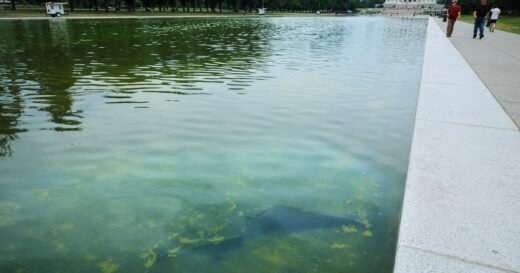
Rips appear in Reflecting Pool’s new sealant, chosen by Trump, after algae turn water green
new admin - Jun 19, 2026President Trump's efforts to spruce up the Lincoln Memorial Reflecting Pool faced a snag this week, with algae turning the…