

Naturopathic Medicine College Programs Face Uncertain Future


The fledgling field of naturopathic medicine could soon be facing an existential crisis as a key accreditor for its college programs teeters.
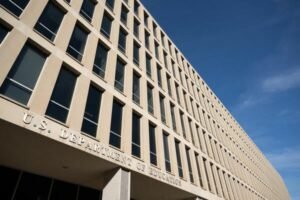
Last week the National Advisory Committee on Institutional Quality and Integrity voted 12 to zero against renewing recognition of the Council on Naturopathic Medical Education due to concerns about student outcomes at member institutions. While the vote is a recommendation and the final decision falls to the Education Department, CNME’s potential loss of federal recognition would have far-reaching consequences for the small field. CNME is the sole federally recognized accreditor for naturopathic medicine and has six member institutions, including one in Canada.
Some of those member institutions offer little beyond naturopathic medicine, meaning a majority of their academic portfolio could lose accreditation if CNME is denied recognition. Now those universities and their advocates are watching and waiting as ED contemplates a decision. While the loss of recognition would not cut off the flow of federal financial aid, it would deal a severe reputational blow to naturopathic programs at a time when the field is growing amid increased interest in alternative medical approaches.
If ED does decide to terminate recognition for CNME, it would be the first casualty in the Trump administration’s efforts to reshape accreditation, a system that officials argue has failed to hold colleges accountable for shaky student outcomes and soaring education debt.
An Uncertain Future
While ED staff recommended giving the accreditor 12 months to come into compliance with various concerns that they flagged in a report ahead of the meeting, the advisory body disagreed. NACIQI members particularly took issue with how CNME blamed weak student outcomes at member institutions on student demographics.
Daniel Seitz, the executive director and only full-time CNME employee, told NACIQI last week that most students in accredited naturopathic programs are adults with competing priorities such as work and family life, which he said explained substandard licensure exam passage rates. (While CNME’s standards call for a 70 percent pass rate on the Naturopathic Physicians Licensing Examinations, several members fall below that threshold.)
But NACIQI members didn’t buy that explanation from Seitz.
In the motion to deny renewal of recognition, NACIQI members wrote that CNME had “fundamentally compromised its integrity as a reliable authority on educational quality by officially citing student demographics as a justification for substandard program outcomes.”
Seitz did not respond to a request for comment from Inside Higher Ed. Of CNME’s six member institutions—Bastyr University, Canadian College of Naturopathic Medicine, National University of Health Sciences, National University of Natural Medicine, Sonoran University of Health Sciences and Universidad Ana G. Méndez—only Bastyr responded.
Officials wrote by email that CNME issued a show cause sanction to the university last May, but that action helped prompt a turnaround at the institution, restoring positive net revenues and a “re-focus on academic excellence.” But Bastyr officials did not address how potential loss of federal recognition might affect their programs.
The university’s statement did say that benefits of the program should be measured in other ways beyond debt and earnings.
“Surveys of our graduates consistently show high levels of job satisfaction,” the statement said. “When we encounter [naturopathic doctors] nearing the end of their careers, or who are recently retired, we hear stories of fulfilling careers, lives well lived, and recollections of joy found through healing others, and being of service to people in their community.”
As of Tuesday, CNME had not posted information to its website about the NACIQI decision. None of the member institutions appeared to have issued public statements on it, either. Instead, the American Association of Naturopathic Physicians and the Association of Accredited Naturopathic Medical Colleges appear to be speaking on behalf of the sector.
“We understand that this news is concerning, but it is critical to emphasize that today’s vote is not a final decision,” the two organizations wrote in a joint statement posted online last week, emphasizing that CNME still had the right to appeal and other ways to potentially push back.
“Today’s recommendation has no immediate impact on the accreditation of our schools, the validity of your degrees, the status of student financial aid, or ability to take NPLEX or obtain a license,” they wrote in the joint statement.
The two organizations added that the sector has “navigated complex regulatory landscapes before” and is “prepared to do so again” as it works to explore “all available options to ensure the stability and integrity of the naturopathic medical workforce.”
What’s Next?
If CNME were to lose recognition, the process would take months. But losing recognition is rare.
Clare McCann, managing director of policy at American University’s Postsecondary Education and Economics Research Center and a former Education Department official, told Inside Higher Ed by email that ED has other options stopping short of stripping recognition from an accreditor, including “the ability to issue a limitation or suspension action, which could be more temporary or have a smaller effect.”
And in some cases fights over federal recognition have stretched on for years.
The most recent precedent for stripping recognition is the Accrediting Council for Independent Colleges and Schools. While ED first terminated recognition for the accreditor in 2016 over consumer protection concerns, it was restored in 2018 by Education Secretary Betsy DeVos during Donald Trump’s first term. ED ultimately terminated federal recognition for ACICS in 2022, under the Biden administration.
Member institutions then had up to 18 months to find another accreditor, though dozens later closed.
Should CNME suffer the same fate as ACICS, its member institutions could theoretically migrate to other programmatic accreditors, explained Emily Merolli, a partner at Sligo Law Group. However, since CNME is the nation’s only accreditor for naturopathic medical programs, that would mean another group would have to expand the scope of its services to fill potential gaps.
“There’s a question of whether those agencies might be positioned to expand their scope, and that would certainly be a question between the agency and the department about whether that was something that they could reasonably do and provide quality assurance in and whether they could do that in a timely enough way that it would allow for the accreditation of these programs,” Merolli said.
Practitioner Responses
Concerns about accreditation for naturopathic medical programs come as the field appears poised for growth. In 2010, only 15 states recognized licensure for naturopathic doctors; that number has since grown to 23 states, according to AANMC. Lawmakers in several states are considering recognizing NDs, including Florida, where a bill to establish licensure recently passed. Legislation was also proposed in Illinois, Missouri, New Jersey, New York and Texas.
Health and Human Services Secretary Robert F. Kennedy Jr. is also an advocate for alternative health-care approaches, similar to the field of naturopathic medicine. (However, advocates for the industry have said recent graduate loan caps passed in last year’s One Big Beautiful Bill Act are likely to undercut enrollment in naturopathic programs.)
While CNME and its six member institutions have not publicly weighed in on the potential fallout of losing federal recognition, naturopathic students and practitioners argued at last week’s NACIQI meeting that such a decision would have devastating consequences for patients.
“As a practicing ND, I deeply value that our profession is held to a recognized standard in a crowded, holistic marketplace,” Emily Hudson, a member of the American Association of Naturopathic Physicians Board of Directors, said at the meeting. “CNME accreditation helps patients identify providers with real standardized training. Continuing recognition of CNME supports not just education, but patient protection and continued growth of a profession that more Americans are seeking every year.”
But to CNME’s critics, last week’s vote provided much-needed accountability.
Ryan Hofer, a licensed naturopathic doctor in Oregon who graduated from the National University of Natural Medicine last year and writes the Debt by Natural Causes newsletter, was one of multiple people who raised concerns about the accreditor at the NACIQI meeting.
Hofer pointed to concerns about low NPLEX passage rates, a lack of accountability and debt loads among graduates. Now, with the accreditor teetering, he hopes this prompts a reckoning for naturopathic programs.
“Instead of glossing over our collective problems and ushering more students into career financial toxicity, which is terrible for health and well-being, I hope the ND professional community will engage in deep reflection on how we can hold ourselves accountable to consensus standards informed by external expertise,” Hofer wrote to Inside Higher Ed.
You may be interested

Barret Zoph is out at OpenAI again after just five months
new admin - Jun 19, 2026Five months after returning to OpenAI, Barret Zoph — the company’s head of enterprise AI sales — has departed, The…
Safety Tips for Runners & Joggers
new admin - Jun 19, 2026Whether you run as part of a track program or cross-country team, or do it to get in shape, it's…

Brits urged to put cucumber peels in their garden this weekend
new admin - Jun 19, 2026Brits are being urged to put cucumber peels in their garden this weekend (Image: Dariusz Banaszuk via Getty Images)With scorching…