

Full transcript of “Face the Nation with Margaret Brennan,” March 29, 2026

On this “Face the Nation with Margaret Brennan” broadcast, moderated by Margaret Brennan:
- Tom Homan, Trump administration border czar
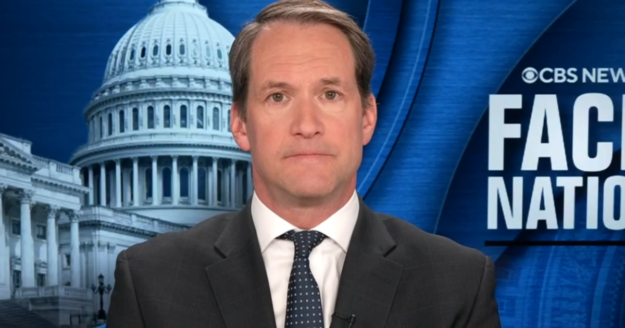
- Rep. Jim Himes, Democrat of Connecticut
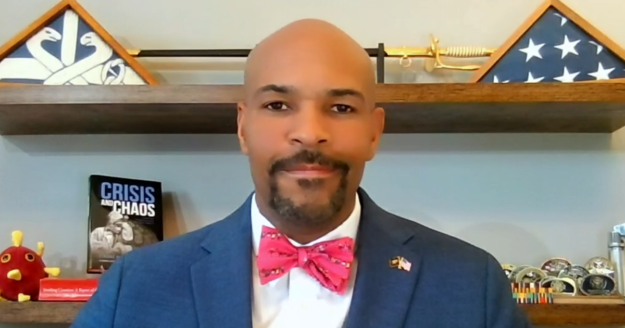
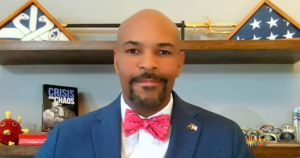
- Jerome Adams, former U.S. Surgeon General
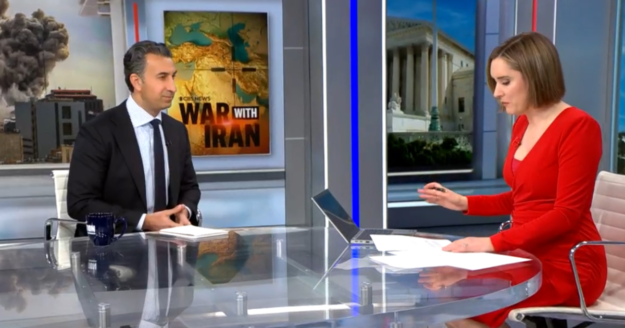
- Iran policy analyst Karim Sadjadpour and former CENTCOM commander and CBS News contributor and retired Gen. Frank McKenzie
Click here to browse full transcripts from 2026 of “Face the Nation with Margaret Brennan.”
MARGARET BRENNAN: I’m Margaret Brennan in Washington.
And this week on Face the Nation: continued conflicting messages out of the White House when it comes to the war against Iran and why Americans are increasingly bearing the brunt of Washington’s action or inaction.
It’s a spectacular spring in the nation’s capital, but Congress has fled the city after showing they’re incapable of consensus when it comes to funding the Homeland Security Department. President Trump says he will use other means to pay TSA officers until an agreement is reached.
But will that be enough to ease the long security lines at some of the country’s busiest airports while the House and Senate are out of town for the next two weeks?
Another spring break frustration for Americans, skyrocketing gas prices due to the war in Iran, which has now entered its second month. The conflict is only intensifying, and U.S. preparations for a ground offensive are ramping up, despite the president’s insistence that Iran has been devastated.
(Begin VT)
DONALD TRUMP (President of the United States): And they will tell you, we’re not negotiating. We will not negotiate. Of course, they’re negotiating. They have been obliterated. Who wouldn’t negotiate? They are begging to make a deal.
(End VT)
MARGARET BRENNAN: That deal can’t come soon enough for the president, as there are worrisome signs about the overall economy faltering due to the war, and even some Republicans are questioning his mission in the Middle East.
As for Democrats, millions marched in unity on the streets of the nation’s cities in town Saturday in a movement that could mean trouble for the GOP when it comes to the midterm elections.
We will address the challenges to DHS with White House border czar Tom Homan. Plus, we will talk with the top Democrat on the House Intelligence Committee, Jim Himes, and check in with former Surgeon General Dr. Jerome Adams about the alarming spread of measles and the impact of social media on children.
It’s all just ahead on Face the Nation.
Good morning, and welcome to Face the Nation.
Today marks the 44th day of the partial shutdown of the Homeland Security Department, now the longest in history. So far, it has resulted in at least 500 TSA officers quitting their jobs, and sick-outs continue, although officers are expected to be paid as early as tomorrow through an executive order signed by the president late last week.
As for the funding impasse, Democrats want reforms to ICE and the president’s deportation policy to be part of the bill before they will agree to fully fund Homeland Security. Republicans are resisting that, and the standoff is likely to continue while Congress is gone for the next two weeks.
We begin with White House border czar Tom Homan, who was tasked by the president to help oversee ICE efforts following the killings of Renee Good and Alex Pretti earlier this year out in Minneapolis.
Good morning to you, sir.
THOMAS HOMAN (White House Border Czar): Good morning.
MARGARET BRENNAN: So, Congress is gone until mid-April. Will the president compel them to come back and sort this out?
THOMAS HOMAN: Well, look, I hope so.
I mean, they got to – they got to fund the Department of Homeland Security. Again, we’re talking about the Department of Homeland Security. And we’re in an increased threat posture right now because of what’s going on in the world. We’ve got to keep this country safe, which means we got to we got to fund the members of the Coast Guard and CISA and Secret Service and all these other agencies within the Department of Homeland Security.
I know the president found a way to pay TSA workers so we can get the American public through those lines. And he also came up with the idea of sending ICE agents to the airport, which has had an impact. So we just need to get the department funded. They want to talk about, you know, immigration policies, we can talk about that.
But why do you got to hold the rest of the DHS hostage to do that? Let’s sit down and talk. I have been talking to them for the last two weeks.
MARGARET BRENNAN: Yes, but just to be clear, the president is not forcing lawmakers to come back to Washington now;he’s going to wait until mid-April to do this?
THOMAS HOMAN: Look – and the American people hold Congress responsible. They’re on vacation right now while tens of thousands of DHS employees aren’t being paid.
MARGARET BRENNAN: Right, but Republicans control both chambers.
THOMAS HOMAN: And that’s what happened at the airports.
MARGARET BRENNAN: That’s the – this is the president’s party.
THOMAS HOMAN: The Democrats shut – the Democrats shut down DHS. They voted to shut down DHS because they simply won’t fund DHS, because they want to change ICE policies, so ICE is less effective in the interior.
MARGARET BRENNAN: Well…
THOMAS HOMAN: Remember why we’re here. We’re here because the last four years of an open border, millions of people are in this country illegally, many public safety threats, national security threats, and we’re out seeking them and arresting them. And they simply don’t like ICE enforcing the law.
They proved that the last four years.
MARGARET BRENNAN: Well, the bill that…
THOMAS HOMAN: because they didn’t – let ICE enforce the law.
MARGARET BRENNAN: The bill that passed the Senate was bipartisan, and it did have a lot of the funding for the agencies you just laid out there. The issue was specific to parts of ICE.
But – but it seems like the White House really didn’t force your party to get in line here, because that Republican-controlled Senate did pass a funding bill. The White House didn’t get the House of Representatives leadership on board with that.
In fact, the speaker, Mike Johnson, said that bill was a joke. Why wasn’t the White House able to get both parties – both heads of the party the president controls on the same page?
THOMAS HOMAN: Look, I have been up on the Hill. I have been in these meetings. I have met with lawmakers from both sides. This isn’t a White House issue. This is the Democrats shutting down the Department of Homeland Security. I have been in these meetings.
MARGARET BRENNAN: So did you support the Republican bill in the Senate that passed?
THOMAS HOMAN: They – they wanted – I – I support Congress opening up the entire government, the entire DHS, and not holding people in DHS hostage because they don’t like…
MARGARET BRENNAN: So, no.
THOMAS HOMAN: … immigration enforcement.
MARGARET BRENNAN: You weren’t on board with the Senate bill?
THOMAS HOMAN: I support opening up the entire government. I’m with the president.
MARGARET BRENNAN: OK. Well…
THOMAS HOMAN: I missed that. Say it again, ma’am.
MARGARET BRENNAN: So you were not in favor of the bill that passed the Senate, which the Republican leader supported.
THOMAS HOMAN: I support – I…
MARGARET BRENNAN: I got it.
THOMAS HOMAN: I support the president of the United States in getting DHS fully funded and operating.
MARGARET BRENNAN: OK.
So, tell me, so the president did direct DHS to use other pots of emergency cash to pay these TSA officers, and they’re supposed to receive paychecks as early as tomorrow. Does that mean that the system is going to become unclogged? Do they actually have to show up to work to get paid?
THOMAS HOMAN: Yes, I think it’s certainly going to help, because TSA agents have left the job because they got to – you know, whether it’s driving Ubers or finding other jobs so that – so they can feed their families and pay the rent.
So I’m hoping, with this – this change that President Trump put in place with – with Secretary Markwayne Mullin, that more will come back to work. Until then, ICE will remain in airports to take those jobs that – to secure the airport and check – check identification and check exit lanes, where people enter through exits, do the jobs that don’t require the enhanced TSA screening, so we can get more TSA screeners on the X-ray machines, to open up more lanes.
MARGARET BRENNAN: Yes.
THOMAS HOMAN: So ICE is there to do the job, to get TSA screeners back to the line…
MARGARET BRENNAN: Yes.
THOMAS HOMAN: … and hopefully open more lines, get the American public through the airport.
MARGARET BRENNAN: OK.
Well, there’s like, 500 TSA officers who have quit. Do you expect to be able to rehire them? And we have some big events like the World Cup coming up in June. Are we going to have problems at airports for the foreseeable future?
THOMAS HOMAN: Look, we’re going to continue an ICE presence there until the airports feel like they’re in – they’re in 100 percent in a posture where they can do no normal operations.
MARGARET BRENNAN: OK.
THOMAS HOMAN: If less TSA agents come back, that means we’ll keep more ICE agents there. The president has been clear. He wants to secure those airports, especially, as I said earlier, in an increased threat posture. We need to secure those airports.
ICE is there to help our brothers and sisters in TSA. We’ll be there as long as they need us, until they get back to normal operations and feel like those airports are secure.
MARGARET BRENNAN: OK.
So, the – you referenced some of this earlier. The reason that we got to this political standoff is because of the differences between Democrats and Republicans on the policy part of this. And back in January, those two Americans, Renee Good and Alex Pretti, were shot during immigration actions.
Democrats point to that and say this is why they need to force change. We saw that letter you signed. And, in it, you were very willing, you told lawmakers, to expand the use of body cameras, to limit enforcement activities at locations like schools and hospitals, and require officers to identify themselves.
So, if you’re willing to make those changes, what’s the harm in legislating them?
THOMAS HOMAN: We already made those changes. We already made those changes.
MARGARET BRENNAN: But why not put them in law then, if you’re already…
(CROSSTALK)
THOMAS HOMAN: Matter of fact, matter of fact, the bill – the bill – the bill they’re holding up right now actually gives $120 million to buy more cameras.
I have already talked to them. They want to – they want to, you know, talk about policy and legislative policy. Look, if they want to change the law, change the law. We’re enforcing laws they enacted, because I told them…
MARGARET BRENNAN: Well, they are trying to write new law.
THOMAS HOMAN: Name – give me – no, give me – give me one instance. And there’s not one Democratic lawmaker that can give me one example, one, a single one, where ICE arrested an illegal alien inside of a hospital. When have we ever arrested an illegal alien inside of a church?
The only one that violated the sanctuary of a church was Don Lemon and that group. You know, we – we have not made those arrests. And even though we don’t have a sensitive location policy, the men and women of ICE have common sense. They don’t go into schools.
Now, make – I want to make a caveat here. If you’re a significant public safety threat and national security threat, you have no sanctuary. But they – they can’t point to one instance where ICE has made arrests in those what they call sensitive locations.
MARGARET BRENNAN: Well, but there was a policy change in January 2025, where the Trump administration said they weren’t going to be – you know, have their hands tied in terms of those sensitive locations.
So – so that was a shift.
THOMAS HOMAN: Because – because – because, as I said, a significant public safety threat or national security threat does not have a sanctuary in this country. We’re going to find them. We’re going to arrest them.
However, you can’t point to one instance when we actually went into a church and school, because we try very hard to wait for people to leave places. We wait for them. We arrest them in their home or arrest them in their community. We try very hard not to go into those sensitive locations because we know there’s an issue there.
So that’s what I have been telling the members on the Hill. As far as body cameras, the first thing I did in Minneapolis is bring many body cameras there, so everybody had a body camera.
MARGARET BRENNAN: Yes.
THOMAS HOMAN: There is a plan in place right now for CBP and ICE to go body cameras across the entire agency. However, the money to do that is sitting with the Congress fighting over the shutdown.
MARGARET BRENNAN: OK.
Well, one of the policy changes has to do with warrants, requiring specifically ICE to secure a judicial warrant from a judge before entering a home to make an arrest. And that would be a change to the current ICE policy of relying on some administrative warrants. Listen to the DHS secretary during his confirmation hearing.
(Begin VT)
MARKWAYNE MULLIN (U.S. Homeland Security Secretary): I said, we will not enter a home or a place of business without a judicial warrant, unless we’re pursuing the individual that runs into a place of business or a residence – or a – or a house.
(End VT)
MARGARET BRENNAN: So, the secretary agreed to that change. When does that take place?
THOMAS HOMAN: Look, I – I think we’re already in discussions on that.
You know, there are certain sections of law on a Section I-205, where it’s legally – you are legally able to enter a home. And a district court has – – has upheld that. But these are discussions we’re having right now.
I’m talking – I talk to Secretary Markwayne Mullin every day, several times a day. We’re talking with members of the White House. We’re already working all these policies, not really policy and how we – it’s about execution.
Again, the laws are the laws. If they don’t like the law to allow us entry into the home, then change the law. But it’s also they want an arrest warrant to just arrest an illegal alien. There’s nothing in federal law says that. Matter of fact, the law that Congress wrote says you can arrest an illegal alien with an administrative warrant.
MARGARET BRENNAN: Yes.
THOMAS HOMAN: That’s what the federal statute says.
Again, but they want – they want judicial warrants just to arrest an illegal alien. They’re asking for changes in policy that’s really about changes in the law. Again, if they don’t like what ICE is doing, they can change the law.
MARGARET BRENNAN: Yes.
THOMAS HOMAN: It’s that simple.
MARGARET BRENNAN: Well, I appreciate your argument about changing the law. There are many who would like to. But there’s also the question of interpretation of existing law.
And the acting ICE director, Todd Lyons, had sent a memo in May saying: “DHS counsel reinterpreted existing law to allow for agents to make arrests without a judicial warrant.”
When we heard the new secretary say they won’t enter without a judicial warrant, was Secretary Mullin stating the current policy? Are you changing the Trump policy going forward from where it was in May?
THOMAS HOMAN: I’m not going to speak for Secretary Mullin, but I think he was clear he’s looking at it. He wasn’t the secretary when he made that statement. I think he’s looking forward.
But one of the first things I did, I have asked for a full legal review on that reinterpretation. I want to know exactly what – I’m not a – I’m not a lawyer, but I have asked DOJ to do a full review on that, and we’ll see where it comes. But I think Secretary Mullin meant what he said. I think he is looking toward the future.
MARGARET BRENNAN: Well, we will see where they land.
Mr. Homan, thank you very much for your time this morning.
Face the Nation will be back in a minute. Stay with us.
(ANNOUNCEMENTS)
MARGARET BRENNAN: We go now to the top Democrat on the House Intelligence Committee, Congressman Jim Himes, who joins us from Greenwich, Connecticut.
Good morning to you.
REPRESENTATIVE JIM HIMES (D-Connecticut): Good morning, Margaret.
MARGARET BRENNAN: So, you just heard the border czar, the White House representative here, make his argument.
Politically speaking, though, I mean, the shutdown was intended by Democrats to try to constrain ICE and how it had been acting. But, practically speaking, ICE is already funded. In fact, it’s one of the few DHS entities where people are getting paid because they had so much funding from the president’s last bill.
And now their portfolio is expanding because they’re in American airports across the country. So what did Democrats get out of this standoff?
REPRESENTATIVE JIM HIMES: Yes, well, Margaret, the standoff is not done yet, right?
The president is illegally paying, apparently, TSA agents. You had the Senate, as you pointed out, with Mr. Honan – Homan – pass a bipartisan bill unanimously in the United States Senate to say, look, let’s fund everybody else, and let’s deal with this thorny issue about ICE.
And then you had the Republican House say, hell, no, we’re not doing that, and, by the way, mock their own Republican leaders in the Senate. So, look, what – this thing is still very much live for one very simple reason. We can talk about House, Senate, changing law.
MARGARET BRENNAN: Yes.
REPRESENTATIVE JIM HIMES: For one very simple reason, which is that the vast majority of Americans look at the way ICE behaved, with the murder of two American citizens, with the constant knocking down of doors of American citizens without warrants, people dressed like they are, you know, airlifting into Fallujah to do the legitimate work…
MARGARET BRENNAN: Yes.
REPRESENTATIVE JIM HIMES: … of going after illegal aliens in this country, and they say, that is not OK. And that’s our position.
MARGARET BRENNAN: So…
REPRESENTATIVE JIM HIMES: Our position is very simply, we want ICE to act like the police force that they are.
MARGARET BRENNAN: Yes.
REPRESENTATIVE JIM HIMES: And that – that fight is not won yet.
And, look, I’m sorry it got tied up. I’m sorry that the Republicans on one side of the Capitol said this was a good idea, and on the other side of the Capitol, they called it a joke.
MARGARET BRENNAN: Yes.
REPRESENTATIVE JIM HIMES: But we’re ready to negotiate around something that is not a radical demand.
MARGARET BRENNAN: OK.
REPRESENTATIVE JIM HIMES: We just want ICE to act like proper police officers.
MARGARET BRENNAN: So, in the meantime, the president’s redirecting existing funding to pay TSA agents. You said he was illegally paying them. You believe that he is violating the law in this interpretation that the White House says they have?
REPRESENTATIVE JIM HIMES: Well, it’s not that I believe it. It’s that I know it, right?
I mean, if there’s one power that Congress has, it is the power of the purse. Now, this president has, of course, consistently and universally said that he in fact has that power.
MARGARET BRENNAN: So they shouldn’t be paid?
REPRESENTATIVE JIM HIMES: But any American that went through fourth grade civics – no, they should be paid.
This – they should have never been held hostage. And we had a deal come out unanimously from the Senate that, if it had passed, right now, they would be getting paid.
MARGARET BRENNAN: Yes.
REPRESENTATIVE JIM HIMES: And we wouldn’t be talking about the constitutional power of the purse. But Mike Johnson, leader of the House of Representatives, said hell no to what his Republicans in the Senate said yes to.
MARGARET BRENNAN: So there were three Democrats, though, who got on board with Speaker Johnson, the House version of this bill, even without any new accountability measures in it.
Congresswoman Gluesenkamp Perez says she did so because she thinks it’s wrong not to pay people for their work and Democrats had set unattainable goals. She says, since the White House was agreeing to things like body cameras – doesn’t she have a point here that there is, as she put it, ideological purity that’s getting in the way of working people?
REPRESENTATIVE JIM HIMES: So, this is not a question of ideological purity.
And I agree with Marie on one point, which is the people shouldn’t be held hostage. And we can come back to that. But this is not extreme demands, by any stretch of the imagination. Again, we’re asking that guys not dress like Navy SEALs when they go into Minneapolis. We’re asking that they wear badges, the way every other police officer does, that they have warrants when they break down doors.
MARGARET BRENNAN: And some of those things have been agreed to.
REPRESENTATIVE JIM HIMES: This is not ideological purity. This is basic adherence to the law.
Yes, well, OK, so it’s all agreed to, let’s pass the law which codifies it, because you know what? We don’t trust the president when he says, OK, no masks, any more than we trust him when he says, oh, well, now I’m negotiating with the Iranians, when he’s not, right?
So, if this is so easy, fine, let’s codify it into law. But they’re not – you know, they’re not willing to do that. Now, where Marie is right – and this is important – we have gotten too used to using shutdowns as a mechanism of getting what we want legislatively.
And what that implies is that people like TSA agents…
MARGARET BRENNAN: Yes.
REPRESENTATIVE JIM HIMES: … or folks that work in the federal government for the Department of Agriculture or something don’t get paid when one party throws a tantrum, right?
Now, in this case, I happen to believe that the American people believe – you know, are with the Democratic Party and saying, you don’t get to act like ICE acted in Minneapolis. But we do need to get away from legislating through shutdown.
MARGARET BRENNAN: Yes.
REPRESENTATIVE JIM HIMES: That is not consonant with the great country that we are.
MARGARET BRENNAN: Well, and they just want their airports and basic government to work.
But on the point you raised, you said that the president’s not really negotiating with Iran. Is that because you haven’t been briefed as a member of Congress on the diplomacy, or you think he’s flat-out lying?
REPRESENTATIVE JIM HIMES: Oh, I think he’s flat-out lying.
Last Sunday, when he was told – and, by the way, we’re in exactly the same position today, you know, oil prices now $112 a barrel, and, you know, futures in the stock market down 2 percent. Last Sunday, he realized, oh, my God, I have got a financial cataclysm on Monday. So he just made it up that they’re in negotiations with the Iranians.
Look, underneath that statement, the Iranians have now realized that they have the reins. They are controlling the Strait of Hormuz.
MARGARET BRENNAN: Yes.
REPRESENTATIVE JIM HIMES: Gasoline prices are up more than $1 a gallon, and so the Iranians realize, holy smokes, we’ve got a lot of leverage here.
MARGARET BRENNAN: In Islamabad today, there are a number of mediators who are in contact with the United States saying they’re talking about Iran, but neither the United States nor Iran are at that table at this moment in time.
But, further on the Iran point, I know you care about what’s happening in Ukraine. Notably, President Zelenskyy of Ukraine has been in the Gulf in these past few days. And he said yesterday that Russia is providing satellite imagery to Iran, and that imagery consists of U.S. military bases.
He also said Russia is giving signals intelligence and electronic intelligence to Iran. Do you know of evidence that Russia is actively helping Iran in its war against the United States?
REPRESENTATIVE JIM HIMES: Well, I have to be a little careful about this, Margaret, because I do review the intelligence, and I obviously can’t speak about things that are classified.
But, boy, I would sure not argue with President Zelenskyy on that point. And I would ask the American people to think about, what do you think Putin is doing right now? Over four years, we have been, rightly, in my estimation, helping the Ukrainians exact a terrible toll on the Russians.
So what do you think is happening? Meanwhile, as you know, we are letting the Iranians – so now the Iranians are getting billions of dollars – sell their oil to the Chinese, so that they can buy drones from the Russians. We’re letting the Russians sell oil so that they can get dollars to attack the Ukrainians and use those dollars to attack – to help attack our troops.
I mean, you just couldn’t make this stuff up in a Hollywood script.
MARGARET BRENNAN: Well, Secretary Rubio was asked about the degree of aid Russia is giving to Iran, and he minimized it. He says it’s not making a difference on the battlefield.
I know the French, I know the British have said that Russia and Iran are helping each other on drones here. When you heard Secretary Rubio’s statement, what did you think he meant?
REPRESENTATIVE JIM HIMES: I think it is very much in Marco Rubio’s interest, as one of the chief cheerleaders of this war that the American people are now coming to realize is a catastrophe, another quagmire, for Marco Rubio to say things like, oh, they’re not making a difference.
Well, I don’t agree with Marco Rubio on that point. You know, the Russians have capabilities…
MARGARET BRENNAN: Yes.
REPRESENTATIVE JIM HIMES: … things like using basic satellite technology, which you can do commercially, by the way…
MARGARET BRENNAN: Yes.
REPRESENTATIVE JIM HIMES: … to find our aircraft carriers.
MARGARET BRENNAN: Yes.
REPRESENTATIVE JIM HIMES: Our military bases in the region, Margaret, right now are supposedly uninhabitable. Why do you think that is?
MARGARET BRENNAN: Yes.
Before I let you go, Democrats have been making corruption a theme in their campaign against the president and to win back control of the house. Your fellow Democrat Sheila Cherfilus-McCormick of Florida has been found guilty on 25 ethics charges related to stealing millions of dollars in COVID relief money.
Should she resign? Should she be expelled?
REPRESENTATIVE JIM HIMES: You know, if she doesn’t resign, there will be a vote in the House, and, you know, people will find reasons to support the congresswoman, just as Republicans found reasons to support George Santos.
MARGARET BRENNAN: Should she resign?
REPRESENTATIVE JIM HIMES: And at a time when we’re at war, when gas prices are too high, that shouldn’t happen.
So I would hope that my colleague might avoid that outcome by choosing to resign. But it is also very important that both parties…
MARGARET BRENNAN: Yes.
REPRESENTATIVE JIM HIMES: … be consistent in punishing ethical lapses inside their own teams.
MARGARET BRENNAN: OK, you hope she resigns.
Thank you, Congressman, for all your insights today. We have to leave it there.
We’ll be right back.
(ANNOUNCEMENTS)
MARGARET BRENNAN: We’ll be right back with a lot more Face the Nation.
(ANNOUNCEMENTS)
MARGARET BRENNAN: Welcome back to “FACE THE NATION.”
We turn now to former U.S. surgeon general, Doctor Jerome Adams, who joins us this morning from Indianapolis.
Good morning to you, Doctor.
DOCTOR JEROME ADAMS (Former U.S. Surgeon General): Thanks for having me, Margaret.
And I’d like to start by saying that the most important thing for your viewers to understand is that American’s most pressing health threat today isn’t opioids or obesity, it’s mistrust.
MARGARET BRENNAN: Yes.
DOCTOR JEROME ADAMS: Seventy percent of Americans say they support childhood vaccines and school mandates, yet a similar majority say they do not trust health information from Robert Kennedy and say they would not trust surgeon general nominee Casey Means.
MARGARET BRENNAN: Well –
DOCTOR JEROME ADAMS: So, a failure to acknowledge this plummeting trust –
MARGARET BRENNAN: Yes.
DOCTOR JEROME ADAMS: Or worse, if we’re seen (ph) to accelerate it, is going to hurt Americans. And actually, Margaret, according to Republican pollster Fabrizio Ward, it’s going to hurt Republicans in November elections.
MARGARET BRENNAN: Well, that’s not where is was going with the question, but, yes, I’ve seen some of the polling, and it says that the MAHA health guidance resonates more with voters than the vaccine skepticism.
DOCTOR JEROME ADAMS: Exactly.
MARGARET BRENNAN: So, Republicans seem to be signaling what would be more resonant with the majority of voters.
But in terms of the policy at this moment in time, you were President Trump’s surgeon general during his first term. There are now more than 1,500 confirmed measle cases in the U.S. since January according to the CDC. There is this spike out in Utah. Why can’t the existing health infrastructure stop this?
DOCTOR JEROME ADAMS: Well, that’s a great question. And you have to start off by understanding that almost 20,000 people have been cut from HHS. And so, normally we have measles cases every year. We had about 250 in 2024. We had about 2,000 last year. As you mentioned, we’re at 1,500 already this year. But normally, we’re able to control those outbreaks because of the CDC, because of the public health infrastructure and funding. All of that has been cut. And now, instead of one case turning into two or three and being stopped, it’s turning into 20, and 50, and 100 cases. And we’re also seeing falling vaccination rates. A broad group of states are falling below that 95 percent threshold for herd immunity for measles. Utah, Colorado, Florida, Georgia, Kentucky, all below that 95 percent threshold. And the further we get below that, the more those outbreaks explode.
MARGARET BRENNAN: Well, you mentioned the memo. This was a pollster who continues to consult for the president and for Republicans, Tony Fabrizio. In the memo he writes, “policies related to vaccines and vaccine safety need to be addressed carefully and with nuance. That’s because overall a slim majority of voters are not convinced there are negative health impacts from vaccines.”
He was speaking about how MAHA and MAGA need to continue to work together for the benefit of the Republican Party. But by saying there’s a slim majority who are unconvinced, he’s making it sound like your party really is struggling with this, frankly.
DOCTOR JEROME ADAMS: Well, they absolutely are. And I understand why parents are frustrated with the healthcare system. It is not working for people. And we’ve always, as physicians, been taught to respect patient autonomy. But the difference here is, you’re seeing a health secretary and an infrastructure that is actively sowing distrust in vaccines and in the health care system.
MARGARET BRENNAN: Yes.
DOCTOR JEROME ADAMS: I believe we can do both. I believe we can respect patient’s autonomy. We need to make sure we’re facilitating those conversations between patients and their doctors or their pharmacists or nurses, while at the same time telling people what we know to be true, and that is that childhood vaccinations, like measles, mumps, rubella, are safe, they’re effective, and they’re the most important achievement in our lifetimes. We’re not going to make America healthier if we go backwards on vaccines.
MARGARET BRENNAN: So, the chair of the Health Committee, Senator Bill Cassidy, who’s also a physician, asked Casey Means, she is the doctor you referenced who is the choice of the Trump administration to be the next surgeon general, he asked her whether she would recommend a mother vaccinate her child against measles? Here’s the part of the exchange from her confirmation hearing.
(BEGIN VC)
SEN. BILL CASSIDY (R-LA): If you’re the nation’s doctor, would you encourage her to have her child vaccinated?
CASEY MEANS, SURGEON GENERAL NOMINEE: I’m not an individual’s doctor. And every individual needs to talk to their doctor before putting a medication in their body. I absolutely am supportive of the measles vaccine, and I do believe vaccines save lives and are an important part of the public health strategy.
(END VC)
MARGARET BRENNAN: So, the doctor did say she’s a supporter – supportive of the measles vaccine. Why does that stop short of what you would want to hear from someone in that role?
DOCTOR JEROME ADAMS: Well, number one, I watched the hearing. This was after much pressing and equivocating, number one. And she said she’s not an individual’s doctor. That is correct. But you’re applying to be the nation’s doctor.
For me, this isn’t personal or political. Number one, and I’ve talked to you about this, it’s about her not having the basic qualifications to do the job. She does not have an active medical license and would be the first surgeon general ever to be in the role to not have an active medical license.
But beyond that, to the points you brought up, in the midst of a massive measles outbreak, America needs a surgeon general who can clearly stand behind vaccines. When I came in, we had the opioid epidemic and an overdose crisis.
MARGARET BRENNAN: Yes.
DOCTOR JEROME ADAMS: Imagine if I had said, you know, as surgeon general, it’s not my place to tell people to take naloxone, the opioid overdose reversal agent. They should talk to their doctor about it. That would not be acceptable in that circumstances and it’s not acceptable to have a surgeon general who equivocates on vaccines, much less one who can’t actually practice medicine and meet the qualifications to be a physician in the corp (ph).
MARGARET BRENNAN: Well, the doctor apparently has an inactive medical license that she says she voluntarily placed on inactive status.
And I want to talk about this because it seems a feature, not a bug, right, because the HHS secretary has described Dr. Means as being perfect for this job. He says, “the surgeon general is a symbol of moral authority who stands against the financial and institutional gravities that corporatize medicine.” H said she was a great student and surgical resident but she left traditional medicine because patients weren’t getting better and that’s why she should be the disrupter in this moment.
So, when you say there’s distrust, how do you respond to those who say disruption is the purpose of this selection?
DOCTOR JEROME ADAMS: Well, again, number one, a recent “Axios” poll came out and that poll showed that 68 percent of people who were questioned said they would not trust health advise from a surgeon general Casey Means. So, you’re not going to restore trust if preemptively the public is telling you, we’re not trusting the person you’re putting forward.
And again, I don’t want to underplay this. Every physician, every nurse, every pharmacist in the public health service corp has to maintain an active license. I had to fire people for not having an active medical license. So, this is not about disruption. Casey Means can be a part of this administration. She can advise the White House.
MARGARET BRENNAN: Yes.
DOCTOR JEROME ADAMS: She can advise Secretary Kennedy, as her brother does. But that does not mean she’s qualified to be surgeon general of the United States after dropping out of her residency and not having an active license.
MARGARET BRENNAN: Yes. And just a note, there is also no Senate confirmed CDC director currently amidst the crisis.
Let me ask you about social media as well, because there were these big cases this past week. A New Mexico jury found that Meta platforms violated consumer protection laws by misleading users about the safety of Facebook, of Instagram and WhatsApp. Out in California there was another lawsuit linking Meta to a young woman’s depression.
As a doctor, are you convinced that social media has a direct link to health?
DOCTOR JEROME ADAMS: As a doctor and as a parent I’m convinced of these facts. I have three teenage kids. We know, based on Surgeon General Murphy’s report, that there is an increasing and very valid evidence out there showing links between social media use, particularly at a younger age, and increasing anxiety, increasing depression, less sleep, which actually leads to mental health problems and also obesity.
And so, we need to, as a society, understand the harms that are coming from social media, similarly to the harms that surgeon generals have pointed out before coming from cigarettes. We also need to, similar to cigarettes, point out the fact that these substances, meaning social media platforms, are incredibly addictive, and we’re hearing again in these – in these lawsuits that they were specifically designed to addict children, again, the way cigarette manufacturers tried to addict children back in the day.
So, I’m happy that we’re having a conversation about this. The policy is going to be hard, but Australia has already done it.
MARGARET BRENNAN: Yes.
DOCTOR JEROME ADAMS: They’ve banned social media for people under 16. You have 25 states, I believe, that are – that are to the point where they’re discussing or have legislation, keeping social media and phones out of schools. And we need to really understand the harm that’s occurring to our children because of this unfettered access to screen time and social media.
MARGARET BRENNAN: Before I let you go, Secretary Kennedy spoke to the Conservative Political Action Conference yesterday. He said he’s worried about cell phones and recommends parents don’t let their kids sleep with phones beside the bed. Would you agree with that recommendation?
DOCTOR JEROME ADAMS: Yes. Actually, AAP, the American Academy of Pediatrics, the Health Department of California, all say that we should not allow cell phones in children’s bedrooms. It keeps them up at night. It subjects then to bullying constantly. And, yes, it is a good practice, and I agree with the secretary on this. I want to find common ground with the secretary. This is one place where we agree, we should not be exposing young people to cell phones and social media, particularly in their bedrooms at night.
MARGARET BRENNAN: All right, Doctor, thank you for your insights today.
We’ll be right back.
(ANNOUNCEMENTS)
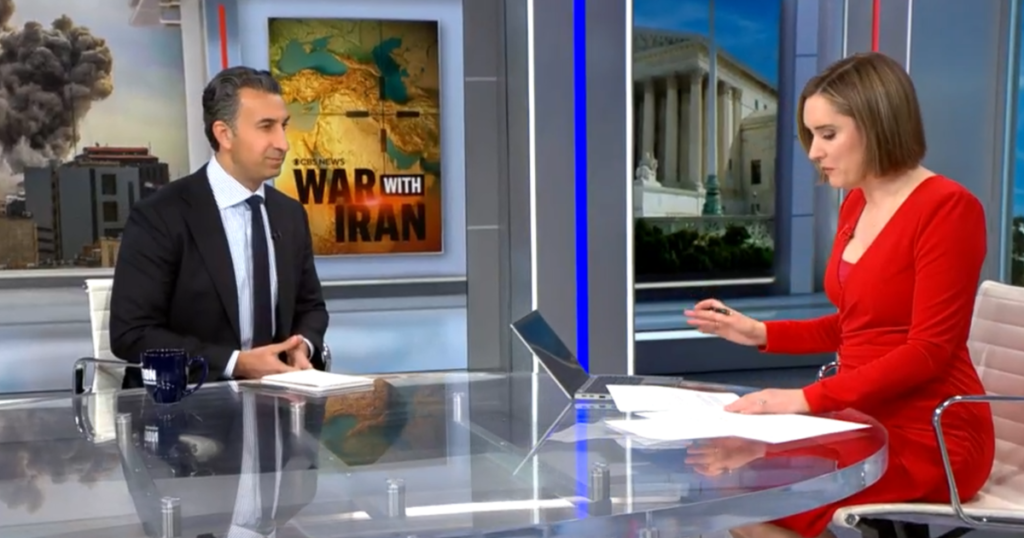
MARGARET BRENNAN: For more on the ongoing war in Iran, we’re joined by Iran policy analyst Karim Sadjadpour, as well as former CENTCOM commander and CBS News contributor, retired General Frank McKenzie, who joins us this morning from Tampa.
Good morning to you both.
Karim, let me start with you.
Today, in Islamabad, you have Pakistan, Turkey, Egypt, these self-acclaimed mediators gathered together to talk about how to deescalate the war. Iran, so far, hasn’t responded to the 15 points the Trump administration put forward. And Rubio said he’s not even sure who they’d be negotiating with. So, what is the reality of who we’re negotiating with and are we even negotiating?
KARIM SADJADPOUR (Senior Fellow, Carnegie Endowment for International Peace): Well, Margaret, this is a regime, the Islamic Republic of Iran, which came into power in 1979, taking American diplomats hostage, and now they think they have the global economy hostage. And they’re fighting a war of survival. They’re also fighting a war of revenge against President Trump.
So, at the moment, they don’t feel compelled to compromise, it seems, because the trend lines are oil prices are going up, American public opinion about the war is going down, and many of these leaders that we’re hoping to negotiate with are, right now, living underground, fighting for their lives.
MARGARET BRENNAN: Well, to your point on that difference, that asymmetric difference in power, General, I want to bring you in here because one of the things that Iran had been waiting to do was activate its militias, or the militias it supports in Yemen, the Houthis. Over the weekend, they jumped in the fight and fired on Israel. Do you think this is a game- changer given that they could, not just disrupt the Strait of Hormuz, but another passageway through the Red Sea?
GENERAL FRANK MCKENZIE (Ret.): Margaret, I don’t think it will be a game changer. Their ability to attack Israel is quite limited. Yes, they will have the ability to further stop, slow traffic through the Bab-el-Mandeb, going up into the Suez Canal. We have the ability to go down there and prevent that. It will require additional resources, but we have those resources and we can certainly do it if that becomes necessary.
MARGARET BRENNAN: Well, the president has made clear that he needs to reopen the Strait of Hormuz. His language has been contradictory on some of these points as to who’s going to do it and when. What’s the military reality of making it passable?
GENERAL FRANK MCKENZIE: We’re on our way to doing that now, Margaret. This is a part of a plan that’s been in existence for many years. What we’re doing right now is we’re reducing Iranian ability to target ships in the strait through their short-range missiles, their drones and other activities. We do that by maintaining air superiority over southern Iran on a 24/7 basis, looking for where these missiles are and striking them relentlessly.
Once we reduce those to a very low level, then you’ll be able to go in, if necessary, sweep the mines. I’m not certain they put mines in the water yet. I predict eventually they will. It’s their nature.
But we have the ability to do this. We’re on – we’re on plan. I’ll be honest with you, Margaret, I’ve simulated this many years and many places at Central Command. We’re a little further along than we would have expected to be at this point, in all the simulations that I’ve seen.
MARGARET BRENNAN: I’m going to guess, in your simulations, you looked at what would happen in the Strait of Hormuz, even though the president said no one ever thought of it. You thought of it, didn’t you?
GENERAL FRANK MCKENZIE: The U.S. military thinks of a lot of things. We certainly have thought of the Strait of Hormuz.
MARGARET BRENNAN: Yes.
GENERAL FRANK MCKENZIE: Thought of Kharg Island. Think of all those islands on the southern lateral (ph) of Iran.
MARGARET BRENNAN: Karim, the president said the Israelis killed the second tier pragmatist types that he had thought he might be able to go and negotiate with. In recent days, the name that has emerged is the parliament speaker, Ghalibaf. What do we know about him? Is he someone you can make a deal with?
KARIM SADJADPOUR: Ghalibaf is importantly a former senior Revolutionary Guard commander and a close adviser to Mojtaba Khamenei. Under different circumstances, he is someone who aspires to be Iran’s modern strongman leader. I have actually met him in the World Economic Forum in Davos. Just the fact that he shows up in Davos –
MARGARET BRENNAN: Yes.
KARIM SADJADPOUR: Shows you a little bit about his world view.
But under the current circumstances, no one in that Iranian system is capable of changing the long-time ideology of antipathy toward America and toward Israel, even if they wanted to.
MARGARET BRENNAN: Explain that, if you would. Because what we hear from the White House and from Israel is that pressure will break them. You’re saying they’re unbreakable?
KARIM SADJADPOUR: At the moment, and this could change in the future, but we haven’t seen any cracks in the regime’s resolve. We haven’t seen any cracks in the cohesion of its security forces. And given the fact that so many of its top officials, including the supreme leader, have been killed, it’s a regime which is not prepared to compromise or change its ideology. They actually believe that antipathy towards America is part of their identity. And if you capitulate on that, it actually doesn’t prolong your shelf life, it actually could hasten your death.
MARGARET BRENNAN: So, if there’s not a negotiated settlement, how does this end?
KARIM SADJADPOUR: I don’t see any possibility of a resolution to this conflict. I think the U.S. and Iran are miles apart when it comes to their goals here.
Now, I think we could see a potential ceasefire that opens the Strait of Hormuz, which would shift us back from a hot war back to a cold war, but there’s no possibility, in my view, so long as this regime is in power, of a U.S. Iran normalization.
MARGARET BRENNAN: General, do you agree with that assessment? I mean it does seem that the Trump administration is acknowledging the regime will stay if they are at least offering to negotiate with the regime, so it would allow for them to remain in power.
GENERAL FRANK MCKENZIE: The primary goal of Iranian statecraft, Margaret, is survival of the regime. Back in the late 1980s, they signed a truce with Iraq when things were going very bad for Iran. In Iranian history it’s known as drinking from the poison chalice. I believe that they will break. I believe that they will come to terms. And it may be an imperfect solution, but I think it would be one that would include opening the Strait of Hormuz, possibly some deal on the missiles – on the missile systems. The nuclear program is certainly a possibility. But I believe eventually they’ll make a deal. But we need to keep the pressure up. We need to continue to pressure them very hard because that is, in fact, the only thing they will respond to.
MARGARET BRENNAN: So, the president had posted he’s postponed the deadline to open the Strait of Hormuz as a result of the Iranian government asking for it. He says he’s shifted that to April 6th at 8:00 p.m.
We also hear from the secretary of state that he’s talking to the allies about a post conflict necessity of having other countries help to essentially police the strait. And he said that you will need tankers to have military escorts. So, this doesn’t sound like this is a short-term project. This sounds like, even if combat ends, we’re going to be talking about a military presence in the region for some time. Am I wrong?
GENERAL FRANK MCKENZIE: Margaret, you could be right. Let’s see what happens. I think a negotiate – that are two ways the Strait of Hormuz can be opened. It can be opened if the Iranians negotiate with us to open it. And, of course, that’s the desired solution.
The other solution would be if they don’t and they decide to fight. We can open the strait under that condition too.
The second condition is obviously a lot more intensive in terms of ships and equipment that we’d have to bring into the region. And, yes, help from our allies would certainly be – would be very useful in that case.
We have the ability to open the Strait of Hormuz under any condition that the Iranians choose to exist under.
MARGARET BRENNAN: Does it appear to you that one of the contingencies that the White House is planning for, given that they’re continuing to move troops into the region, and you have these Marines who are moving into the area as well, are they preparing for a ground troop presence? And what does that look like?
GENERAL FRANK MCKENZIE: Margaret, for many years we’ve considered options along the southern coast of Iran, seizing islands, seizing small bases. Typically raids. And a raid is an operation with a planned withdrawal. You’re not going to stay. But some of those islands you could seize and hold. That would have a couple effects. First of all, it would be profoundly humiliating for Iran and would give us great weight in negotiations. The second, the example of Kharg Island, which everyone talks about, if you seize Kharg Island, you really can shut down the Iranian oil economy completely. And the beauty of seizing it is, you’re not destroying it. You’re retaining it for further use by the global economy and possibly for return to Iran under certain conditions.
So, all of these things – this is not back of the – these are not back of the envelope calculations. These are things we’ve been working on for many years. And I think we’re right to threaten the entire atola (ph), to hold all these options out there. And I think the president’s message is spot on when he talks about all these alternatives.
MARGARET BRENNAN: But can he achieve his goals without ground troops, which is what the secretary of state says, and how does this end? How do you call this a success?
GENERAL FRANK MCKENZIE: Sure. I think a success looks like the Strait of Hormuz is open. We get some kind of deal on the ballistic missile program, some kind of deal on the nuclear program. That’s probably about as much as you could hope for. But I think there are very discreet things that for me at least, from an operational military perspective, would be – would look like victory.
I believe all of those things are actually within our grasp. We just need to continue. Iran will ultimately respond to the use of force. They know and understand it perhaps better than we have – we have in the past. This administration’s willing to use force. Other administrations have been thoroughly deterred by Iran. President Trump is not deterred by Iran.
MARGARET BRENNAN: Yes. Well, the president says he wants a deal, even though, I know, you think that’s going to be pretty hard to get to.
GENERAL FRANK MCKENZIE: Well –
MARGARET BRENNAN: And he said Vice President Vance is going to be directly involved here, Karim. What does that signal to you?
KARIM SADJADPOUR: Well, the Iranians actually want to negotiate with Vice President Vance for a couple of reasons. Number one, they think he comes from the anti-war wing of the Republican Party. And number two, they think because of the fact that J.D. Vance wants to run for president, he’s incentivized to want to wrap this war up pretty quick.
And I agree with something General McKenzie said, which is, we know over the last five decades that this regime is only compromised under really clear circumstances, when it faces existential pressure, coupled with a clear, diplomatic exit. I think it’s feeling existential pressure. I don’t think it – they’ve yet seen a clear, diplomatic exit.
MARGARET BRENNAN: Well, gentlemen, thank you both for lending us your expertise for this conversation. We’ll have to leave it there.
SADJADPOUR: Thank you.
MARGARET BRENNAN: We’ll be back in a moment.
(ANNOUNCEMENTS)
MARGARET BRENNAN: This week could mark the beginning of a new era for human space flight. NASA’s Artemis II mission is scheduled to launch on April 1st, carrying four astronauts in a loop around the moon before they return to earth ten days later. The crew, three Americans and one Canadian, includes the first woman, the first person of color, and the first Canadian expected to travel to the moon. It’s the first crewed lunar mission in more than 50 years. And if all goes according to plan, you can see full coverage here on CBS News and next Sunday on “FACE THE NATION.”
(ANNOUNCEMENTS)
MARGARET BRENNAN: That’s it for us today. Thank you all for watching. Until next week. For “FACE THE NATION,” I’m Margaret Brennan.
(ANNOUNCEMENTS)
You may be interested
3/29: Sunday Morning – CBS News
new admin - Mar 29, 20263/29: Sunday Morning - CBS News Watch CBS News Hosted by Jane Pauley. Featured: The story of Elizabeth Tsurkov's 903-day…

IOC faces backlash on policy to ensure women’s competitions stay fair
new admin - Mar 29, 2026[ad_1] NEWYou can now listen to Fox News articles! American Olympic runner Nikki Hiltz, who identifies as transgender nonbinary, reacted…

Bluesky’s new app is an AI for customizing your feed
new admin - Mar 29, 2026The latest app from the team behind Bluesky is Attie, an AI assistant that lets you build your own algorithm.…