



Full transcript of “Face the Nation with Margaret Brennan,” March 22, 2026

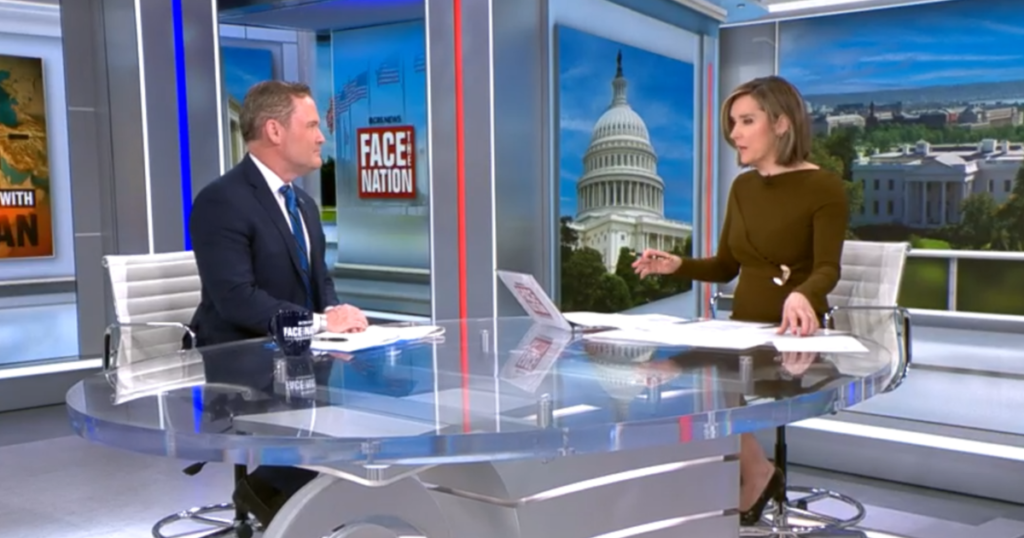
On this “Face the Nation with Margaret Brennan” broadcast, moderated by Margaret Brennan:
- Mike Waltz, U.S. ambassdor to the United Nations
- NATO Secretary General Mark Rutte
- Rep. Jason Crow, Democrat of Colorado
- International Atomic Energy Agency Director-General Rafael Grossi
- Siamak Namazi, Emad Shargi, Roger Carstens and Neda Sharghi
Click here to browse full transcripts from 2026 of “Face the Nation with Margaret Brennan.”
MARGARET BRENNAN: I’m Margaret Brennan in Washington.
And this week on Face the Nation: Is President Trump eying an exit from the war with Iran, or is he doubling down? An escalation in the war with Iran, with nuclear and energy sites being targeted in the Middle East and growing tensions among the U.S. and some allies.
Plus, a new warning overnight from President Trump, threatening to destroy Iran’s power plants unless Tehran reopens the Strait of Hormuz. Back home, the president says that most of his objectives have been fulfilled in the conflict.
(Begin VT)
DONALD TRUMP (President of the United States): Oh, I think we have won, but we have knocked out the navy, their air force. We have knocked out their anti-aircraft. We have knocked out everything.
No, I’m not putting troops anywhere. If I were, I certainly wouldn’t tell you.
(End VT)
MARGARET BRENNAN: But CBS News has learned that there are detailed preparations being made for deploying U.S. ground forces into Iran. So what’s really going on?
We will talk with key voices in the conflict, including U.S. Ambassador to the United Nations Mike Waltz, the head of the U.N. nuclear watchdog agency, Rafael Grossi, and NATO Secretary-General Mark Rutte.
Plus, as the standoff between congressional Democrats and the administration over funding the Department of Homeland Security marks day 37, President Trump is now threatening to deploy ICE agents to assist with the shortage of TSA agents at airports. We will ask Democratic Congressman Jason Crow where negotiations stand.
It’s all just ahead on Face the Nation.
Good morning, and welcome to Face the Nation.
We begin today with the latest from the Middle East and Charlie D’Agata in Arad, Israel.
(Begin VT)
CHARLIE D’AGATA (voice-over): Overnight, Iranian ballistic missiles slammed into parts of Israel…
MAN: Whoa.
(EXPLOSION)
MAN: Whoa! Whoa!
CHARLIE D’AGATA: … inflicting the kind of destruction not seen here since the start of the war.
(MAN SPEAKING IN FOREIGN LANGUAGE)
CHARLIE D’AGATA: Nearly 200 wounded in strikes in the central cities of Dimona and Arad…
(EXPLOSION)
(MAN SPEAKING IN FOREIGN LANGUAGE)
CHARLIE D’AGATA: … and, into the morning, hitting population centers such as Tel Aviv.
Officials are investigating how the missiles pierced Israel’s multilayered air defense systems amid worries Israel may be running low on interceptors as the war enters a fourth week.
The launch of two long-range ballistic missiles fired toward the joint U.S.-U.K. military base of Diego Garcia – that’s around 2,000 miles away in the Indian Ocean – raising serious concerns about both the reach and number of these types of weapons. Iran claimed it was not developing missiles that could cover more than roughly 1,200 miles, but these longer- range launches now potentially put European capitals and more U.S. military bases at risk.
Iranian state media has framed the overnight attacks on Israel as retaliation for the bombing of the Natanz nuclear facility.
We’re at the scene of one of those strikes. You can see the crater behind me and destruction in every direction.
But officials tell me, as bad as this was, it could have been a lot worse, because it landed in the middle of a block of apartment buildings, instead of on top of one.
(End VT)
MARGARET BRENNAN: That’s Charlie D’Agata reporting in Arad, Israel.
We’re joined now by the U.S. ambassador to the United Nations, Mike Waltz.
And it’s good to have you here in person.
MIKE WALTZ (U.S. Ambassador to the United Nations): Thank you, Margaret.
MARGARET BRENNAN: So, Ambassador, on Friday, the president tweeted: “The Hormuz Strait will have to be guarded and policed as necessary by other nations who use it. The United States does not.”
And then, last night, he threatened that if Iran doesn’t fully open the Strait of Hormuz within 48 hours, the U.S. will hit and obliterate their power plants, starting with the biggest one first.
So, which is it? Is the U.S. opening Hormuz by force or having others do it?
AMBASSADOR MIKE WALTZ: Well, I think it can be both.
It’s not necessarily mutually exclusive. I’m glad you’re having NATO Secretary-General Mark Rutte on. I think, at his urging and his leadership, we have now seen Italy, Germany, France, and a number of others commit to help with this effort, particularly since…
MARGARET BRENNAN: After combat operations end.
AMBASSADOR MIKE WALTZ: … particularly since so much energy is going to Europe out of the straits. We just had the Japanese prime minister commit to portions of her navy and the Japanese navy; 80 percent of what’s coming out of the Gulf is going to Asia.
So, we are seeing our allies come around, as they should. But, at the same time, the president is not going to stand for this regime, as it’s threatened and tried for five decades, to hold the world’s energy supplies hostage under its genocidal intent.
MARGARET BRENNAN: So, some allies like the United Kingdom have talked about things like surveillance, anti-mining, anti-drone support for the United States, but in that appeal from the United States, I should say in the Straits of Hormuz, but not until active combat ends.
To be clear, that’s what we’re talking about.
AMBASSADOR MIKE WALTZ: Well, and the president’s been clear too. He’s going to continue to pound Iran’s capabilities, its missile, its naval, and its drone capability.
Yes, Margaret, we have to take a step back. We have seen what it’s doing now in terms of attacking ports, airports, civilian infrastructure, hotels, resorts…
MARGARET BRENNAN: Yes.
AMBASSADOR MIKE WALTZ: … and what it’s trying to do to global energy supplies.
One could only imagine if it had a nuclear umbrella. One could only imagine if Iran achieved…
MARGARET BRENNAN: Yes.
AMBASSADOR MIKE WALTZ: … its aim to test. Then you have Saudi Arabia wanting a nuclear program, the – perhaps the UAE, Turkey, or others.
And when people ask why does this matter to our security here at home, it should petrify every American that you could potentially have a nuclear Middle East awash in weapons.
MARGARET BRENNAN: Well, they’re not enriching. They weren’t enriching leading up to this. This is what U.S. officials have testified to.
But just on this point about what the president said he wants to do…
AMBASSADOR MIKE WALTZ: Well, they couldn’t enrich because of Operation Midnight Hammer that obliterated their ability to enrich. They had every intent to continue.
MARGARET BRENNAN: They do have a nuclear power plant, Bushehr.
AMBASSADOR MIKE WALTZ: Right.
MARGARET BRENNAN: It’s actually their largest energy plant. It’s a civilian site. So when…
AMBASSADOR MIKE WALTZ: It’s actually not their largest energy plant. It’s about one gigawatt. They have larger ones that are gas-fired outside of Tehran.
MARGARET BRENNAN: OK. So…
AMBASSADOR MIKE WALTZ: So, just case in point.
MARGARET BRENNAN: OK, but in this case, are – in that clarification, the reason I’m asking you is, when the president says he’s going to bomb energy infrastructure, civilian energy infrastructure, is he going to bomb a nuclear power plant, or is that off the table?
AMBASSADOR MIKE WALTZ: Well, I would never take anything off the table for the president, certainly not on national television.
However, there are larger plants. There’s one outside of Tehran. There are others outside of other cities that are gas-fired, thermal-powered. I think the important point here is to understand, the IRGC, a declared terrorist organization not only by us, but a number of European countries…
MARGARET BRENNAN: Yes, in Europe too.
AMBASSADOR MIKE WALTZ: … controls a huge swathe of Iran’s critical infrastructure, their economy and certainly many of their governing institutions.
And so to the extent we are degrading their military capability and their defense industrial base, all options should be on the table, and the president has made that very clear.
MARGARET BRENNAN: How do you ensure that this doesn’t constitute a war crime, which the U.N. secretary-general said an attack on energy infrastructure could be? How do you make sure this is not mass punishment for innocent civilians?
AMBASSADOR MIKE WALTZ: Well, I think, you know, I would encourage and will encourage the secretary-general to point out the 20,000 to 30,000 Iranians that the regime massacred at scale, the civilian infrastructure that they are attacking.
MARGARET BRENNAN: No one is endorsing that, but how do you make sure this doesn’t hurt…
(CROSSTALK)
AMBASSADOR MIKE WALTZ: And when you – but when have a regime that has its grips on in much critical infrastructure, that is using it to further not only the repression of its own people, to attack its neighbors, and in contravention of U.N. sanctions to march towards a nuclear weapon, then that makes those legitimate targets.
MARGARET BRENNAN: OK. Well, you know that in many of these places, water desalination is linked into that energy infrastructure, civilian infrastructure. This is why it is a question of it being a war crime.
AMBASSADOR MIKE WALTZ: I have no doubt that – that the president, the Pentagon, their team will ensure that what they target is geared towards the military infrastructure of Iran.
But I have to tell you, they deliberately blend…
MARGARET BRENNAN: Yes.
AMBASSADOR MIKE WALTZ: … have a long history, everything from hiding weapons under schools and hospitals, to using power plants and other critical infrastructure, to not only power their military, but their civilian, and they deliberately blend, in contravention of international law.
MARGARET BRENNAN: Let me ask you about what we saw overnight with these missile attacks.
The director of national intelligence testified last week to Congress that Iran could not develop a militarily viable ICBM, intercontinental ballistic missile, before 2035, if it attempted to pursue that capability.
Yesterday, the IDF said Israel – said that Iran did fire an ICBM. Has this changed the U.S. assessment?
AMBASSADOR MIKE WALTZ: I am not familiar with the IDF assessment. I can tell you…
MARGARET BRENNAN: They said what was fired at Diego Garcia and them was an ICBM.
AMBASSADOR MIKE WALTZ: I can tell you the U.K. just condemned the firing of an intermediate-range ballistic missile at Diego Garcia. That same type of missile, Iran has lied about in terms of its development, said they were not developing. Yet they just lied. Yet they just did it.
Not only could it hit Diego Garcia. It could hit capitals in Europe. And, Margaret, the technology, the booster technology…
MARGARET BRENNAN: Yes.
AMBASSADOR MIKE WALTZ: … that Iran has been hiding behind its space program, I don’t think we are going to see Iranian astronauts on the moon anytime soon, that this space program has been hiding that technology. You have the reentry technology.
To marry the two really doesn’t take very much in terms of technological development.
MARGARET BRENNAN: OK.
AMBASSADOR MIKE WALTZ: And we just have to – you know, thank God the president is taking action now and stopping this march towards a fully fledged nuclear program, instead of waiting until after it’s developed, like we saw in North Korea under the Clinton administration, say, surprise, we now have, a full program.
MARGARET BRENNAN: OK, so a difference there in the assessments. But let me ask you about our polling.
(CROSSTALK)
AMBASSADOR MIKE WALTZ: It wouldn’t be the first time you have different intelligence assessments, by the way, by different intelligence communities.
MARGARET BRENNAN: Absolutely.
The administration hasn’t convinced, we’ve seen it in our polling, the majority of Americans that this war was necessary; 66 percent of Americans believe conflict with Iran is a war of choice; 60 percent disapprove of the U.S. taking military action against Iran; 57 percent of Americans think the conflict is going very or somewhat badly.
How do you tell the American people they’re wrong?
AMBASSADOR MIKE WALTZ: Well, I can – I could quote a whole slew of polls that show, for example, self-described MAGA Republicans give the president a 100 percent approval rating.
MARGARET BRENNAN: His base is in there, absolutely.
AMBASSADOR MIKE WALTZ: A majority say the number one job of the commander in chief is to keep Americans safe.
I can point here to an NBC poll; 90 percent of Republicans, broader Republicans, support Trump’s effort to destroy Iran’s nuclear capabilities. And I have to point out, no one should be surprised here. President Trump has said Iran cannot have a nuclear weapon 2016 campaign, 2020 campaign. Since 2024, he has said it 74 times out in the public space.
So…
MARGARET BRENNAN: But if he is going to commit any kind of ground troops or boots on the ground, don’t you think he needs to persuade the majority of American people, not just his base?
AMBASSADOR MIKE WALTZ: I think the president will keep all options on the table to secure these objectives.
And, as a veteran, as a parent, I thank God he is not kicking the can like so many administrations have for 50 years, until this is a catastrophic problem where we have very limited options to deal with, much less an entire Middle East potentially awash in nukes.
MARGARET BRENNAN: Ambassador Waltz, thank you for your time this morning.
AMBASSADOR MIKE WALTZ: All right, thank you.
MARGARET BRENNAN: Face the Nation will be back in a minute, so stay with us.
(ANNOUNCEMENTS)
MARGARET BRENNAN: We turn now to NATO Secretary-General Mark Rutte, who joins us this morning from The Hague in the Netherlands.
Welcome back to Face the Nation.
MARK RUTTE (NATO Secretary-General): Margaret, it’s good to be back on the program. Good morning.
MARGARET BRENNAN: Good morning.
We did see that Iran fired two missiles at Diego Garcia. That’s that island in the Indian Ocean which houses a U.S.-U.K. joint base. That was 4,000 kilometers from Iranian territory, furthest Iran has ever gone.
You just heard Ambassador Waltz say there might be a difference there in how Israel and the U.S. assess that capability Iran has in terms of what they fired. But Israel says these were intercontinental ballistic missiles that could hit Berlin, Paris and Rome.
Does NATO share that Israeli assessment?
SECRETARY-GENERAL MARK RUTTE: We cannot confirm that at the moment, so we’re looking into that.
But if this would be true, it is the more evidence that what the president is doing here, taking out the ballistic missile capability, taking out the nuclear capability from Iran, is crucial, and exactly as the ambassador just said, Ambassador Waltz.
We have seen with North Korea, if we negotiate for too long, you might pass the moment where you can still get this thing done, and North Korea now has the nuclear capability. If Iran would have the nuclear capability, including together with the missile capability, it will be a direct threat, a existential threat, to Israel, to the region, to Europe, to the stability in the world.
So the president doing this is crucial. And I have seen the polling, but I really hope the American people will be with him, because he is doing this to make the whole world safer.
MARGARET BRENNAN: So – but, just to be clear, at this hour, do you believe that Iran could bomb Berlin, Paris and Rome? Are they all within direct threat range?
SECRETARY-GENERAL MARK RUTTE: What we know for sure is that they are very close to having that capability. Whether this case with the U.K. base, Diego Garcia, we are still assessing.
But, if it is true, it means they already have that capability. If it is not true, we know they are very close to having that capability. And that is exactly why I feel, in Europe, that most politicians, it resonates with them what the president is doing here, which is taking out, degrading Iran’s capability to be, again, an exporter of chaos, sheer chaos to the region, to the world.
MARGARET BRENNAN: Well, yes. Well, I’m sure the president appreciates your praise, but he has been very frustrated, and made that clear this week, with NATO and the European allies. He called NATO – quote – “a paper tiger” without the U.S.
He said: “They complain about high oil prices when they’re forced to pay, but they don’t want to help open the Strait of Hormuz. Easy for them. Cowards. We will remember.”
SECRETARY-GENERAL MARK RUTTE: I have been in several conversations this week with the president.
And the good news is that, look, we had the U.S. for weeks planning for Epic Fury. And for reasons of security and safety, they could not share with European allies and allies around the world and partner countries what they were doing, because that would have jeopardized the effect of the first – first attack.
MARGARET BRENNAN: Or it would have allowed you to plan.
SECRETARY-GENERAL MARK RUTTE: So, it is only logical that European countries needed a couple of weeks to come together.
But, at this moment, the good news is this, that since Thursday, 22 countries, most of them NATO, but also Japan, Korea, Australia, New Zealand, Bahrain, the UAE, have come together to basically answer three questions, what do we need, when do we need it, and where do we need it?
These three questions are now worked through to answer the president’s call to make sure that we secure the free sailing through the Strait of Hormuz.
MARGARET BRENNAN: To be clear, the president has said four to six weeks for this war. That would put us in early April for an end to combat operations. But then he’s also sending troops. He’s also possibly asking Congress for more money.
What’s the when part? When did he tell you your support from these European countries will be needed? Because, from the sources I speak to, they are not willing to send in the midst of combat.
SECRETARY-GENERAL MARK RUTTE: Obviously, I cannot, in a program which is aired around the world, and you have a lot of viewers, discuss with you what is discussed in secrecy.
But I can assure you that, of course, and the U.K. is – is at the forefront of leading this effort of the 22 countries on the leadership of Prime Minister Starmer. I have been on a phone call this week with Prime Minister Starmer and President Macron.
And, again, this has led to 22 countries now signing up to this initiative., indeed, one of the key questions is not only the what question and the where question, but also the when question. And this is why military planners are now working together to make sure that we are ready, to make sure that that street – that that Strait of Hormuz, that we secure the free sailing there, which is crucial for the world’s economy.
MARGARET BRENNAN: The president seemed to say, though, that this will go beyond Iran in terms of the impact on his thinking about NATO and his willingness to help Europe. Take a listen to this.
(Begin VT)
DONALD TRUMP (President of the United States): I think NATO is making a very foolish mistake. And I have long said that, you know, I wonder whether or not NATO would ever be there for us. So this is a – this was a great test, because we don’t need them, but they should have been there.
(End VT)
MARGARET BRENNAN: The president continues to frame this as sort of like a quid pro quo, and he’s also mentioned Ukraine in the same context, saying: I help Europe with Ukraine. Why aren’t they helping me?
Are you worried that this is going to hurt NATO’s goals elsewhere?
SECRETARY-GENERAL MARK RUTTE: What I know is that we always come together. It was under President Trump’s leadership that we had the extremely successful summit in The Hague where we agreed to spend 5 percent of our GDPs on defense, and therefore equalizing for the first time since Eisenhower…
MARGARET BRENNAN: Yes.
SECRETARY-GENERAL MARK RUTTE: So this is quite some time – some time back in history, equalizing what the Europeans are spending and what the Americans are spending, not only because it is fair that we all spend the same – and this was a wish from Trump 45…
MARGARET BRENNAN: Yes.
SECRETARY-GENERAL MARK RUTTE: … and now is Trump 47. He got this done, but also because we need it because of the Russian threat and our other adversaries.
Then, on Ukraine, it is again the U.S. providing critical intelligence support…
MARGARET BRENNAN: Yes.
SECRETARY-GENERAL MARK RUTTE: … and weapons flow, working together with Europeans to secure Ukraine’s fight against the Russians, making sure they have what they need.
And now, with Iran, I’m absolutely convinced – and I understand the president’s frustration that it takes some time. But, again, I also ask for some understanding…
MARGARET BRENNAN: Well…
SECRETARY-GENERAL MARK RUTTE: … because nations had to prepare for this not knowing, and for good reasons…
MARGARET BRENNAN: No.
SECRETARY-GENERAL MARK RUTTE: … about the initial attack on Iran, but now coming together to make sure that we can be able to secure the Strait of Hormuz.
MARGARET BRENNAN: Yes.
No, but to be clear, I have spoken to some NATO members who say this is a defensive alliance, not an offensive one. We didn’t sign up to go do what the president is asking us to do.
But on the Russia point you just made the European Council president said: “The U.S. decision to lift sanctions on Russian oil exports is very concerning, as it impacts European security.”
This is part of what President Trump’s doing to try to stop the spike in oil prices here at home. The Treasury secretary says this means about $2 billion is going to Russia now. President Zelenskyy says it’s more like $10 billion. Doesn’t this benefit Vladimir Putin?
SECRETARY-GENERAL MARK RUTTE: Well, this is the thing. The president has to balance all these different interests.
I know that he is, with his team, with Jared Kushner and Steve Witkoff and Marco Rubio, they are constantly working with the Ukrainians to put maximum pressure on the Russians to come to a deal. I know…
MARGARET BRENNAN: This isn’t maximum pressure.
SECRETARY-GENERAL MARK RUTTE: … I spoke an hour-and-a-half last week with President Zelenskyy in London. He wants to get the deal done.
And we have to make sure that we also take this to the Russians, to make sure that they are willing to play ball. It is the president putting that pressure, together with the Europeans.
MARGARET BRENNAN: Yes.
SECRETARY-GENERAL MARK RUTTE: But, again, he has to balance all these different interests. So I’m not going to comment on each element of what is happening here, but his effort to bring the war in Ukraine to a successful end is crucial.
He was the only one who was able to break the deadlock with Putin…
MARGARET BRENNAN: Yes.
SECRETARY-GENERAL MARK RUTTE: … when he made the first phone call in February last year. And he has consistently, with his team, done what is necessary to put that pressure, of course, on the Ukrainians.
MARGARET BRENNAN: Yes.
SECRETARY-GENERAL MARK RUTTE: And they want to play ball. They show this. They want to end the war, and also with the Russians.
MARGARET BRENNAN: Well, we’ll see if Vladimir Putin wants to play ball.
Secretary-General, thank you for your time.
And we’ll be right back with a lot more Face the Nation. Stay with us.
(ANNOUNCEMENTS)
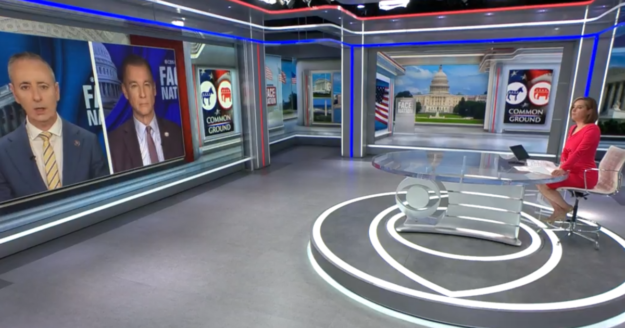
MARGARET BRENNAN: And we’re joined now by Colorado Democratic Congressman Jason Crow.
Welcome back.
REPRESENTATIVE JASON CROW (D-Colorado): Thanks, Margaret.
MARGARET BRENNAN: So, you sit on the House Intelligence Committee.
This past week, you heard the director of national intelligence testify about Iran’s capabilities, saying we wouldn’t see an ICBM that would, in theory, be the thing that would carry a nuclear warhead right to American shores.
REPRESENTATIVE JASON CROW: Mm-hmm. Mm-hmm.
MARGARET BRENNAN: She said they wouldn’t have one until 2035 if they even tried at all. Is what – are you afraid she was wrong? Because Israel is saying that what was fired was an ICBM that was aimed at this U.S.-U.K. base.
REPRESENTATIVE JASON CROW: Yes, she could be wrong.
And we have – obviously have to dive into the intelligence. The question has never been whether or not Iran poses a threat or a series of threats to the United States, but that’s where the analysis begins, not when the analysis ends, right?
We have lots of threats. Kim Jong-un poses a threat. Putin poses a threat. We have threats around the world. The question is, what do we do about it? And, right now, we’ve spent $20 billion in the first two weeks of this war alone, $1.5 billion a day. Americans are paying $300 million a day extra energy prices.
The terror threat around the world against the United States and Americans is spreading. And there’s no off-ramp. We have no strategy and no endgame. This is a mess, by any definition. And now we have to figure out what we do from here.
MARGARET BRENNAN: So, no timeline beyond the four to six weeks has been briefed or shared with Congress at this point?
REPRESENTATIVE JASON CROW: No. No, we have – we are not getting the information from this, this administration.
They started this war without congressional authorization. There’s no imminent threat. They actually have even stopped trying to pretend there was an imminent threat, which is what is necessary for the president to take action without congressional approval.
So, now here we are spending tens of billions of dollars of taxpayer money, losing American lives. Congress isn’t involved. We’ve been stonewalled. The American people are not in the driver’s seat here, right, because Congress has been sidelined in this.
They are the ones that need to have the voice in whether or not they’re going to send their sons and daughters to go fight this war…
MARGARET BRENNAN: Yes.
REPRESENTATIVE JASON CROW: … whether or not they’re going to finance it. It’s time for this to end.
MARGARET BRENNAN: Let’s take a break. I have more to talk to you about on the other side of it.
So all of you, please stay with us. We’ll be right back.
(ANNOUNCEMENTS)
MARGARET BRENNAN: And we will be right back with a lot more, including Democratic Congressman Jason Crow, head of the U.N. nuclear watchdog agency Rafael Grossi, and findings from our latest CBS News poll.
(ANNOUNCEMENTS)
MARGARET BRENNAN: Welcome back to “FACE THE NATION.”
We return now to our conversation with Colorado Congressman Jason Crow.
Before we leave the topic of Iran, I do want to ask you, last Sunday on this program the White House economic advisor, Kevin Hassett, said the war was ahead of schedule and while it was up to the budget office, he didn’t think the administration would need any kind of supplemental funding. But then days later, Secretary Hegseth seemed to confirm the Pentagon needed as much as $200 billion.
(BEGIN VC)
DEFENSE SECRETARY PETE HEGSETH: As far as $200 billion, I think that number could move, obviously. It takes – it takes money to kill bad guys. So, we’re going back to Congress and our folks there to ensure that we’re properly funded for what’s been done, for what we may have to do in the future.
(END VC)
MARGARET BRENNAN: I know you’re opposed to the war, but is there a way to structure this deal would you – where you would be comfortable with additional funds?
REPRESENTATIVE JASON CROW: No. If they think I’m going to vote for hundreds of billions of dollars for an unauthorized war, a war they didn’t come to Congress for, a war they haven’t given an explanation to the American people for what we’re doing and not doing, how it’s going to end, how we’re protecting our service members. And on top of that, House Republicans gave DOD $150 billion slush fund last summer as part of Donald Trump’s big ugly bill. And on top of that, they say they’re going to come and ask for a $1.5 trillion defense budget. And the Department of Defense, to this day, can’t pass an audit. They can’t tell us where all their stuff is, where they’re spending all their money.
So, I’m not about to throw money at a DOD that can’t pass an audit, that’s sitting on money that they already haven’t accounted for and haven’t spent and to perpetuate an unauthorized war that is not in America’s interest.
MARGARET BRENNAN: I know you’re a veteran, but you know that the accusation will be made that Democrats just don’t support the troops.
REPRESENTATIVE JASON CROW: There is – of course that’s what they’re going to say. But there is plenty of money within DOD for military families, for troops, for barracks. I have guaranteed that. I sit on the Armed Services Committee and I will continue to push forward and vote to make sure our troops, our military is taken care of, that we have the military that we need to protect America.
What I’m not going to do is just throw money at the Iran war, which they’re now admitting is a war. This cannot continue. We spent 20 years in Iraq and Afghanistan, trillions of dollars. It ends here. It must end here.
MARGARET BRENNAN: Tell me though, as a Democrat, because Congress is scheduled to go on vacation soon. A lot of TSA agents aren’t receiving paychecks because of this Democratic-led funding shutdown because of a demand to change immigration policies. Something the White House has not made any concessions on that I know of to date. This is in the Senate. But as a Democrat, I mean, look at Denver Airport, near your district. They’re asking people to donate gift cards for TSA agents to make ends meet. The airport says, you know, this is a huge generator in terms of what the airport does for the region. This is hurting your community. How do you continue to defend the shutdown?
REPRESENTATIVE JASON CROW: I’m going to be really clear that this is a Republican shutdown. Full stop. Right. Just yesterday –
MARGARET BRENNAN: Republicans said that – funded all –
REPRESENTATIVE JASON CROW: Just yesterday the U.S. Senate held a vote, and Senate Democrats put up an authorization to fund everything except for ICE and CBP. That’s Coast Guard, that’s TSA, that’s cyber security. Every single Senate Republican voted against it. In the House, we actually have a bill, Rosa Delaro and Hakeem Jeffries, we have a clean bill that would force a vote to open up everything, to fund everything except for ICE and CBP. Republicans are stopping it. They’re not even allowing a vote on that bill.
So, we are ready to go. They are in control of every facet of government.
MARGARET BRENNAN: But in the meantime, these people are left stuck. We’re about to be in spring break. Heavy traffic season.
REPRESENTATIVE JASON CROW: That’s the Republican – they are in control of every element of government. They’re in control of what we vote for and don’t vote for. We are saying, let’s open it back up. Let’s fund Coast Guard, let’s fund FEMA, let’s fund TSA, let’s fund cyber security, which, by the way, we need because we’ve just started a war with Iran which has a huge cyber capability.
MARGARET BRENNAN: Yes.
REPRESENTATIVE JASON CROW: We want to fund it. We’re ready to fund it. We will take the vote tomorrow. They’re stopping that vote. They own this shutdown.
MARGARET BRENNAN: Congressman Crow, thank you very much for your time today.
REPRESENTATIVE JASON CROW: Thank you.
MARGARET BRENNAN: We’ll be right back.
(ANNOUNCEMENTS)
MARGARET BRENNAN: The U.N. nuclear watchdog agency, the IAEA, says it has not detected any raised levels of radiation around nuclear sites that have been targeted by strikes in Israel and in Iran. On Thursday we spoke with the head of that agency and began by asking him whether Iran’s nuclear ambitions can be destroyed through military action.
(BEGIN VT)
RAFAEL MARIANO GROSSI (Director General, International Atomic Energy Agency): Well, of course there has already been a lot of damage done. Last year, 12-day war was in that sense quite effective. This time around, I think the focus of the campaign does not seem to be specifically the nuclear facilities. Although there have been some hits in the – in Natanz and Isfahan, and also on another place near Parchin, which used to be a facility more related to the weaponization efforts but back in the early 2000s.
So, there has been some. But I would say they have been relatively marginal when you consider the overall nature of the military campaign so far. But so, going back to your question, there has been a lot of impact on the program. One cannot deny that this has really rolled back the program considerably. But my impression is that once the military effort comes to an end, we will still inherit a number of major issues that have been at the center of all of this. One, most notably, the inventory of enriched uranium at 60 percent, which is very close to what we need to make a bomb, that is going to still be where it is largely.
MARGARET BRENNAN: Under the rubble?
RAFAEL MARIANO GROSSI: Under the rubble and, in some cases, no rubble. Somewhere under. And also, importantly, some facilities, infrastructure, equipment, which have most probably survived some of the attacks. Even – they could be damaged, seriously damaged. But that is something that we will only be able to ascertain once our inspectors go back. So.
MARGARET BRENNAN: Let’s talk about that. What I heard you say there is Iran had that nuclear weapons program that in 2003, according to U.S. intelligence, was halted. But as you know, there’s the debate over whether Iran’s nuclear program actually did have a weapons ambition. You were never quite able to say yes or no.
RAFAEL MARIANO GROSSI: Well, because we are – we are not analysts or people having opinions. We are the IAEA. So, whenever we say something, it has to be based on actual inspection. And the thing is, and continues to be, one, yes, like you say, yes, we haven’t seen a systematic program like the AMAD (ph) plan with offices people reporting to people and an array of places where you are doing stuff. But there were many, many concerning things. Many unanswered questions. And especially since 2019, 2020, when I became – more or less when I became director general, were, yes, in 2015, in 2016, when the JCPOA, the previous agreement, you remember.
MARGARET BRENNAN: Right, the Obama era nuclear pact (ph).
RAFAEL MARIANO GROSSI: Exactly. When that started to be applied, Iran was complying with a number of things. But we started seeing new stuff. We started seeing and getting new elements that gave rise to concerns. And we were talking about them with Iran. And then it came a point, very important point, when I said, you know, in view of this, I have to say that I’m no longer able, I’m no longer able to say that everything is in order.
MARGARET BRENNAN: Because you were finding uranium in places it wasn’t supposed to be because they weren’t allowing you unfettered access. You couldn’t say clearly one way or the other.
RAFAEL MARIANO GROSSI: Exactly that.
MARGARET BRENNAN: So, let’s come back to that. According to what you did know and did – were able to declare in these IAEA reports, Iran had uranium enriched up to 60 percent. Weapons grade is 90, as I understand it.
RAFAEL MARIANO GROSSI: Yes.
MARGARET BRENNAN: And if that material remains now in Iran after combat ends, will it still have nuclear capabilities, if it has the enriched material and the centrifuges?
RAFAEL MARIANO GROSSI: Well, you remember, and for this I would quote or partially refer to things that have been said in Iran by Iranians. You remember very important officials saying, we have all the elements of the puzzle. So, when this is said, we were telling them, this is unhelpful, or at least you should explain what is – what is meant by that. The – it’s a vast program, all right? And so – albeit the physical distraction that has been operated, acted upon, these facilities, there’s a lot going on. And don’t forget something, Margaret. When we talk about centrifuges, when we talk about these kind of facilities, this is an activity that can be relatively, I won’t say easily, but it is very possible to reconstruct this effort. It’s metallurgy.
MARGARET BRENNAN: Yes.
RAFAEL MARIANO GROSSI: It’s a sophisticated washing machine. It’s nothing – – I mean and you can’t unlearn what you’ve learned and what you –
MARGARET BRENNAN: Right. You can’t bomb away the knowledge.
RAFAEL MARIANO GROSSI: And what you’ve mastered. I mean –
MARGARET BRENNAN: So, that capability will exist after combat.
RAFAEL MARIANO GROSSI: Exactly. And it was very sophisticated. Let’s not forget, again, referring back to JCPOA. JCPOA was based or predicated upon a very primitive type of centrifuge. Now Iran has the most sophisticated, fast and efficient machine that exists. And they know how to make that. They know – and on top of that, there might – there may be places out there which are not nuclear places. This is why. What I say is that we still need to find a framework, an agreed framework that is going to be providing us with the necessary visibility and sense of a clear idea of where they are, what they want to go.
MARGARET BRENNAN: Because this war will not destroy Iran’s nuclear ambitions and capabilities.
RAFAEL MARIANO GROSSI: Any war. I would say any war.
MARGARET BRENNAN: Any war?
RAFAEL MARIANO GROSSI: Unless it was nuclear war and you go for distraction in, you know, unfathomable way.
MARGARET BRENNAN: Yes.
RAFAEL MARIANO GROSSI: Which we hope, of course, will not – never be the case.
MARGARET BRENNAN: Well, talk to me about the options that we know are being discussed by the United States right now, including President Trump and Israel have talked about the potential of sending special forces in to secure some of this enriched material. You have been to Isfahan.
RAFAEL MARIANO GROSSI: Yes.
MARGARET BRENNAN: You have seen some of the underground facilities.
RAFAEL MARIANO GROSSI: Yes.
MARGARET BRENNAN: How difficult would it be to move these cylinders that are there full of chemicals?
RAFAEL MARIANO GROSSI: We’re talking about cylinders containing gas of – highly contaminated uranium hexafluoride of (ph) 60 percent. So, it’s very difficult to handle. So much so that, for example, in terms of this negotiation, we might perhaps discuss that a little bit, that did not bear fruit.
One of the things that we were discussing was down blending it because of its difficulty in terms of handling in the scenario, for example, of a shape-out (ph) of the material. Actually training (ph) the material. So, it is very difficult. Then, of course, I guess there will be a number of decoys, a number of distracting cylinders, materials, over there, which would make it very difficult. I’m not saying it’s impossible. I know that here there are incredible military capacities to do that. But it would be a very challenging operation for sure.
MARGARET BRENNAN: For special – for a military operation to be carried out.
RAFAEL MARIANO GROSSI: Yes. Yes.
MARGARET BRENNAN: Let me just ask you about one other thing. You’ve said about half the nuclear material was around Isfahan. What does that –
RAFAEL MARIANO GROSSI: Maybe (ph) a bit more. There’s – but the majority of the material is there. And this is no secret because I’ve seen a lot of hype about it. This has been in our reports. The vast majority is there. There’s some in Natanz as well and some other parts.
MARGARET BRENNAN: There is focus on these other undeclared facilities President Trump has brought up.
RAFAEL MARIANO GROSSI: Yes.
MARGARET BRENNAN: There’s facility called Pick Ax Mountain, for example, that comes up.
RAFAEL MARIANO GROSSI: Yes. Yes.
MARGARET BRENNAN: Are you concerned about those other sites?
RAFAEL MARIANO GROSSI: Well, we should – we should visit those. They were not operational. So, this is why we hadn’t. You may remember that on the – on the eve of June 2025 campaign, Iran announced that they had a new enrichment facility in Isfahan.
MARGARET BRENNAN: Yes.
RAFAEL MARIANO GROSSI: On that same day, I issued a request for an urgent inspection, which was granted. And the inspectors were there. And the morning where the – or the – you know, late night, when the attacks happened, so we never got to see the place. We will have to go there eventually.
MARGARET BRENNAN: Final thought here. Do you think President Trump supports what I heard you say, which is that a military campaign cannot destroy Iran’s nuclear program and that the only way to understand what they’re really doing is to be on the ground inspecting it and that can’t be done by the United States’ military fully either.
RAFAEL MARIANO GROSSI: Well, I think – I don’t know what he – whether he would endorse this or not, but he has said also that, of course, the diplomacy is the preferred option. I think that is encouraging. And we have had a very constructive conversations in the past and now. So –
MARGARET BRENNAN: Have you spoken to him?
RAFAEL MARIANO GROSSI: Not to the president.
MARGARET BRENNAN: OK.
RAFAEL MARIANO GROSSI: No, I haven’t had the honor. But I was talking to people that I have been talking in the past and we continue. We continue this effort. I think the essence of this is that in the bleakest hour we should never lose hope.
(END VT)
MARGARET BRENNAN: You can see our extended conversations on our website and on our YouTube channel. We’ll be back in a moment.
(ANNOUNCEMENTS)
MARGARET BRENNAN: We turn now to our new CBS poll with executive director of elections and surveys, Anthony Salvanto.
Anthony, good to have you here.
ANTHONY SALVANTO: Good morning.
MARGARET BRENNAN: So, as we were discussing earlier with U.N. Ambassador Waltz, the American people, they’re just not sold on this war. Their skepticism is growing. Why?
ANTHONY SALVANTO: So, to evaluate a war, you need to know what the goals are, what you’re comparing against. And the American people increasingly feel like they haven’t gotten a clear explanation from in administration. So, against that backdrop, I asked them, OK, what do you think is important for the U.S. to be doing? The top answer was to have a quick and successful war. But beyond that, majority say they want to see the nuclear program in Iran stopped permanently. They’d like to see the Iranian people be safe and free. And really importantly, for a majority, it would not be acceptable for them to see the war end with the regime still in power.
Now, all those things might be incompatible with a quick war. And it wouldn’t be the first time the public asked for a wide range of things. There’s still a collective uncertainly about whether or not the U.S. would need to have boots on the ground, send in ground troops. But this is important about duration of this. There’s still a lot of people who think this may take months, may take years. And what that goes to is approval. The longer you think this will last, the more disapproving of it you are. That all ties up in the uncertainty too.
MARGARET BRENNAN: That’s the overseas picture.
Here at home, the most measurable thing seems to be the price at the gas pump. How are people feeling ability the economy?
ANTHONY SALVANTO: They have noticed the increase in gas prices.
MARGARET BRENNAN: Of course.
ANTHONY SALVANTO: Big, big number see now they’ve gone up. But it’s the impact more broadly on the economy. They think the war is having both a short-term impact on gas prices and weakening the economy. But also I asked about the long-term, because you hear the argument out there, well, it will just take patience. And let’s ride this out. But even in the long term, folks are not convinced that there’s going to be an improvement in the economy and also that larger increase in gas prices.
The other part of this too is, they see this as a war of choice, as opposed to necessity. And what that does is it comes back to this, are you willing to have patience? Right now, at least as far as gas prices are concerned, most people say they don’t think Americans should be willing to pay higher prices for it.
MARGARET BRENNAN: Anthony Salvanto, thank you.
ANTHONY SALVANTO: Thanks.
MARGARET BRENNAN: We’ll be right back.
(ANNOUNCEMENTS)
MARGARET BRENNAN: There are at least four Americans currently detained in Iran and two of them, Reza Valizadeh and Kamran Hekmati, have been designated by the U.S. government as wrongfully detained. Last week we spoke with two men who have shared that experience of being held hostage in Iran, Siamak Namazi and Emad Shargi. We also spoke with Neda Sharghi, Emad’s sister, who is now helping families of other wrongful detainees.
Here’s some of that conversation.
(BEGIN VC)
MARGARET BRENNAN: For the American people, what do you want them to know, Neda, about both the Americans who are held and the Iranians and the Iranian Americans who are back in Tehran right now?
NEDA SHARGHI (Sister of Emad Shargi): Well, you know, I’m not an analyst. I can give you a little bit about my own lived experience. You know, I was born in Iran. And I left with my family during the revolution in 1979 with my parents and Emad. I am an American now. But, you know, my country of birth is still very much in my heart. And there are people in Iran who – all they want is freedom and peace. And they – you know, it’s tough because here I am trying to advocate for Americans there, but I want freedom for everyone. And I want people of Iran to find liberation just as much.
I do want to say that – sort of to Roger’s point, what happens with our American hostages, whether they’re in Iran or in Venezuela is, that they always become a hostage to other bigger, broader political issues. And I wish that, you know, Envoy Witkoff had sort of – before he started engaging with the Iranians, had said, we will not talk to you until there’s an unconditional release of our Americans. I’m not sure if that was asked or not. But here we are again, you know, these Americans who are innocent, are, again, tied to this issue that’s, you know, out of their control. So, I want – I want Americans to know that, you know, Kamran and Reza are just ordinary Americans who were there sort of to take care of family and they’ve been caught in this big issue. And we need to – we need to convince our government to separate them from what’s going on and find a creative solution, like we did to get Emad and Siamak home. Find a creative solution to bring them home.
MARGARET BRENNAN: I wonder what you – but the two of you in particular would say to President Trump at a moment like this.
EMAD SHARGI (American Formerly Hed in Iran): What I would tell the president is, he has such a great record of getting Americans home from all over the world. I don’t think any other president has managed to do what he has done in the first 100 days. And I’m confident that if he is aware that there are Americans sitting in Evin prison, that he is going to instruct people around him to put that on the agenda.
So, I think it’s important that he hears that, that there are innocent Americans being held, like we were, as political pawns.
MARGARET BRENNAN: Siamak.
SIAMAK NAMAZI (American Formerly Held in Iran): I completely agree with Emad, and I can’t imagine, if President Trump knew their names and knew these cases they wouldn’t be one of the priorities.
I would say that it is unfortunate that there weren’t – priority was not given to them before. But as I said, I personally think that there will be a time soon, because all wars end with some form of diplomacy. So, I would implore President Trump to make sure that part of those negotiations that will be coming up is bringing our people home.
(END VC)
MARGARET BRENNAN: That full conversation is on our website and YouTube page.
And a quick note on the debate over DHS funding, the White House sent a letter to Congress last week outlining some concessions they are willing to make.
Thanks for watching. I’m Margaret Brennan.
(ANNOUNCEMENTS)
You may be interested
Video shows rescuers treating injured hiker who fell 50 feet on Washington mountain
new admin - May 17, 2026An emergency crew rescued an injured hiker who fell 50 feet from the summit of a mountain in Washington state…

“Call Her Daddy” podcast host Alex Cooper announces pregnancy with 1st child
new admin - May 17, 2026Alex Cooper, the host of one of the most popular podcasts in the United States, announced Sunday that she is…

CBS News poll finds many voice frustration with Trump’s economic approach
new admin - May 17, 2026A new CBS News poll finds most Americans are stressed about finances and many are frustrated by President Trump's economic…