




Asia is already making big changes as oil prices spike

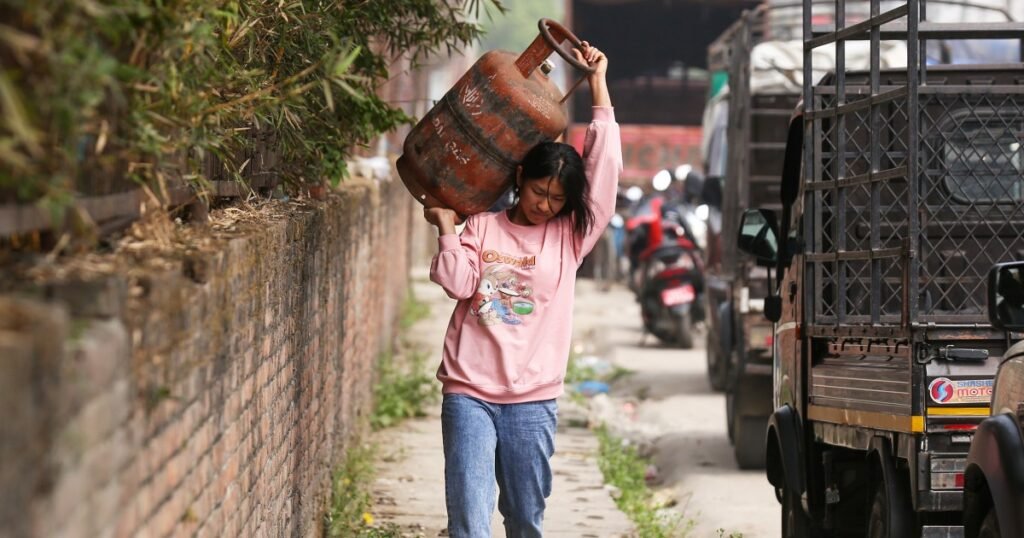
HONG KONG — The fallout from the U.S.-Israeli war with Iran and the effective closure of the Strait of Hormuz is being felt sharply in Asia, with authorities from New Delhi to Manila implementing emergency measures to shield consumers from mounting shortages and surging oil prices.
On Friday, people in Nepal lined up at gas-filling stations, carrying their empty, red cooking-gas cylinders as the country’s main oil company said it would only fill them halfway with LPG, or liquefied petroleum gas, as it tries to make stocks last longer.
Neighboring India, which is the world’s second-largest importer of LPG after China, is grappling with panic-buying among its own citizens amid wild swings in the price of international Brent crude oil, which as of early Friday was above $100 a barrel.
The unease highlights just how much a region dependent on oil from Gulf nations is affected by the Iran war, which the International Energy Agency says has created the “largest supply disruption in the history of the global oil market.”
Unlike the U.S. or Europe, which have more diverse sources of oil, Asia relies heavily on imports that pass through the Strait of Hormuz, a key shipping route along southern Iran that carries about a fifth of the world’s oil.
“The ability to refine different oils from different places is complicated and not easily shifted in Asia,” Robert Savage, the head of markets strategy and insight at Bank of New York Mellon, told NBC News on Thursday.

Among the countries most affected are Singapore, Thailand, South Korea, Pakistan and Japan, according to a research note Thursday from Eurasia Group, a New York-based geopolitical risk analysis firm.
The escalating conflict in the Middle East has set off an energy frenzy across the continent, forcing governments to ration fuel and scramble for alternative supplies.
In India, which has invoked emergency powers directing refineries to maximize LPG production, oil companies say they are focused on ensuring the stability of domestic supplies, including to essential services such as hospitals.
Though authorities have said the measures are precautionary and that India has plenty of oil, panic-buying threatens to strain domestic resources. “We request everyone not to believe such rumors or crowd fuel stations unnecessarily,” Mumbai-based Bharat Petroleum said on X Saturday.
Even as India struggles to reassure its own population, it is getting additional pressure from its South Asian neighbors.
Bangladesh, Sri Lanka and the Maldives have all requested supplies from New Delhi, Indian foreign ministry spokesperson Randhir Jaiswal said Thursday.
Muslim-majority Bangladesh also closed universities and brought forward the Eid al-Fitr holidays to save electricity and fuel. Worried consumers have flocked to gas stations to fill up their vehicles.
In Southeast Asia, the Philippines has initiated a four-day workweek for government employees, while Vietnam has urged its citizens to work from home and limit vehicle usage.
You may be interested

Marine veteran held at gunpoint fights off his attackers
new admin - Jun 06, 2026A Marine veteran was working on his truck in front of his home in Oxon Hill, Maryland, this week, when…

Pelvic Pain in Women – Women’s Health
new admin - Jun 06, 2026If the cause of the pelvic pain is identified, it is treated directly, if possible. Pain related to the menstrual…

Fans say ‘best sunscreen ever’ is ‘great under makeup’
new admin - Jun 06, 2026Dermatologists consistently stress the importance of wearing SPF every day, regardless of the weather. Daily sunscreen use helps protect skin…