


What will it take for ships to start sailing through the Strait of Hormuz again?

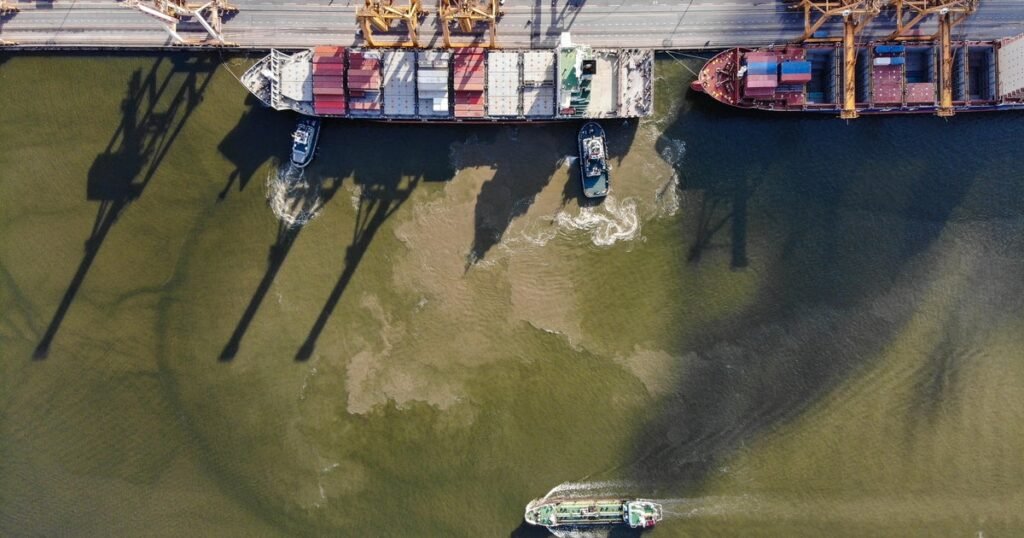
Before the U.S. and Israel attacked Iran on February 28, an average of 100 vessels per day would safely traverse the Strait of Hormuz. On Wednesday, only one or two ships crossed the narrow waterway, according to MarineTraffic, a ship tracking website.
Reopening the strait, which ordinarily handles some 20% of daily global oil shipments, is widely viewed as essential to bringing down the soaring energy prices caused by the Iran war.
In an interview with CBS News’ Major Garrett, American Petroleum Institute CEO Mike Sommers on Wednesday characterized the strait’s closure as a “nightmare scenario” for the global economy. “There is no replacing the 20 million barrels of oil that go through the Strait of Hormuz,” Sommers said.
Here’s what experts said must happen for oil tankers to start sailing again.
Why are ships stopped?
The Strait of Hormuz is currently too risky for commercial ships to navigate, with suspected Iranian drones on Wednesday striking at least three ships in and around the channel. Many insurers have also withdrawn coverage for tankers in the region.
“In the end, it’s all about perception, because our first priority is the protection of human life and our seafarers,” Jerry Kalogiratos, CEO of Capital Clean Energy Carriers, a shipping company based in Greece, told CBS News.
When will tankers return to the strait?
Kalogiratos said he is looking for clear signals that the Strait of Hormuz is safe for marine traffic.
“Let’s say there is a ceasefire overnight, and Iran says it’s safe. Then our ships would be the first to make the transit,” he said.
Not surprisingly, Kalogiratos is also keeping a close eye on the handful of ships that are crossing the waterway to see if they avoid attacks.
A succession of safe crossings of the strait would encourage more ships to sail, according to Vikas Dwivedi, energy strategist at Macquarie Group, a financial services firm.
“You’d need more than just one or two for a couple of days — you would want to see it building,” he told CBS News. “You want corroboration that there are no tricks being played and that ships leaving the Strait of Hormuz are arriving at destination ports.”
By contrast, Kalogiratos takes less comfort from the White House’s offer to insure ships traveling through the Persian Gulf. The Trump administration has also offered U.S. Navy escorts to protect ships from attack when navigating the channel.
“We need to feel confident that the lives of our partners aboard our vessels are safe,” he said.
Looking for de-escalation
Michael Ryan, head of freight at market intelligence provider Sparta Commodities, told CBS News that shipping companies would have to see a sustained reduction in military threat from Iran to start sailing again. That would encourage insurers to re-enter the region and bring premiums down to a manageable level, mitigating the financial risks of braving the waterway.
For now, achieving that level of security seems improbable. On Thursday, newly appointed Iran Supreme Leader Ayatollah Mojtaba Khamenei said in a statement that the strait must remain shut, according to state-run media.
“Until that threat is credibly lifted, either through a ceasefire or a negotiated arrangement, commercial operators of the vessels won’t return in meaningful numbers,” Ryan told CBS News.
How will we know ships are sailing?
Such vessels are equipped with Automated Identification System (AIS) trackers that allow their locations to be detected.
While tracking systems are normally activated, some ships have deactivated their AIS in an effort to pass through the strait undetected, Nikos Pothitakis, a spokesperson for Kpler, which owns MarineTraffic, told CBS News.
The usual flow of maritime traffic through the Strait of Hormuz is currently nonexistent, according to MarineTraffic, which monitors factors including a vessel’s location, load size and speed.
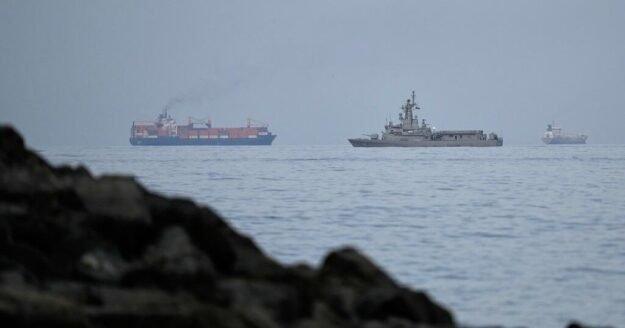
“Normally, you would see all of these little dots of triangles moving fluidly around the strait,” Ryan said. “Right now, there are loads of tankers clustered together on either side of the strait, where they are sitting anchored.”
You may be interested
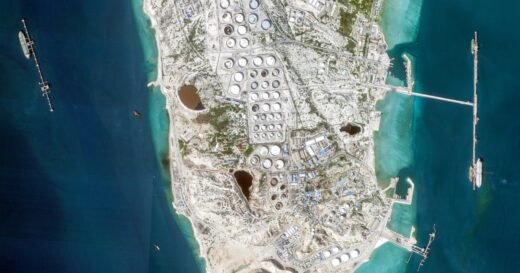
Iran threatens to strike oil facilities after U.S. hits military targets on Kharg Island, a critical oil hub
new admin - Mar 14, 2026President Donald Trump said late Friday that U.S. forces “obliterated” military targets on Kharg Island, a critical hub of Iran's…

Dog owners warned of ‘unlimited fines’ due to rule starting in days
new admin - Mar 14, 2026Dog owners are being warned they could face unlimited fines if their pets chase livestock when new laws come into…

Charlie Kirk murder case judge denies some efforts to restrict media access to court documents
new admin - Mar 14, 2026The Utah man accused of killing Charlie Kirk was back in court Friday as a state judge denied some efforts…