


Lawmakers and Universities Push Back on Loan Caps


Hundreds of lawmakers have joined dozens of university leaders and academic trade associations in urging the Department of Education to amend its new regulations on federal student loans, arguing the current rule will deter students from pursuing high-demand degree programs and thus exacerbate dire health-care workforce shortages.
The 240-page regulation, first released in January, narrowly interprets the new loan limits established by Congress’s One Big Beautiful Bill Act by designating only a select group of 11 postbaccalaureate degree programs “professional.” Students enrolled in those programs will be allowed to borrow up to $50,000 per year, the regulations say. The other programs will be labeled “graduate,” meaning borrowers can borrow only half that amount from the government.
But critics want the department to expand its definition of professional, adding to the list other high-cost, high-demand medical professions such as physician assistantship, nurse anesthesiology, speech pathology and occupational therapy. Some lobbying groups—including the American Council on Education—hope to see the definition expand even further and include licensed professions such as social work, education and accounting.
The public comment period for the loan caps ended Monday at midnight; as of Tuesday afternoon, the Education Department had received nearly 17,500 responses—most of them unfavorable. (That number could continue to grow as the Federal Register works to process last-minute submissions.)
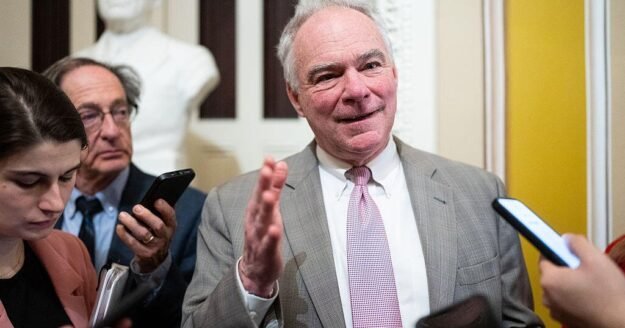
Many comments—including a bipartisan, bicameral letter signed by more than 150 members of Congress—focused specifically on the detriment such a loan cap would have on the future of nursing, which the regulations do not deem a “professional” degree. But others, including the Democratic senators representing Virginia and Republican representative Mike Lawler of New York, encouraged the department to consider concerns beyond immediate bedside care.
Since July 2024, all 133 localities in Virginia have been federally designated as behavioral health shortage areas and 96 as primary care shortage areas, Senators Tim Kaine and Mark Warner wrote. That means the state needs over 17,000 more registered nurses, as well as 3,700 additional physical therapists and 2,400 mental health and substance use disorder social workers.
“Cutting off access to adequate federal loan amounts will needlessly exacerbate the rapidly worsening workforce crisis impacting Virginians and Americans across the country,” they wrote.
Currently the regulation only designates degrees in pharmacy, dentistry, veterinary medicine, chiropractic, law, medicine, optometry, osteopathic medicine, podiatry, theology and clinical psychology as “professional.”
Technically, other programs can be included so long as they fall within the same four-digit CIP code, a labeling system used by the Education Department to categorize degree programs, and require at least six years of postsecondary education. But very few additional programs meet those standards, and those that do tend to be slight variations of the same degree.
The criticism among commenters was bipartisan; university officials in the Republican-led state of West Virginia stressed the same “serious concerns” as their neighboring Democratic lawmakers.
Albert Wright Jr., president of the West Virginia University Health System, explained that his statewide health-care system is facing a 34 percent vacancy rate for registered nurse anesthetists, with 77 open positions, and a 21 percent vacancy rate for nurse practitioners and physician assistants, with 228 and 130 open positions, respectively.
“As an academic health system serving a predominantly rural and medically underserved state, we are uniquely positioned to witness the direct connection between graduate professional education, workforce supply, and access to care,” Wright wrote. “These shortages exist prior to implementation of the new federal loan structure. Any contraction of the graduate education pipeline will … elevate cost structures, and limit access to essential services, particularly anesthesia, primary care, and specialty care across rural West Virginia.”
Commenters proposed a range of potential solutions. Lawler suggested that the department explicitly add 12 programs to the list and make it nonexhaustive, including any other programs that meet the regulatory standards but are not directly listed. He and eight other Republican co-sponsors have also introduced the Professional Student Degree Act, which would force the department to expand the list.
Others, including the University of Texas system, recommended more open-ended changes, such as authorizing case-by-case additions based on the workforce needs of each state.
But most respondents agreed that something in the regulation needs to change if the Trump administration wants to prevent workforce shortages.
“The department is tinkering with the most basic of economic principles: supply and demand,” said Mohan Suntha, president and CEO of the University of Maryland Medical System. “Constrain supply, and [health care] prices rise.”
‘Unintended Barriers’
In addition to expanding the number of qualifying degree programs, some respondents argued that the Trump administration should increase borrowing flexibility for part-time students and delay the loan cap’s implementation.
Currently, the regulations state that loans for part-time students, or students enrolled in fewer than 12 credit hours, must be reduced proportionally.
And while university leaders say they understand the Trump administration’s desire to prevent crushing student debt and spend taxpayer dollars responsibly, they fear limiting how much part-time students can borrow will hurt rather than protect them.
“Many low-income students attend part-time not by choice, but because of employment obligations, caregiving responsibilities, health considerations, or financial constraints,” wrote Melissa Pizzo, associate vice president of financial aid at Arizona State University.
And while tuition may vary depending on how many credit hours a student takes, other costs of attendance, like housing, are fixed.
Tying borrowing eligibility strictly to enrollment hours “risks creating unintended barriers to persistence and completion,” she added. “As a result, students may turn to higher-cost private loans, increase work hours to the detriment of academic progress, or stop out entirely.”
Many students have already completed their application cycle and are deciding where they can afford to go next fall, critics also noted. But if the loan limits take effect July 1 as planned, it could alter students’ payment plans, creating midcycle confusion and forcing some to take out costly private loans. Others who don’t have the credit score or co-signer needed for private loans may be forced to drop out entirely.
That’s why many are urging the department to delay implementation of the loan caps beyond July 1.
“The proposed date would represent a substantial administrative hardship to institutions and run counter to shared goals of clarity and student support,” the Association of Public and Land-grant Universities wrote in its comment.
But the Education Department has been rather clear since loan limit negotiations began in October that it sees little room for change.
Still, before the regulations are finalized, the department is legally required to consider all relevant feedback and provide a “reasoned response” to each of the 17,500 comments.
You may be interested
‘Masterpiece’ war film that’s ‘supremely underrated’ streaming now on Amazon Prime | Films | Entertainment
new admin - Mar 04, 2026A "masterpiece" film set during World War 2 that's hailed by one fan as "supremely underrated" is streaming now in…

MLB news: Aaron Judge headlines Team USA’s loaded World Baseball Classic roster
new admin - Mar 04, 2026[ad_1] NEWYou can now listen to Fox News articles! Team USA is sending a loaded roster to this year’s World…

Apple launches $599 MacBook Neo powered by an iPhone chip
new admin - Mar 04, 2026Apple just announced a new entry-level MacBook that runs on the same A18 Pro chip that launched two years ago…