


How Diversity Gained—and Lost—Its Place in Higher Ed

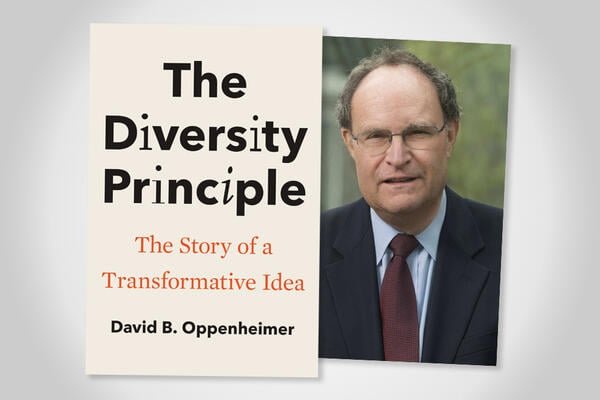
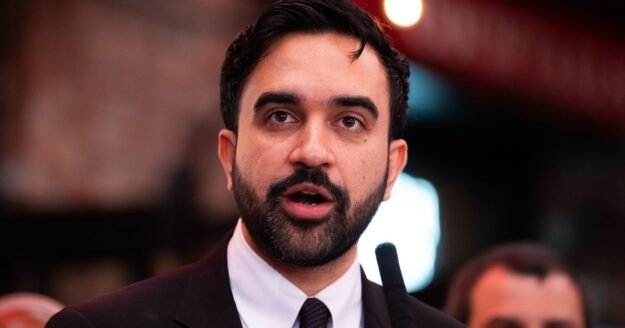
In his new book, The Diversity Principle: The Story of a Transformative Idea (Yale University Press), David Oppenheimer, a law professor at the University of California, Berkeley, traces the history of diversity as a guiding framework for institutions, largely through the people and court rulings that shaped it.
He credits Wilhelm von Humboldt, who founded the University of Berlin in 1810, for first recognizing the value of incorporating a variety of viewpoints into education and opening his predominantly Protestant institution to Catholics and Jews. In the U.S., early proponents of diversity included philosopher John Dewey, former Harvard University president Charles Eliot and Supreme Court Justice Oliver Wendell Holmes Jr.
Diversity was not always the partisan concept it’s become today. Oppenheimer notes that the majority opinions in three key Supreme Court decisions regarding diversity in higher education were written by conservative justices appointed by Republicans. Lewis Powell wrote the 1978 Regents of the University of California vs. Bakke decision, which struck down racial quotas in admissions but found that diversity was a compelling enough state interest to justify the consideration of race as a factor in admissions. Then, in 2003, Sandra Day O’Connor penned the 5-to-4 decision in Grutter v. Bollinger, which found the University of Michigan’s consideration of race in law school admissions was lawful. And Anthony Kennedy wrote the 2016 Fisher v. University of Texas opinion, which upheld the University of Texas at Austin’s race-conscious admissions.
Oppenheimer, who also serves as director of the Berkeley Center on Comparative Equality & Anti-discrimination Law, spoke with Inside Higher Ed via Zoom about the rise and recent decline of diversity as a coveted principle in higher education.
The interview has been edited for length and clarity.
Q: Your book argues that diversity matters not just because it’s fair or fixes historic injustice, but because it actually strengthens organizations and institutions—the business case for diversity. How does that principle operate in higher education?
A: I do think diversity is fair, and I do think that’s one reason why we should seek diversity. But what I’ve come to realize is that the business case for diversity is more than a business case; it’s a general case for diversity. The past 30 years of diversity science tells us empirically that diversity of all kinds—the mix of people from different backgrounds and experiences, including people of different ages and religions and races and ethnicities and cultures and languages—really does make a big difference in terms of how effective we are as decision-makers. Businesses make more money. Public policymakers, governments make better policy decisions.
In higher education, we do a better job as teachers and as researchers when we work in a diverse environment. Students learn more. In a science lab, scientists make more significant discoveries when the scientists working in the lab are diverse. It’s a real thing. It’s not just a psychological argument.
Q: Right. You cite a growing body of scientific evidence that supports the idea that diversity actually improves outcomes, including in education. So why are so many conservatives dead set against it?
A: It’s hard to persuade someone of something when it goes against their fundamental interests. When you look at the opponents of diversity, some of them are just natural skeptics and we need skeptics—that’s part of the diversity principle. But far too many are ideologues, and for far too many, this idea that diversity has value runs up against the idea that the Western world is a white and primarily male world and ought to remain white and male. So they are resistant to the idea that diversity has value, even when they see the studies, because it is a threat to their fundamental ideology.
Q: You describe diversity as a form of academic freedom—the freedom to teach who you want to teach. Can you talk about how those two concepts are related? I gather it’s not a coincidence that they’re both presently under attack by conservatives.
A: I don’t think it’s a coincidence. When Humboldt founded the University of Berlin, he did three radical things. One, he said we’re going to build this university as a place of experiential learning, where professors and students work together to expand our knowledge. That is the model of the modern research university. Two, he said to do that effectively, we need diversity in our community, and so we’re going to admit Catholics and Jews to what otherwise would be a Protestant university. And three, he said it’s essential that the university have a stable form of funding so that faculty and students are free to pursue ideas without worrying about them being unpopular or suppressed. So right from the beginning, there was a connection between diversity and academic freedom.
The idea of the marketplace of ideas, which really comes out of Humboldt and [John Stuart and Harriet Taylor] Mill, is the American source in our legal doctrine, both for academic freedom and for the recognition of the benefits of diversity.
Q: As you trace in your book, diversity as a principle won favor and widespread use through a series of court challenges. Now groups like Students for Fair Admissions are using the same courts to try to unwind it. How do you rectify that?
A: Even though I’m a law professor and a part-time civil rights lawyer, I think maybe we’ve relied too much on the courts. It is interesting that the three major decisions that have propelled this idea of diversity into a justification for race-based affirmative action came from three quite conservative members of the court: Justice Powell, Justice O’Connor and Justice Kennedy. Each was appointed by a Republican president and each embraced the idea against their general views of the world. They were responsible for the legal doctrine that diversity is a proper justification for affirmative action.
Now, affirmative action based on race has been ruled illegal. I don’t see that changing. And so the question really is, are there other ways to pursue the benefits of diversity and what are they? Until recently, the big law firms adopted what they called the Mansfield rule, a very sensible rule that says if you put together a group of candidates for a high-level position in a law firm and you realize that they’re all white men, you have to expand the search. It doesn’t require that you hire a woman or person of color, but it does require that they be part of the pool you’re considering.
But under the Trump administration, the Federal Trade Commission wrote to all of the large law firms and said, “We think this is illegal and we’re going to stop you from doing this.” The [Diversity Lab] consultancy, which had certified law firms as compliant with the rule, immediately ended their compliance program. They shouldn’t have; they should have defended it. It is completely defensible … Universities should be reaching out to students of all kinds of backgrounds and recruiting them. They should be making efforts to diversify the pool from which they make their selections.
Q: Since President Trump took office and sought to apply the Supreme Court’s 2023 ruling banning race-conscious admissions more broadly, we’ve seen a lot of higher ed institutions pre-emptively end DEI programs and offices—even though the courts have struck down President Trump’s attempts to apply that ruling more broadly. What do you think about that?
A: I think it’s an act of institutional cowardice at a time when courage is required. They’re destroying their universities. They are undermining an important part of what makes American universities great, and they should be doubling down on resisting any attempt to take a fairly narrow Supreme Court decision and broaden it. They should be asking the question “What’s good for our university? Our students? Our faculty? What’s good for the expansion of knowledge?” And if that hasn’t been ruled to violate the law, then it’s what we are obligated to do as a university. Of course, we want policies that promote diversity, equity and inclusion, and there is nothing in the law that prohibits that, except for this one important but narrow rule that says, when we make admissions decisions, we can’t use race or ethnicity as a factor. And to just sort of fold on all these other policies is appalling.
Q: How should universities balance competing pressures from the Trump administration, wealthy donors and students and faculty on their campuses, who may feel very strongly about preserving diversity regardless of what the law says?
A: Well, I’m not suggesting that universities violate the law. I am suggesting that they not pre-emptively comply with the direction in which they fear the law may go. Donors, in some cases, are themselves ideologues, and it’s a shame that they’ve decided to stop supporting universities that are doing great work. But I don’t think there’s anything you can do to fix that. It may mean finding new sources. It may mean spending some of that endowment, or asking hard questions about reform of university spending. It may mean convincing donors who are not inclined to believe in the value of diversity that they should.
Q: How do you do that?
A: You sit down with people and you engage and you discuss and you point to facts, you point to empirical evidence, and you listen and you look for common ground and you dig deeply into what they’re unhappy about.
Q: Maybe promoting viewpoint diversity would help?
A: Viewpoint diversity is an important part of diversity. So is ideological diversity. We need conservative colleagues. We need colleagues with different points of view. We shouldn’t be in an echo chamber or a silo. The whole point of the diversity principle is that we learn from people with different viewpoints, which are so often a product of their background and experience and things that we haven’t personally experienced. I think it’s incumbent on us to select our colleagues in a way that encourages viewpoint diversity—all kinds of diversity.
Q: I wanted to ask about the language of the diversity movement. It seems to have moved from diversity to affirmative action and then to DEI. How have semantics played into the debate over diversity?
A: Well, certainly “DEI” is a great term, if what you want to do is choose something to go after. Why? It’s brief, it’s easy to remember and it’s easy to connect it with some of the worst examples of diversity programming gone wrong—for instance, bringing a bunch of white people into a room and telling them, “You’re a bunch of racists.” That’s the classic complaint about diversity training, and I’m sure that happened and probably still happens—and I also suspect that the complaints about it are much exaggerated.
No policy is perfect. When the Clinton White House re-examined affirmative action policy, they said, “Mend it, don’t end it.” It was a fair critique of affirmative action, and I think it’s fair when we talk about diversity training. I don’t doubt there are problems, but let’s mend it, not end it. Because the underlying idea that diversity is something of measurable value is too clearly correct and too important for us to just abandon.
Q: How do you see the principle of diversity evolving in this country going forward? Are you optimistic that it will prevail?
A: I’m cautiously optimistic, but that’s partly the nature of my character, which in turn may be a symptom of my white male privilege. When I talk to my students, by the way, I’m incredibly optimistic.
I do think that the pendulum has swung way to the right and will come back toward the center and that people will re-examine the policies of the Trump administration and recognize that we were on the right path. If you look at the progress as a nation that we’ve made in terms of inclusion, it is significant, and I think that we’re going to continue to make that kind of progress.
You may be interested

Scientists propose model to protect Earth from solar storms
new admin - Jul 22, 2026If a massive solar storm capable of wiping out power grids across the U.S. was headed toward Earth, could there…

U.S. launches strikes on Iran for 11th consecutive night
new admin - Jul 22, 2026The U.S. launched an 11th consecutive night of strikes against Iran on Tuesday. CBS News' Weijia Jiang reports on Defense…

What false positive cyclospora test means for outbreak, according to former FDA medical officer
new admin - Jul 22, 2026The FDA is still hunting for the source of the cyclosporiasis outbreak after earlier test results proved to be a…