



Instagram and TikTok are using your content to sell junk

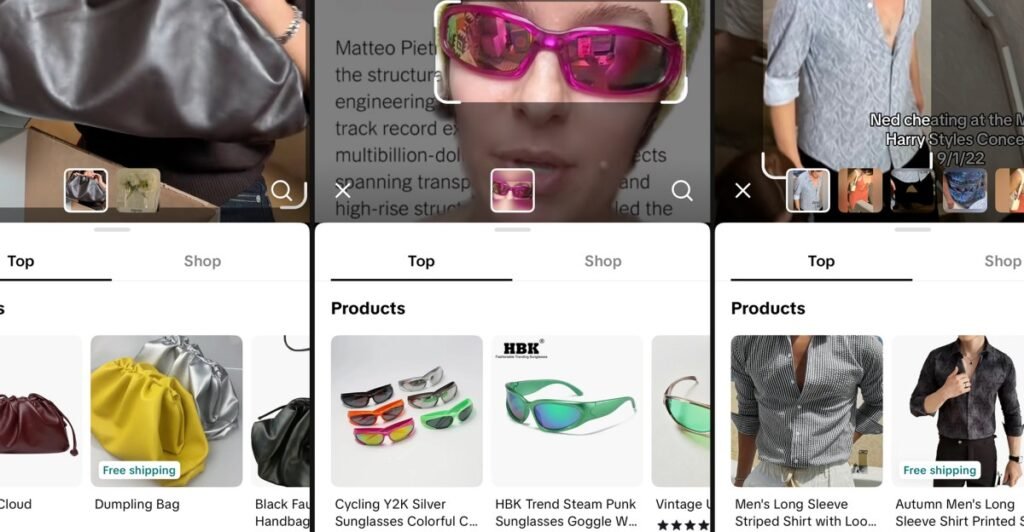
In late February, Puck reported on a strange case: An influencer with more than a million followers was inadvertently promoting products on Instagram. On some of Julia Berolzheimer’s posts, a “Shop the look” button hovered in the corner. When followers clicked it, they were fed similar items to what Berolzheimer was wearing.
Her job is to promote clothing, accessories, and other products to her followers, so having links to specific items isn’t strange. What was odd was that she hadn’t placed the links there herself — Instagram added them without her consent. The product links led followers not to the actual items Berolzheimer was promoting (and earning commission from), but to lookalikes.
“My followers were being shown cheap knockoffs and random items from brands I’ve never heard of, attached to my image, under my name,” Berolzheimer wrote on Substack. She said she had no idea the “Shop the look” button appeared on her posts until someone else notified her.
”This is a limited test intended to help people explore products that match their interests when they’re viewing posts or reels,” Matthew T Torres, a Meta spokesperson, said in an email. “We’re exploring various changes as we continue to test this experience and gather feedback, including exploring different labels. Meta does not take a commission on these items, and we will continue to refine the experience based on feedback.”
Though Meta claims it is just testing the feature, the ramifications are obvious. From a business perspective, it is damaging to influencers if their name, face, and content are associated with promoting products they have not vetted — followers buy things their favorite creators recommend because they trust their judgment and taste. It also has the potential to disrupt an influencer’s income stream: Suddenly, instead of Berolzheimer earning commission through her own affiliate links, another platform is cutting in.
But the feature and others like it aren’t just a problem for people like Berolzheimer — all of us non-influencers are liable to become fodder for ads without our knowledge. Perhaps it’s already happened to you.
We think of social-first commerce as the playground of influencers, with their affiliate links, #partner content, and midroll ads. But these days, anything can be usurped to push products — and for many social media users, their feed has become mostly just a shopping recommendation engine.
Back in September, I reported that TikTok was testing a new feature very similar to what Instagram is now under fire for. The TikTok version worked much the same: If a viewer paused a video, a “Find similar” button popped up automatically. TikTok uses AI to scan the content and then recommends products for sale on TikTok Shop that look like whatever was in the original video. It used strangers’ sunglasses to recommend me cheap lookalikes; a Ms. Rachel video served as a way to push me toward similar dresses. More disturbingly, I found that the feature was being applied to videos coming out of Gaza, effectively turning the mass killings of Palestinians into TikTok Shop promotions. Users had no idea the links were being added to their videos, and the opt-out option was buried deep in the settings menu.
At the time, TikTok said it was working to correct the issue — but the feature appears here to stay. Last week while scrolling the platform, the same “Find similar” button popped up on a video about clothing. The account had just over 400 followers.
The conventional wisdom is that brands hire influencers for access to their sprawling audiences, with whom content creators have built trust. But gradually, the role of influencer has in some cases come to resemble gig work: Micro- and nano-influencers with small followings hustle as a side job. Increasingly, marketers are tapping into normal, non-influencer types to make content that looks organic and unpolished. A whole subgenre of advertising, called UGC (user-generated content), hires content creators not for their followings but for the work of actually producing videos or photos. Gig work platforms like Fiverr are flooded with offers to create UGC, with some rates starting as low as $20. And then there are, of course, the plain bizarre one-off cases, like when internet culture reporter Kate Lindsay recently wrote about discovering a photo of her and her husband was being used to sell picture frames.
In its early days, the burgeoning creator economy promised something it couldn’t ultimately deliver on: that anyone, anywhere, had a shot at fame, money, and influence. In reality, it took a tremendous amount of luck and privilege to make it big — but slot machine-style recommendation algorithms have upended that. The explosion of influencers beginning in 2020 during the covid-19 pandemic opened a Pandora’s box for contemporary advertising and marketing, and there is an endless supply of labor to fill whatever camera, face wash, or gambling app needs promoting. Instagram’s “Shop the look” or TikTok’s “Find similar” are a signal that the creator economy’s central premise has come true, albeit under Monkey’s Paw-like circumstances: Everyone is an influencer, whether we like it or not.
You may be interested

Dog rescue hires a cat to help boost adoptions
new admin - Aug 03, 2026Dog rescue hires a cat to help boost adoptions - CBS News Watch CBS News Muttville Senior Dog Rescue in…

A bicycle class for adults who never learned how to ride
new admin - Aug 03, 2026Most Americans learn to ride a bike as children, but for those who were never taught, learning as an adult…

“This is not a soccer show”: How “Ted Lasso” became a television phenomenon
new admin - Aug 03, 2026"This is not a soccer show": How "Ted Lasso" became a television phenomenon - CBS News Watch CBS News Jason…