


Most Conservative Students Don’t Feel Persecuted on Campus

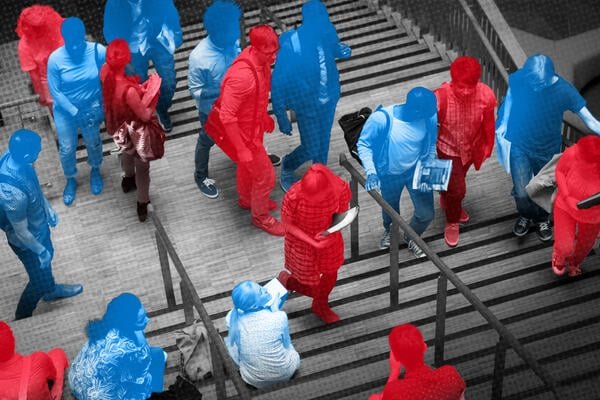
Just 2 percent of all college students say they feel they don’t belong on campus due to their political views.
Photo illustration by Justin Morrison/Inside Higher Ed | David Schaffer/iStock/Getty Images
Despite widespread political rhetoric claiming that colleges suppress conservative viewpoints, new data shows that most college students feel free to express themselves regardless of their political affiliation.
According to a report that Gallup and the Lumina Foundation published today, just 2 percent of all college students—including 3 percent of Republicans—say they feel they don’t belong on campus due to their political views. That’s one of the many disconnects between public perceptions about higher education’s climate and value and what students say is actually happening on campus, according to the report, “The College Reality Check: What Students Experience vs. What America Believes.”
“For years, the American public has been saying they’re losing confidence in higher ed because they believe it’s too political, too expensive and doesn’t lead to jobs,” said Courtney Brown, Lumina’s vice president of impact and planning. “When we compare that to what students and alumni are saying, it’s two different stories.”
In an effort to understand those disconnects, researchers last fall surveyed nearly 4,000 college students and 6,000 alumni about their perceptions of campus climate and the value of pursuing higher education.
The results showed that two-thirds of college students said most of their professors encourage them to share their views, including those that make others uncomfortable. At the same time, 71 percent said their professors create a classroom environment that supports both students who express unpopular opinions and those who may be upset by such views.
Additionally, 93 percent of students said they’re confident they’re learning the skills they need to get the type of job they want, and 88 percent expressed confidence that their degree or credential will help them get a job after graduation. The majority (75 percent) also believe college is worth the cost, including 76 percent of Democrats, 78 percent of Republicans and 76 percent of Independents.
Similarly, most college graduates (71 percent) said getting their degree was worth the cost, including 74 percent of Democrats, 67 percent of Republicans and 74 of Independents.
But those findings don’t align with the general public’s declining confidence in colleges and universities over the past decade.
For example, between 2015 and 2024, the percentage of American adults who said they had “a great deal” or “quite a lot” of confidence in higher education dropped from 57 percent to 36 percent, according to data from Gallup. While public confidence levels rebounded six percentage points in 2025, sharp political divides remained: Just 26 percent of Republican adults said they were highly confident in higher education, compared to 41 percent of Independents and 61 percent of Democrats.
That lack of public confidence stems in part from a growing belief that colleges are bastions of political indoctrination. In 2025, 38 percent of American adults attributed their skepticism to higher education’s “political agendas”—including perceptions that it is “too liberal,” doesn’t allow students to think for themselves and seeks to “brainwash” students—compared to 28 percent who cited politics as the source of their skepticism in 2024, according to Gallup.
Regardless of the disconnect between public opinion and reality, the general public’s negative perceptions of college are increasingly influencing state and federal policy.
Since taking office last year, the Trump administration has issued numerous orders and directives aimed at rooting out diversity, equity and inclusion initiatives in higher education, which it claims have alienated conservative students. At the same time, numerous universities, including Ohio State University, the University of Florida and the University of Texas at Austin, have responded to worries about conservative alienation by opening civic centers devoted to viewpoint diversity, often staffed by DEI critics.
“The political polarization that we are facing right now is defining our national mood. But that’s not defining what’s happening in classrooms and on campuses across the country,” Brown said. “[Policymakers] need to focus on evidence and not just anecdotes or outlier stories. If students are reporting that they feel like they have freedom of speech and are getting the skills they need, they need to pay attention to that.”
Cost a Common Concern
One perception that students, alumni and the general public are more aligned on, however, is that college is too expensive.
While 64 percent of currently enrolled college students said public nonflagship four-year colleges are at least somewhat affordable, only 51 percent said the same of public flagship universities and just 31 percent said it about private four-year colleges. And only one-quarter of students believe four-year universities charge “fair prices,” including 27 percent of Democrats, 32 percent of Republicans and 19 percent of Independents.
Meanwhile, 24 percent of Americans attributed their lack of confidence in higher education to high costs, according to the 2025 survey from Gallup.
“Students are telling us what’s working on campus and what they need help with, which is affordability,” Brown said. “Colleges and universities need to be more transparent about the cost and how their credential is aligned with the job market.”
You may be interested

Christopher Nolan confesses The Odyssey ‘has been an absolute nightmare’ | Films | Entertainment
new admin - Apr 16, 2026Day 3 of CinemaCon has been wild on the celebrity appearances front, from Michael B Jordan and Ryan Gosling to…

Illinois woman works 3 jobs to make dream possible for her and her grandmother
new admin - Apr 16, 2026Illinois woman works 3 jobs to make dream possible for her and her grandmother - CBS News Watch CBS News…

Kenyan court jails Chinese man in ant-smuggling case
new admin - Apr 16, 2026A Kenyan court on Wednesday ordered a Chinese man to pay a fine of 1 million shillings ($7,746) and gave…